
 MAP
MAP SEARCH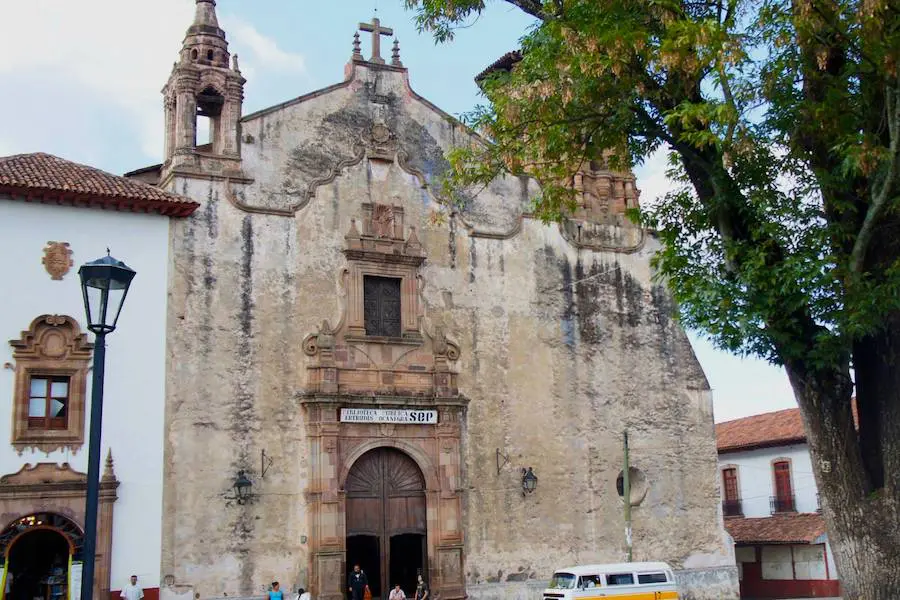
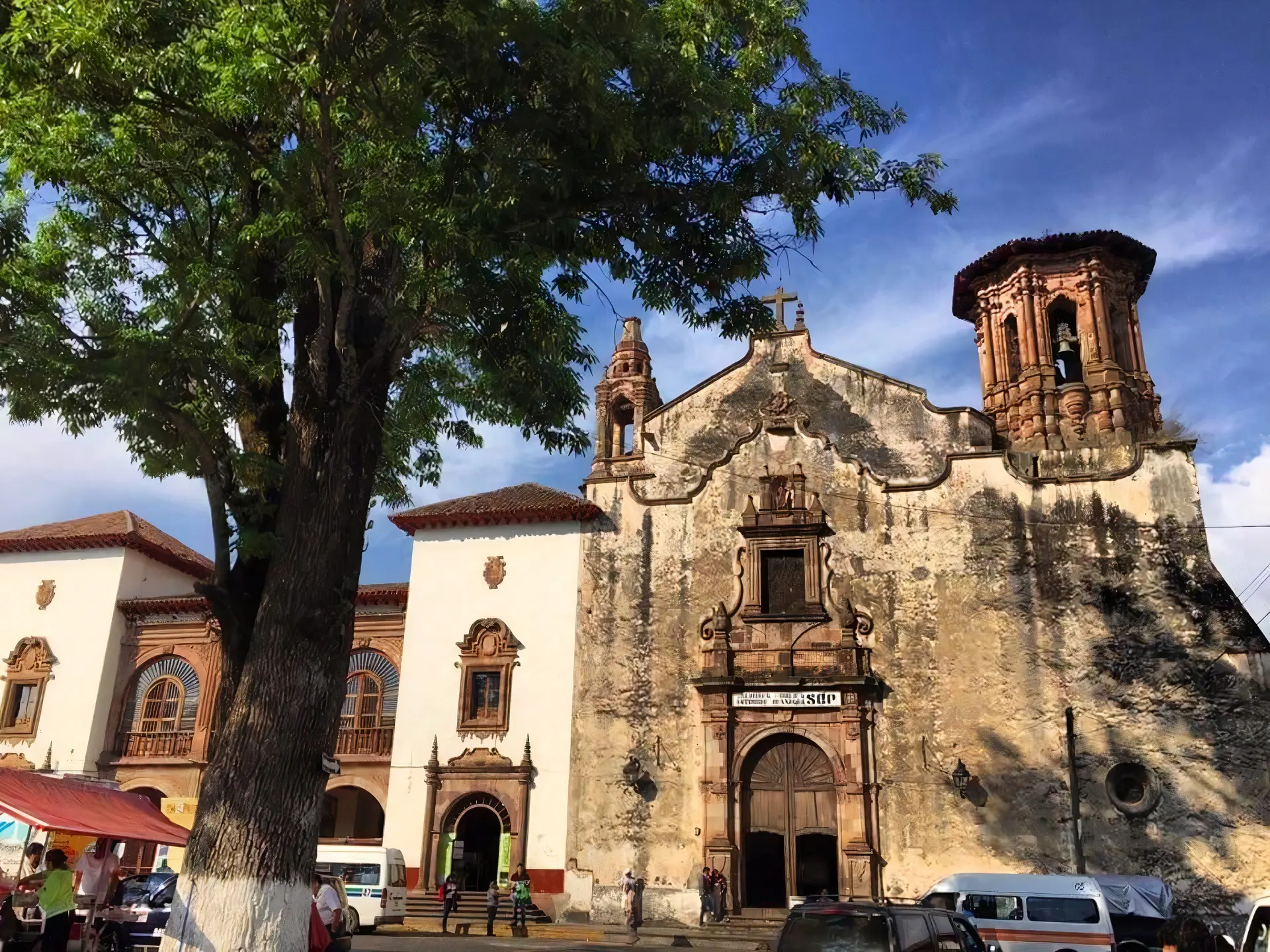
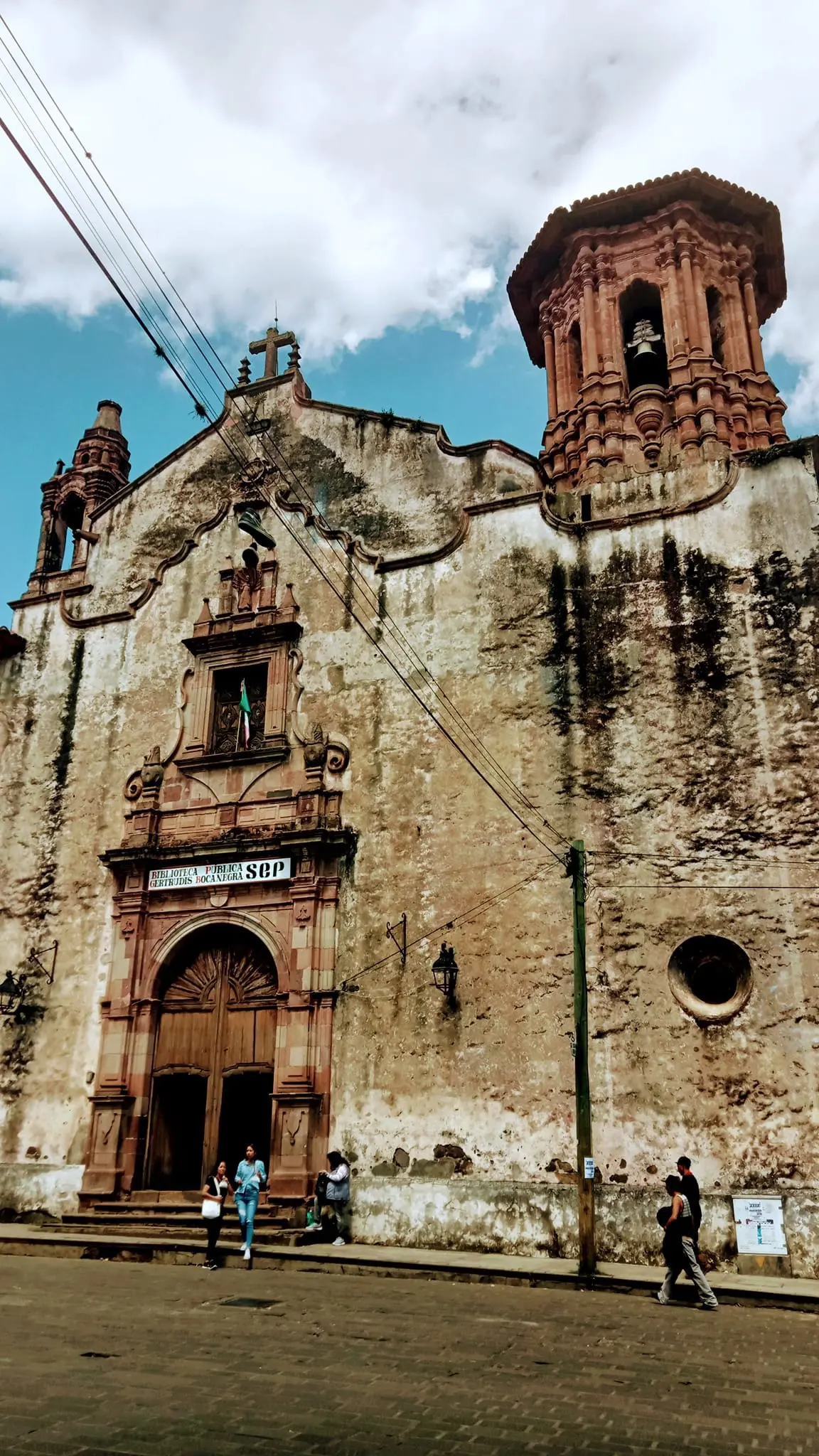
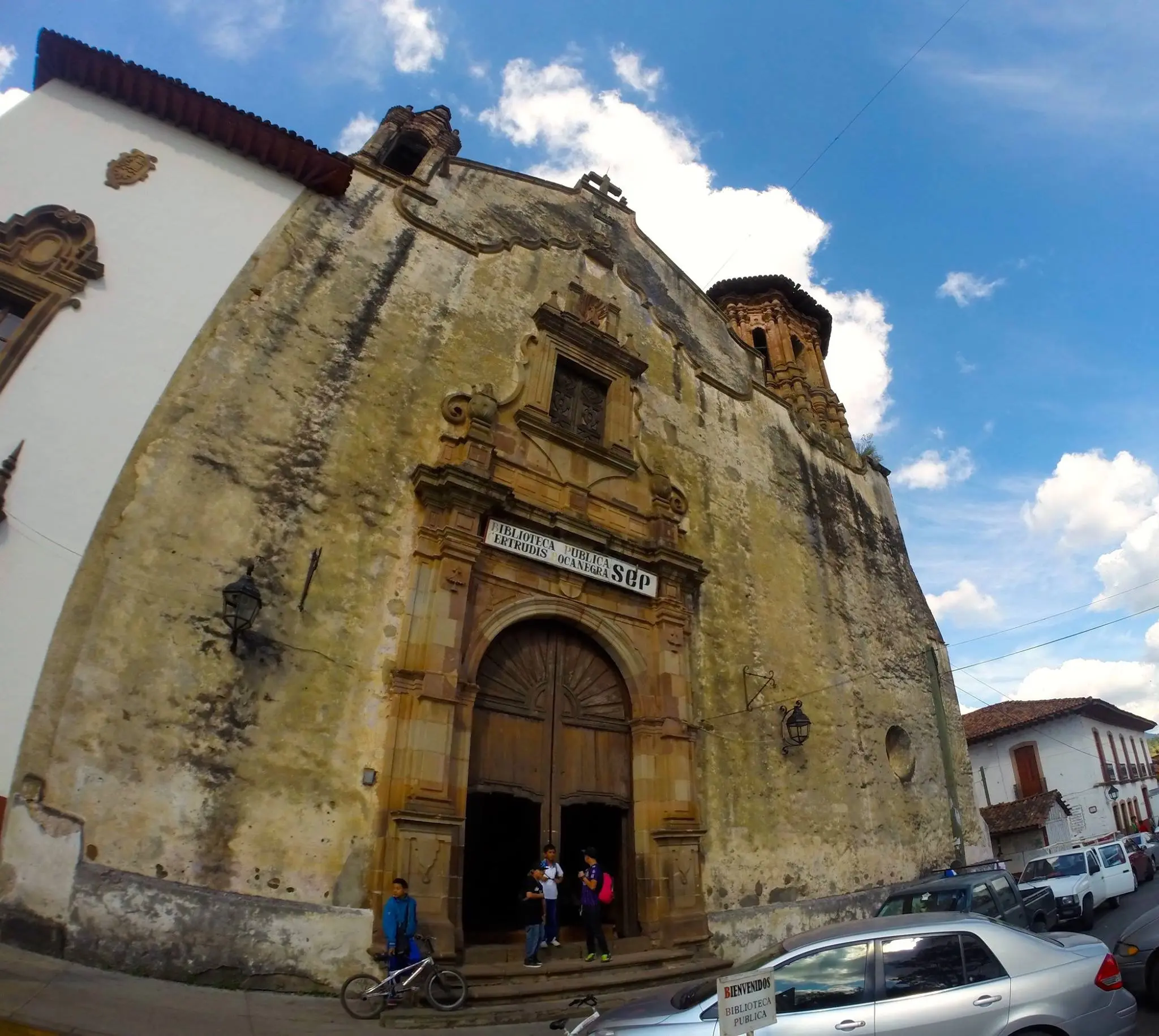
Adress
Padre Lloreda 34A, Centro, 61600 Pátzcuaro, Michoacán, México.
GPS
19.516580535933, -101.60840749741
Phone
Monday
09:00 – 19:00
Tuesday
09:00 – 19:00
Wednesday
09:00 – 19:00
Thursday
09:00 – 19:00
Friday
09:00 – 19:00
Saturday
10:00 – 16:00
Sunday
10:00 – 16:00
KNOW MORE PLACES
VISITA OTRAS LOCALIDADES
Former Convent of San Agustín: The Sanctuary of Knowledge and the O’Gorman Mural
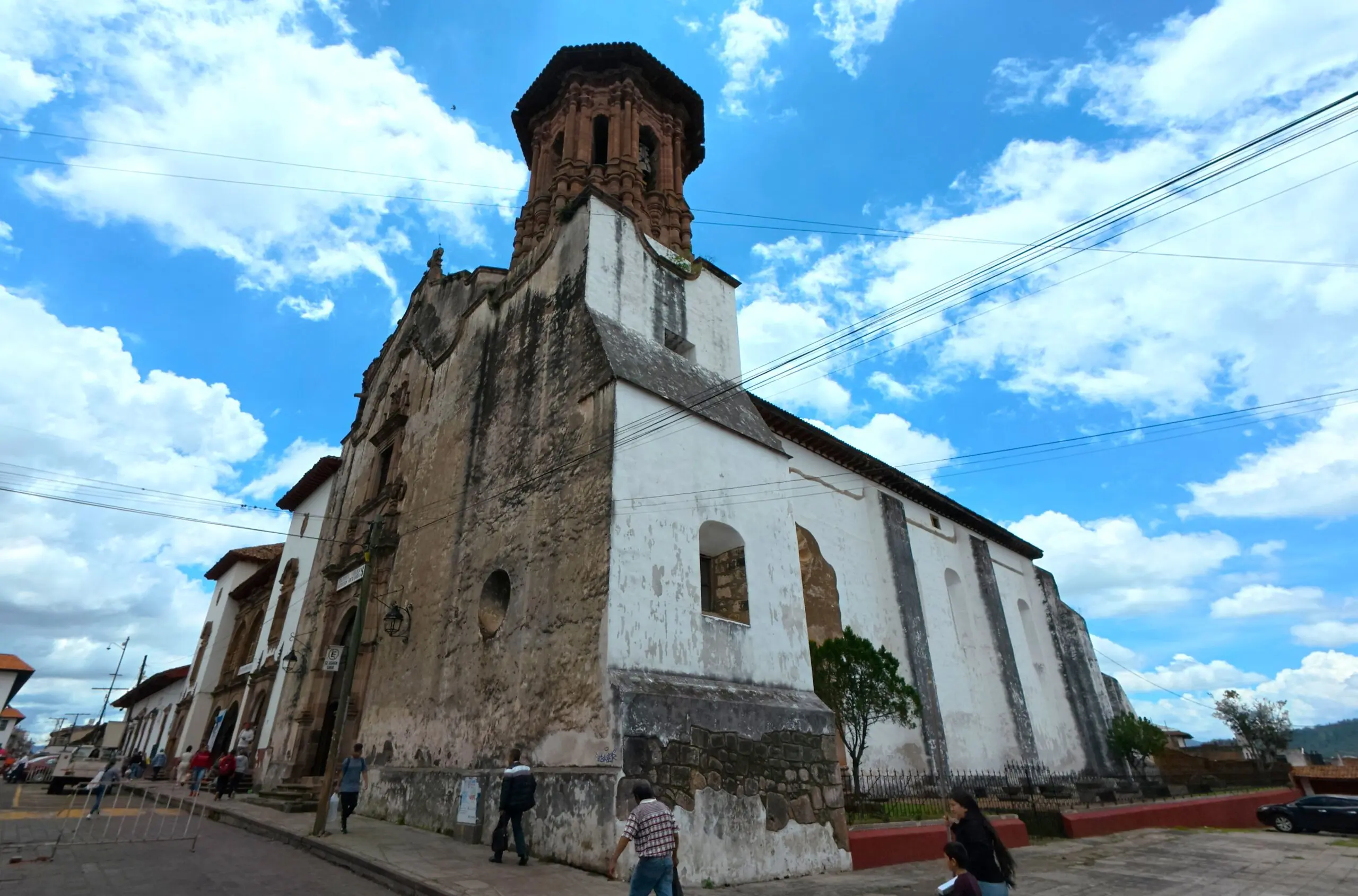
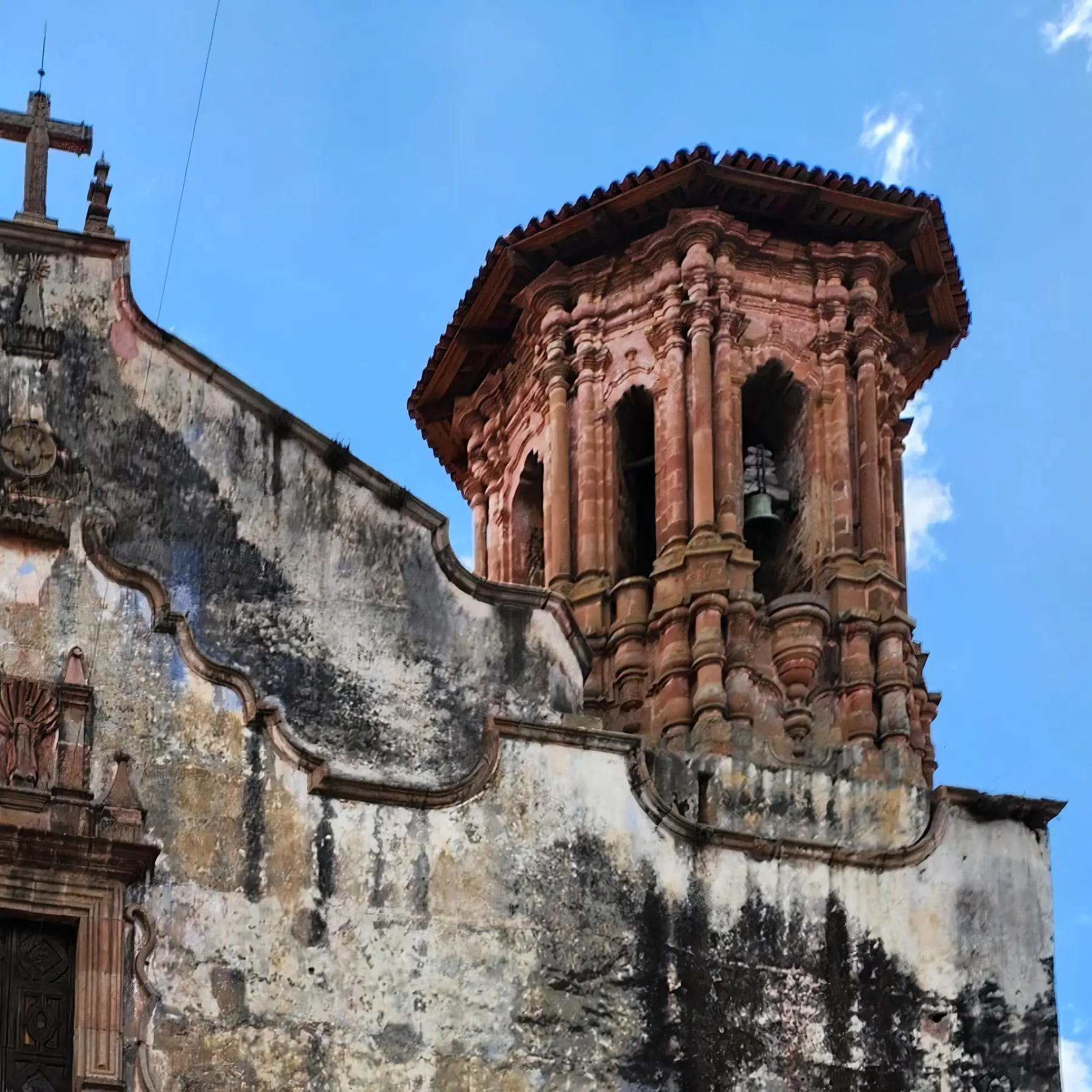
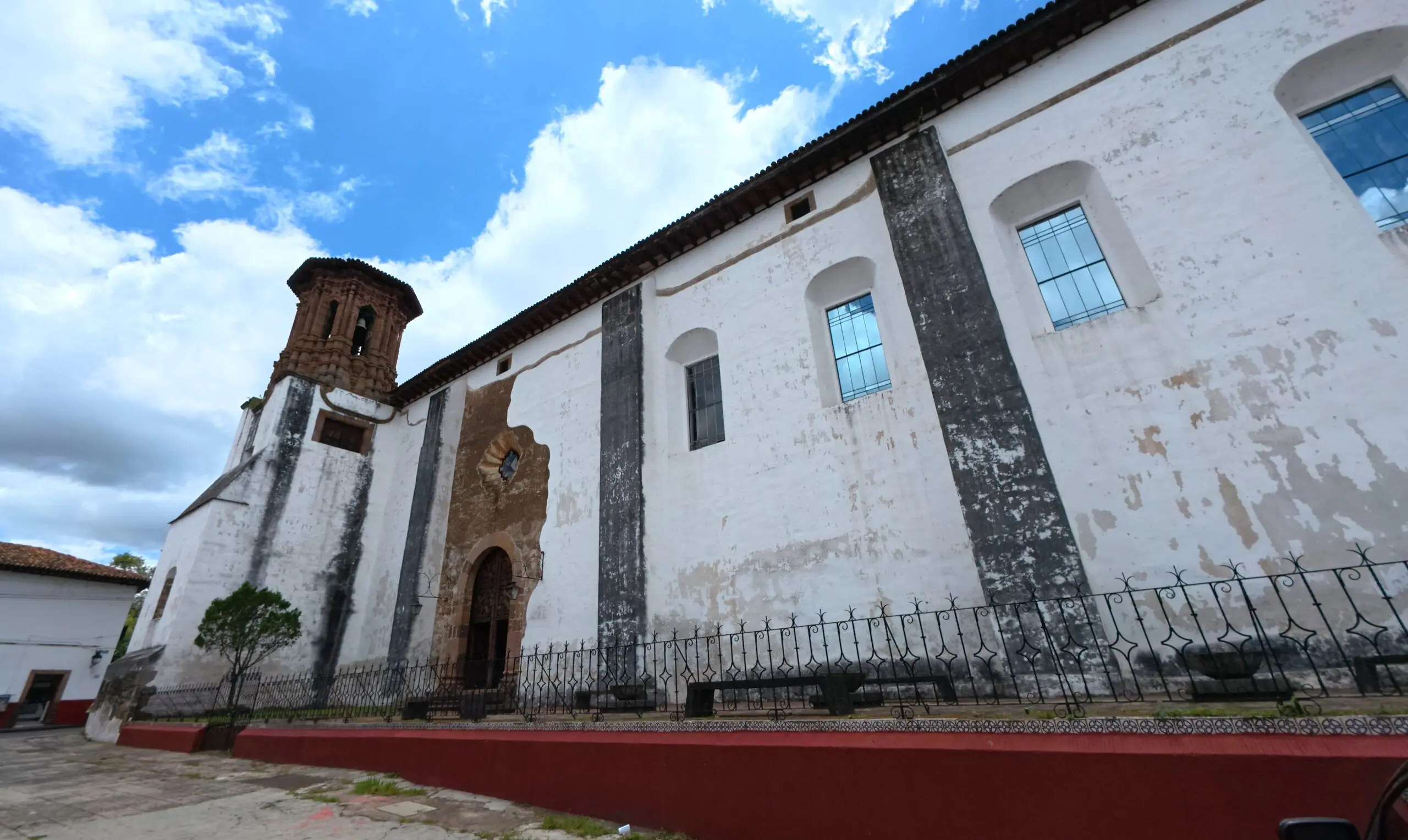
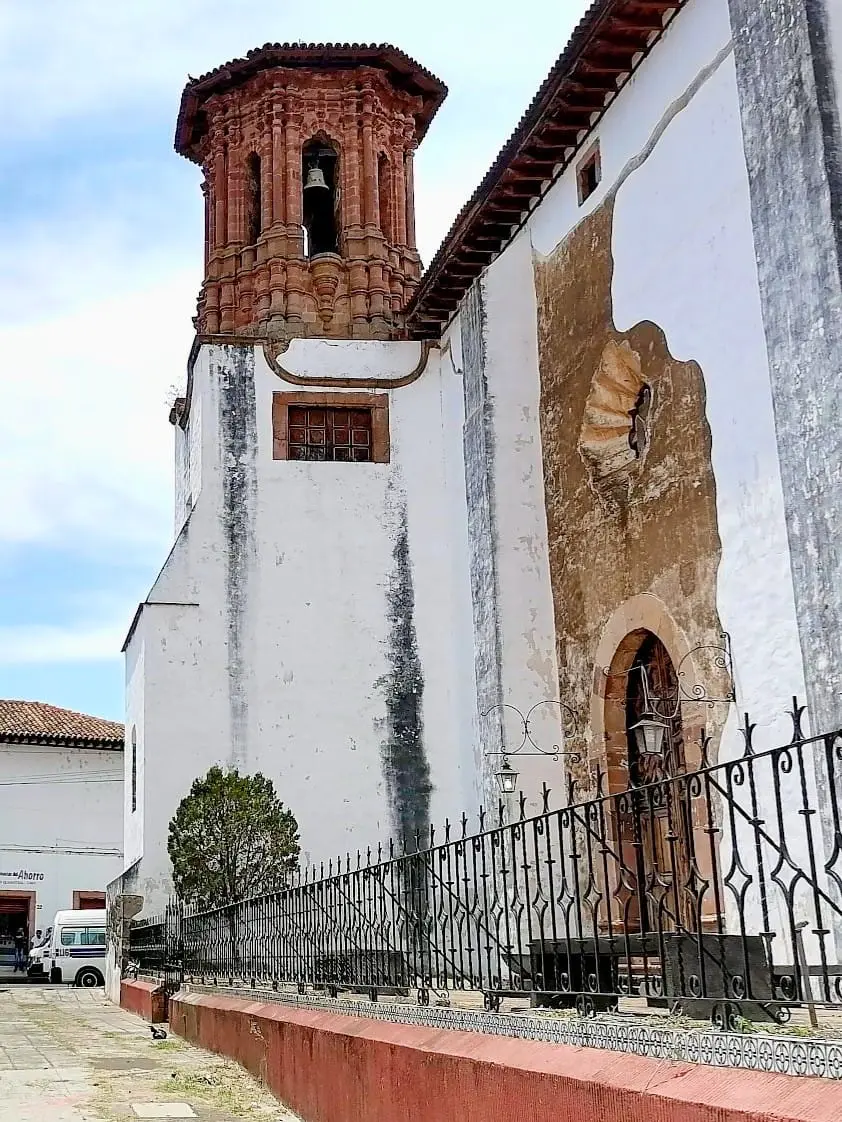
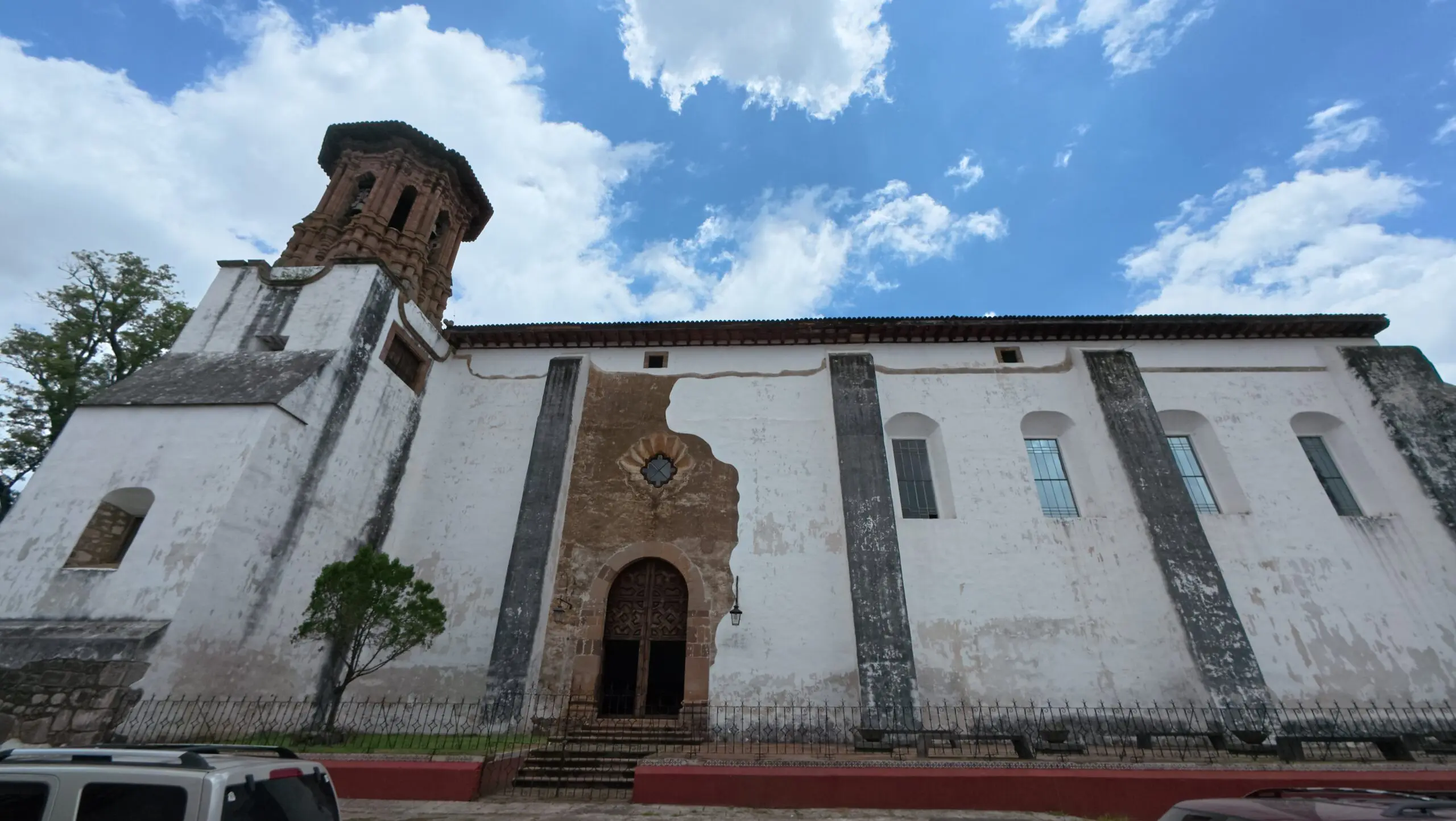
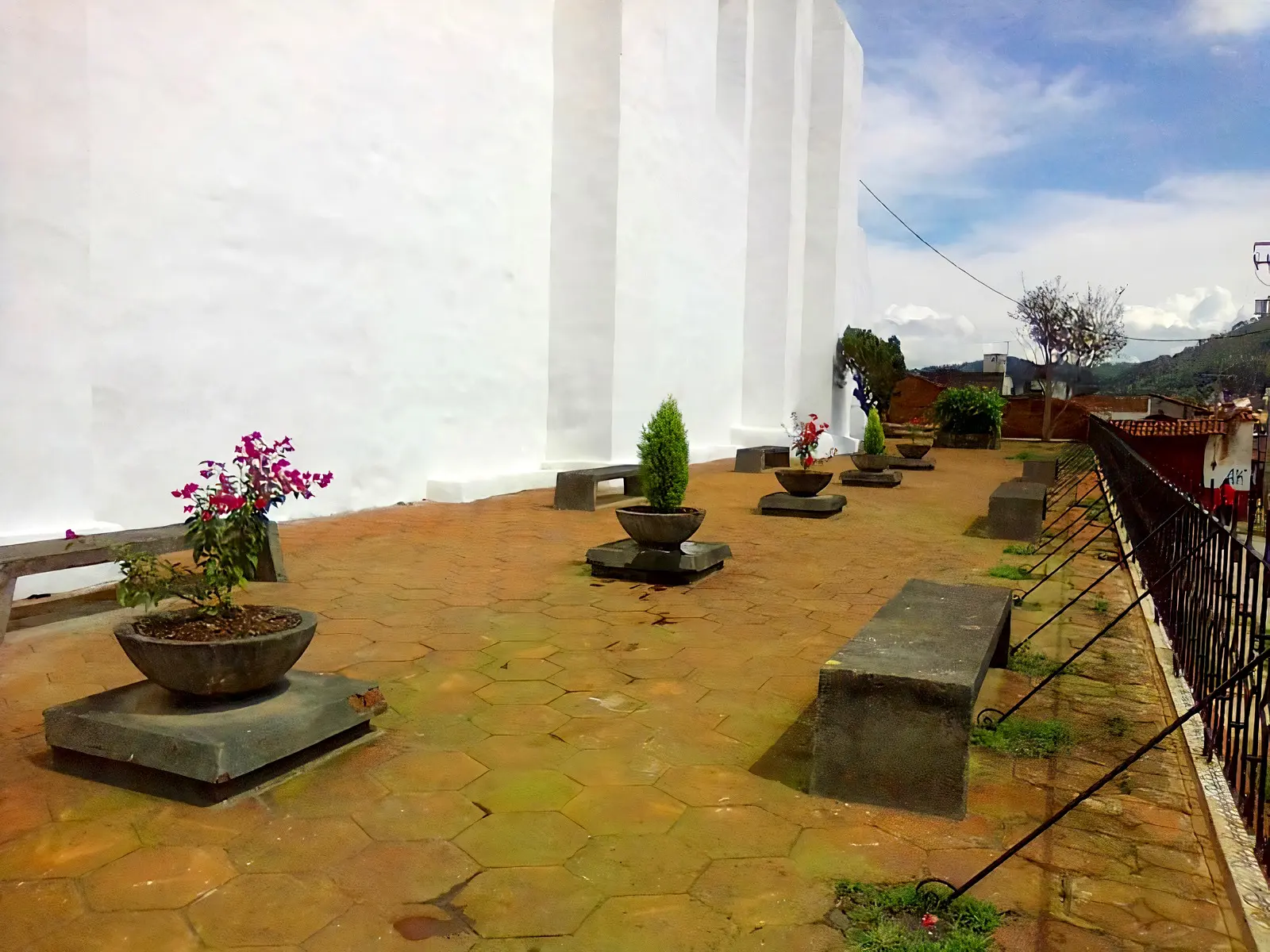
In the heart of Plaza Chica (Plaza Gertrudis Bocanegra) stands one of Michoacán's most significant architectural ensembles. This site is not merely a vestige of the viceroyalty; it is an exceptional convergence of universal art, 16th-century social engineering, and the educational vision of post-revolutionary Mexico.
The Origin: Augustinian Mysticism and the Destiny of Knowledge
The complex was originally founded in 1576 under the authority of the Order of Saint Augustine and the bishopric of Fray Juan Medina Rincón. Unlike other mendicant orders, the Augustinians distinguished themselves by their intellectual rigor and their role as educators of academics, which made this convent the center of a network of up to seven chapels and missions in the lake region.
Saint Catherine of Alexandria: A Historical Premonition
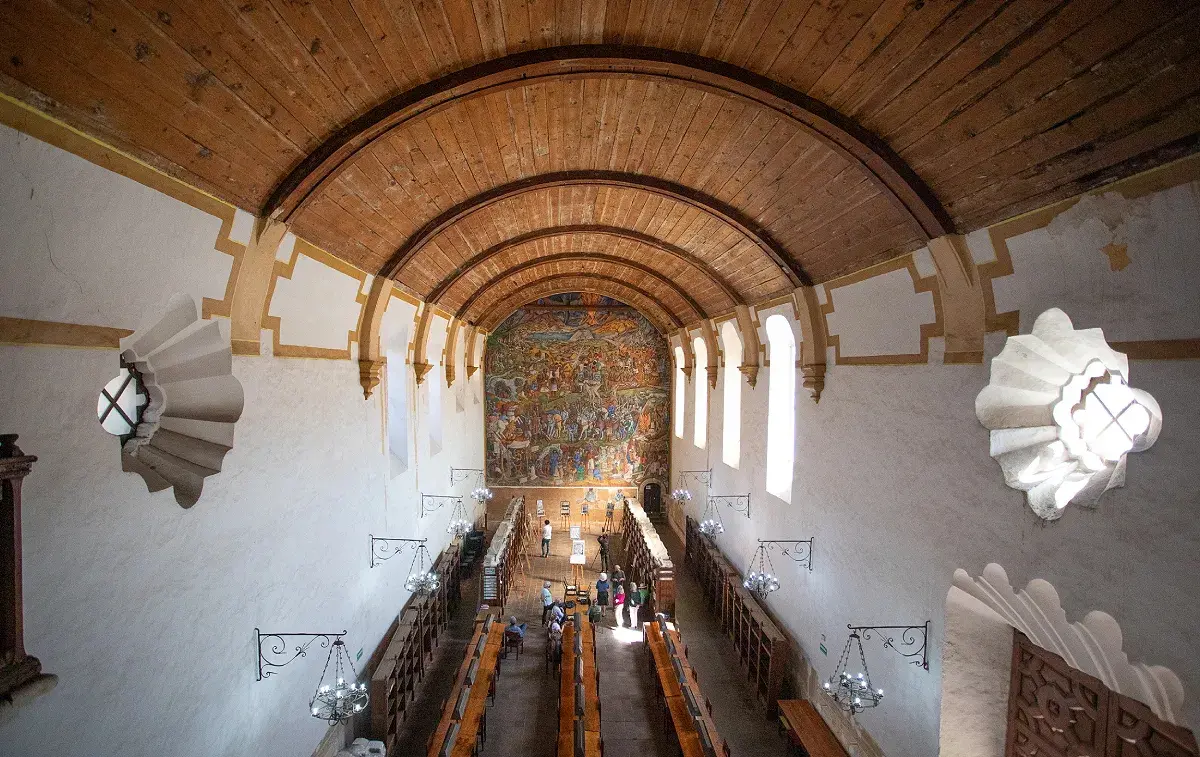
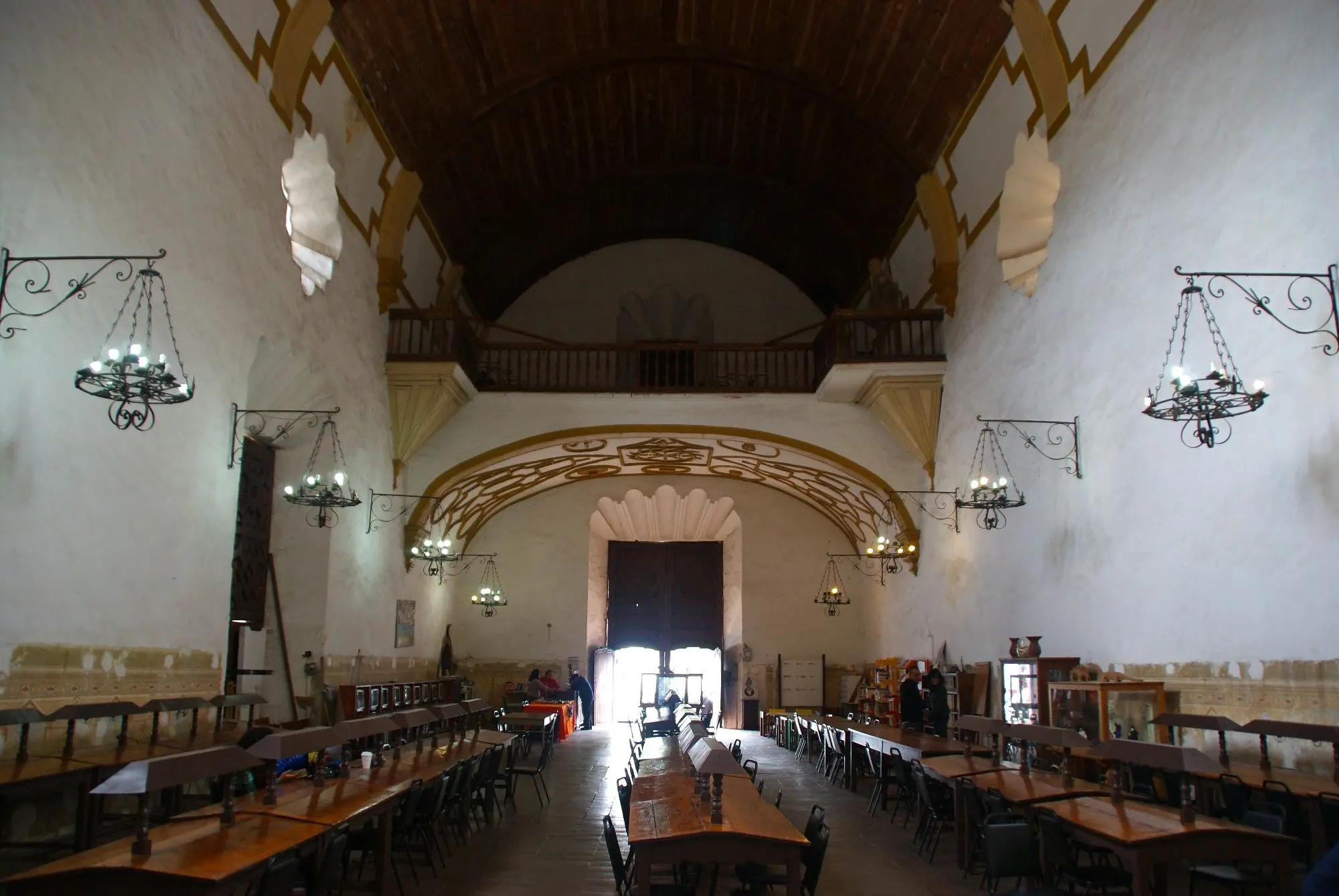
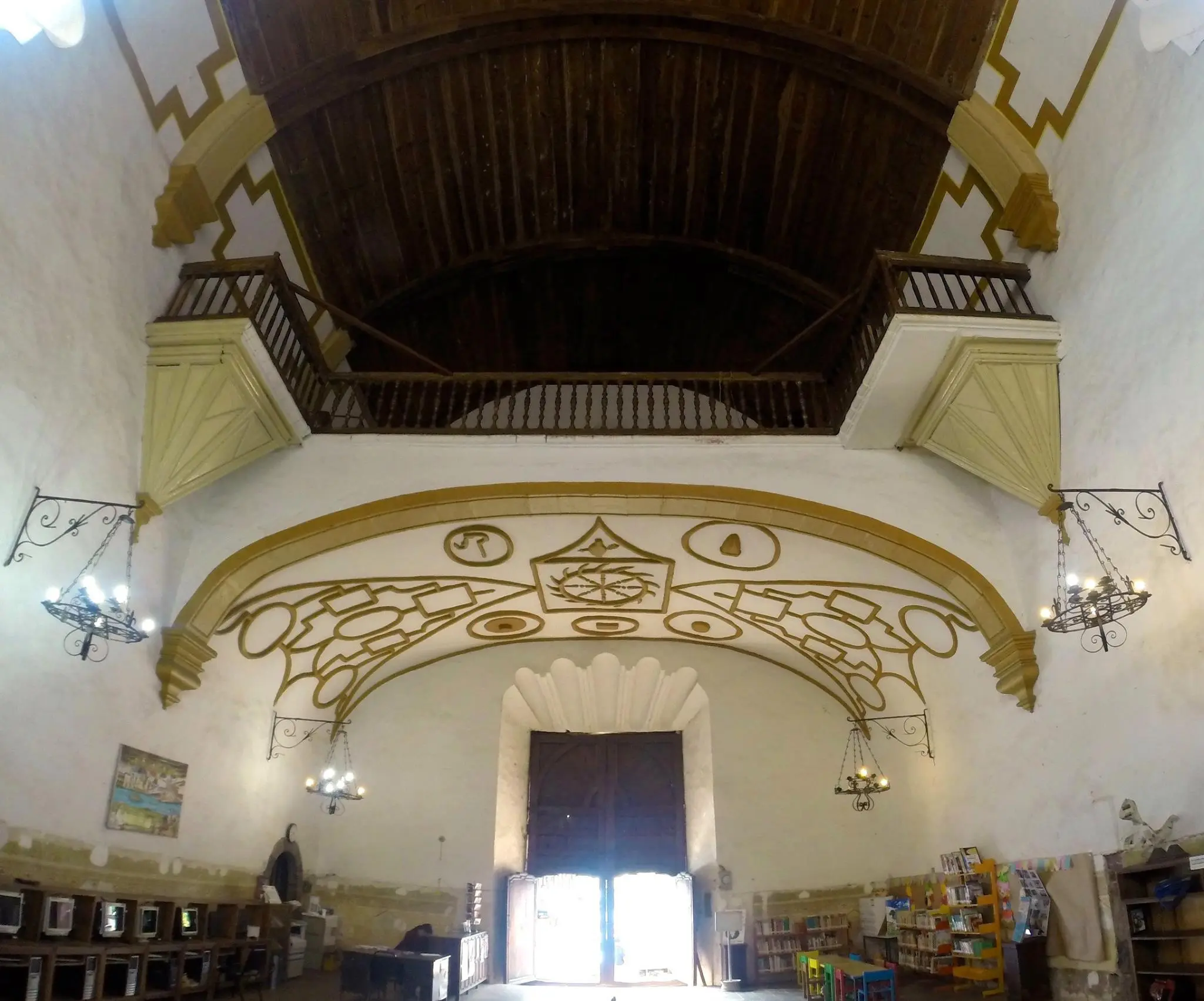
One detail that reveals the historical significance of the place is its original dedication: Saint Catherine of Alexandria, Virgin and Martyr. In iconographic tradition, Saint Catherine is the patron saint of philosophers, students, and libraries. That this former church eventually became the Gertrudis Bocanegra Public Library seems to fulfill an intellectual vocation that the building held from its very foundation.
Its spacious naves and deep apse were acoustically designed so that the speaker's voice would resonate with authority, a feature that centuries later would facilitate its transformation into a sanctuary of the written word.
Transformation
Although the original complex dates back to the 16th century, the building we admire today was constructed by Prior Fray Francisco de Villafuerte in 1630. Following the Reform Laws in the 19th century, the site was expropriated, but its architectural essence remained.
What is most remarkable is its symbiosis with the Emperor Caltzontzin Theatre, the neighboring building. For its construction, the three large arches of the original San Agustín cloister were preserved and masterfully integrated into the facade of the cinema-theater. It is a unique architectural link in the city where the convent's past and civic life merge in a single stroke.
O’Gorman’s Mural: The Great Treasure of Michoacán
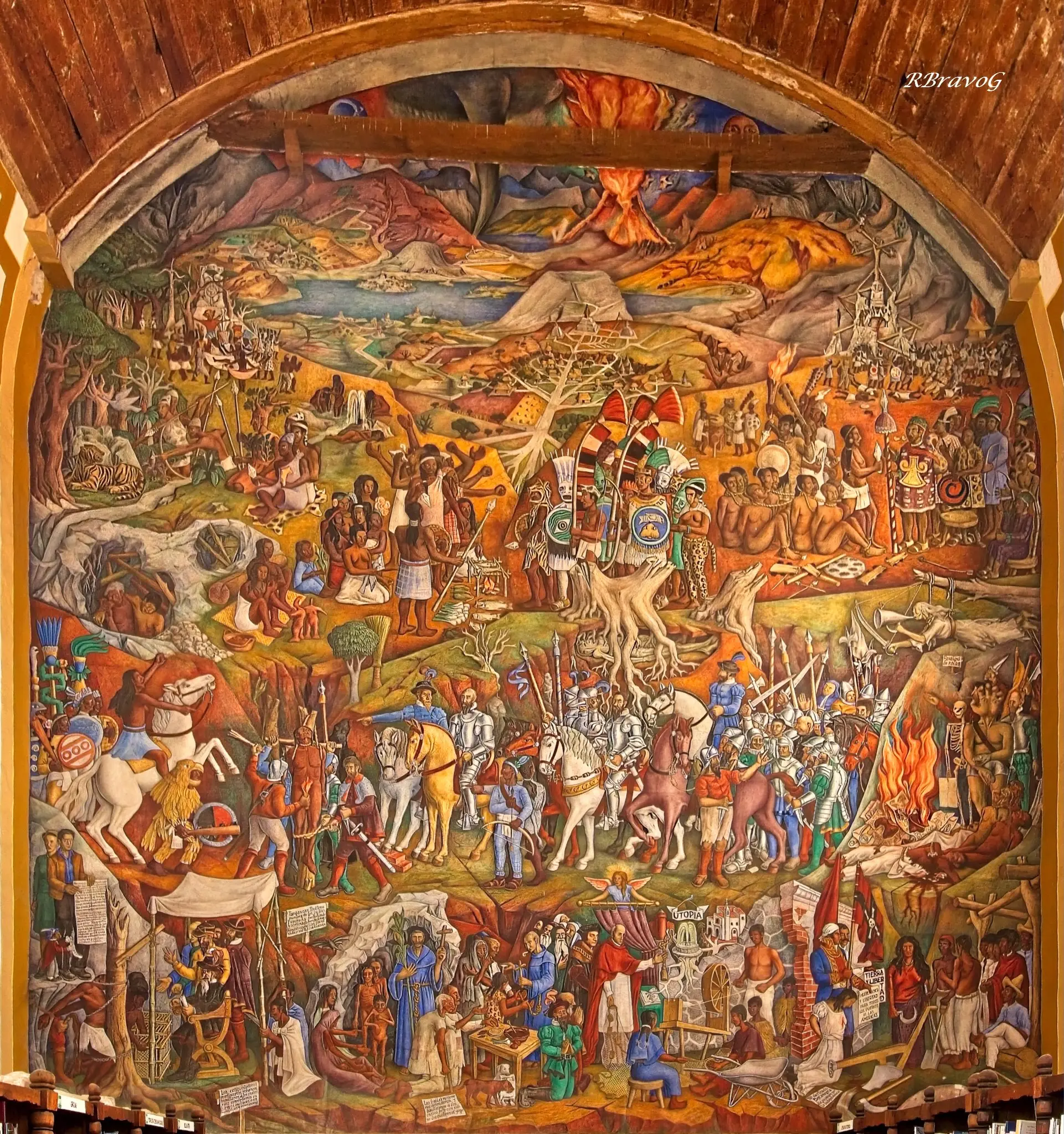
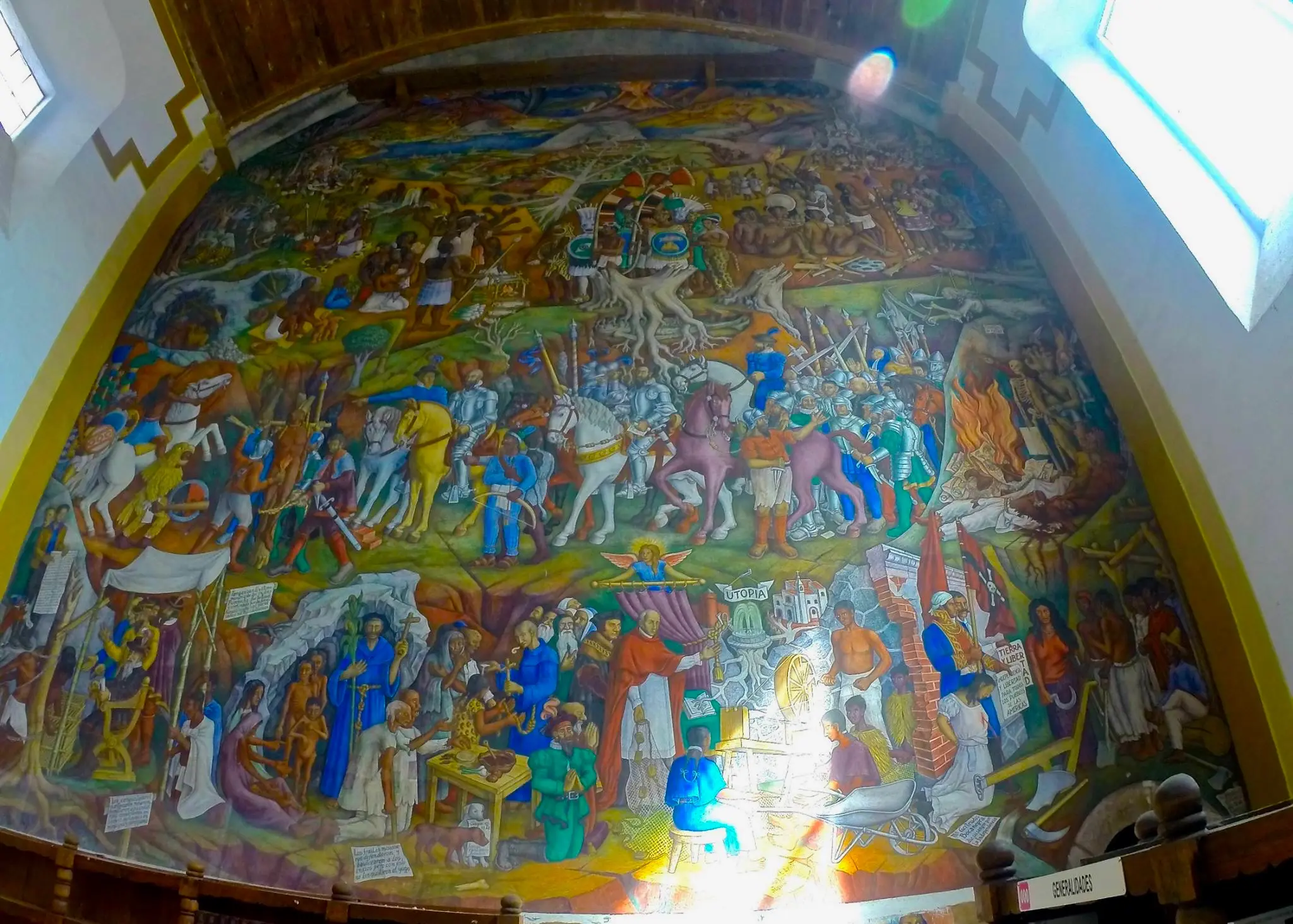
After the temple was converted into a library, the apse wall became the canvas for one of the most important works of Mexican muralism: History of Michoacán, created by Juan O’Gorman between 1941 and 1942.
International Patronage: From Pittsburgh to Pátzcuaro
The location of this mural was not the result of mere chance, but a twist of international fate. O’Gorman had won a contract with the American patron Edgar J. Kaufmann (the same one who financed Frank Lloyd Wright’s famous Fallingwater house) to paint in Pittsburgh.
However, O’Gorman’s sketches—laden with criticism of industrial society—were rejected by the conservative establishment of the steel city. Thanks to the efforts of his wife, the sculptor Helen Fowler Alger, Kaufmann allowed the artist to use the funding to paint wherever he wished. Supported by the vision of Lázaro Cárdenas, O’Gorman chose Pátzcuaro, turning a rejection in the United States into the greatest artistic gift to Michoacán.
The Territorial Compass and the Expert's Detail
O’Gorman, an architect by profession, did not just paint; he interpreted the territory.
- The Invisible Axis: The longitudinal axis of the temple presents a slight deviation that, when extended from the mural, points directly towards the Yácatas de Tzintzuntzan, the ancient capital of the Purépecha Empire.
- The Self-Portrait: In the lower corner, the man holding a scroll is Juan O’Gorman himself, who portrayed himself to sign his eternal commitment to the historical truth of Michoacán.
- Continental Epicenter: In 1940, this venue hosted the First Inter-American Indigenous Congress, consolidating Pátzcuaro as the center of indigenous educational thought throughout Latin America.
Doing Justice to History means recognizing that on this wall, the painting not only narrates history: it seems to emerge from it. We invite you to explore this conversation between centuries in the heart of Pátzcuaro, also discovering the Color Route, which includes works by other great painters.
 EN
EN  ES
ES