

Authorship and collaborations
Original concept and text of Pátzcuaro en Breve: Arturo Pimentel Ramos (1929–2002)
From Pátzcuaro en Breve to Visit Pátzcuaro
Visit Pátzcuaro has a history that predates the web.
Its origins lie in Pátzcuaro en Breve, the printed guide by Arturo Pimentel Ramos (1929–2002), written to share with travelers and readers what he had learned, explored, and gathered over a lifetime in Pátzcuaro.
That guide provided not only an important part of the texts and memory preserved by this project. It also shaped the way the territory was organized and connected: the original architecture of Visit Pátzcuaro and many of its categories grew out of that printed structure.
Arturo Pimentel Ramos had been a licensed tour guide since at least 1961. During the 1960s, he headed the Pátzcuaro office of Mexico’s federal Department of Tourism as a subdelegate, a role equivalent in function to that of today’s regional tourism delegate, and served as secretary of the Patronato contra el Lirio Acuático.
He had gained experience in the hotel industry in the United States and, after returning to Pátzcuaro with his wife, Obdulia Martínez Escobar, founded Motel Pátzcuaro, now Villa Pátzcuaro. He later served as president of the Pátzcuaro Hotel and Motel Association and took an active part in the development of tourism in the city.
That experience also helps explain the perspective behind the original guide: knowing Pátzcuaro was not simply a matter of pointing out places, but of explaining the territory to those who arrived, helping them explore it, and preserving what deserved to be remembered.
Over the years, Pátzcuaro en Breve began its transition to the digital environment. The project first operated as patzcuaroenbreve.com and later, when visitpatzcuaro.com became available, evolved into Visit Pátzcuaro. In that process, the original material was expanded and corrected; research, new sources, places, routes, and tools for travelers were added, while seeking to preserve the provenance of what had been inherited and to distinguish between documented history, memory, oral tradition, and information that changes over time.
Visit Pátzcuaro is therefore both a guide in continuity and a work of stewardship: it preserves an earlier perspective, revises it when the evidence requires, and continues exploring the territory in order to understand it better.
It is also a living tribute to Arturo Pimentel Ramos and to everyone who has helped build, review, and preserve this memory.
Visual identity

The Visit Pátzcuaro symbol begins with a simple idea: a territory cannot be understood as a collection of isolated places, but through the relationships that connect them.
Its forms speak of territory, encounter, and life. They do not literally represent a map, a lake, a building, or a monument; they express a way of seeing the region, in which different parts acquire meaning through their relationships with one another.
Acknowledgments
We gratefully acknowledge the cooperation and support of Enrique Soto González (†), chronicler of Pátzcuaro, and Rafaela Luft Dávalos, a specialist in conservation and restoration, who helped review and correct some of the historical information included in this guide.
We also thank Anne G. Harpe of Micro•Pix Graphics, in Austin, Texas, for her invaluable help in reviewing and correcting the English translation.
Discover the projects alongside Visit Pátzcuaro →
Sources and bibliography
- Pátzcuaro en Breve — Arturo Pimentel Ramos.
- Pátzcuaro — Manuel Toussaint. Facsimile edition, Government of the State of Michoacán, 1992.
- Catálogo de Monumentos y Sitios de la Región Lacustre, Volume I — Esperanza Ramírez Romero. Government of the State of Michoacán / Universidad Michoacana de San Nicolás de Hidalgo, 1986.
- Enciclopedia Salvat — Salvat Editores, Spain.
- La Voz de Michoacán.
- El Sol de Morelia.
- Cantera Hoy.
- Michoacán Histórico.
- Instituto Nacional de Antropología e Historia (INAH).
This page is dedicated to the presence of Obdulia Martínez Escobar, wife and mother whose encouragement helped move the project forward,
and to the memory of:
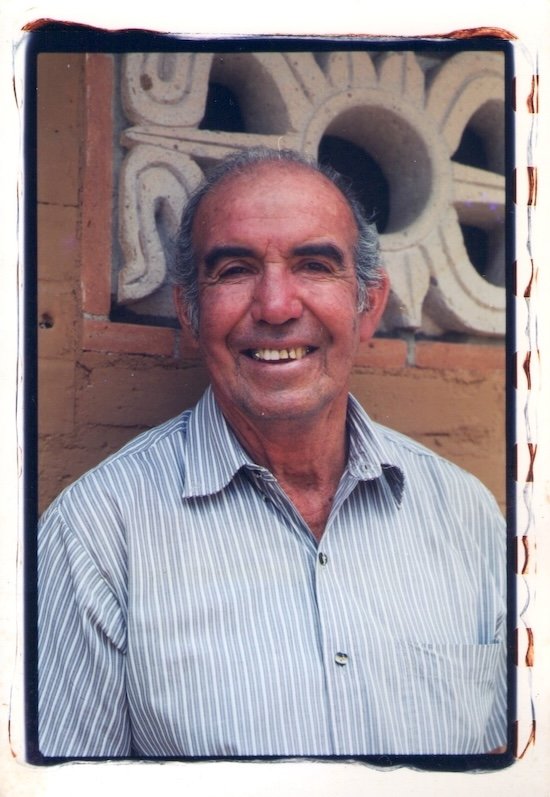 Arturo Pimentel Ramos (1929 – 2002) |  Hernán Pimentel Martínez (1972 – 2023) |
 EN
 ES