
 MAP
MAP SEARCH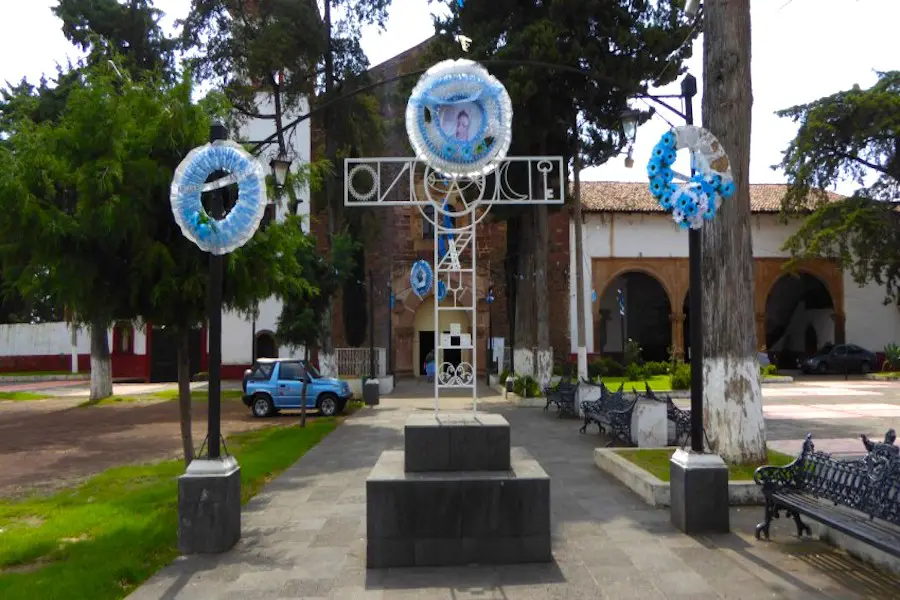
Adress
Benito Juárez esq con Av. Morelos, 61630, Erongarícuaro, Michoacán, México.
GPS
19.586922296269, -101.71894669533
Phone
Monday
10:00 – 14:00
Tuesday
10:00 – 14:00
Wednesday
10:00 – 14:00
Thursday
10:00 – 14:00
Friday
10:00 – 14:00
Saturday
10:00 – 14:00
Sunday
10:00 – 14:00
KNOW MORE PLACES
VISITA OTRAS LOCALIDADES
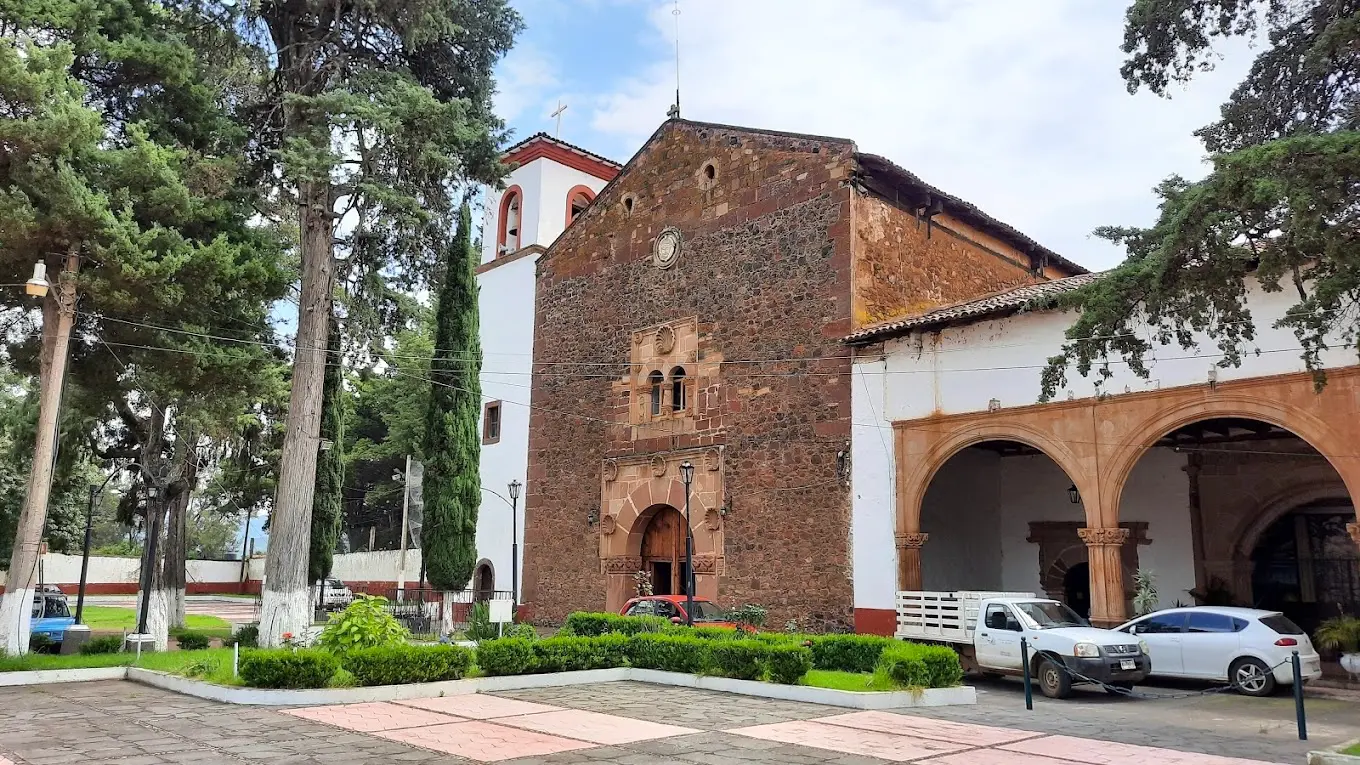
⛪ This place isn't just an old building; it's a time capsule that tells us how it all began in the region. To give you an idea of its importance: Franciscan history carries a lot of weight here.
📜 The First Steps (1533 – 1590)
Imagine that it was in 1533 when the first "heavyweights" of the Order of Friars Minor (OFM) arrived: Friar Martín de Valencia, Friar Antonio Ortiz, Friar Diego de Almonte, and Friar Ángel de Salcedo. At first, Erongarícuaro was considered only a "vista" (a kind of branch) of the main convent in Tzintzuntzan, but the importance of the place grew rapidly.
Although there were previous attempts, the convent complex as we see it today was built between 1563 and 1590. It became such an important site that by the end of the 16th century the province's novitiate was already operating here.
But nothing lasts forever: in 1771, after 230 years of Franciscan history, secularization arrived. The friars left the site and the diocesan clergy took control. Today, what was once the convent is part of the Seminary of the Diocese of Morelia.
🏛️ Architecture that Impresses
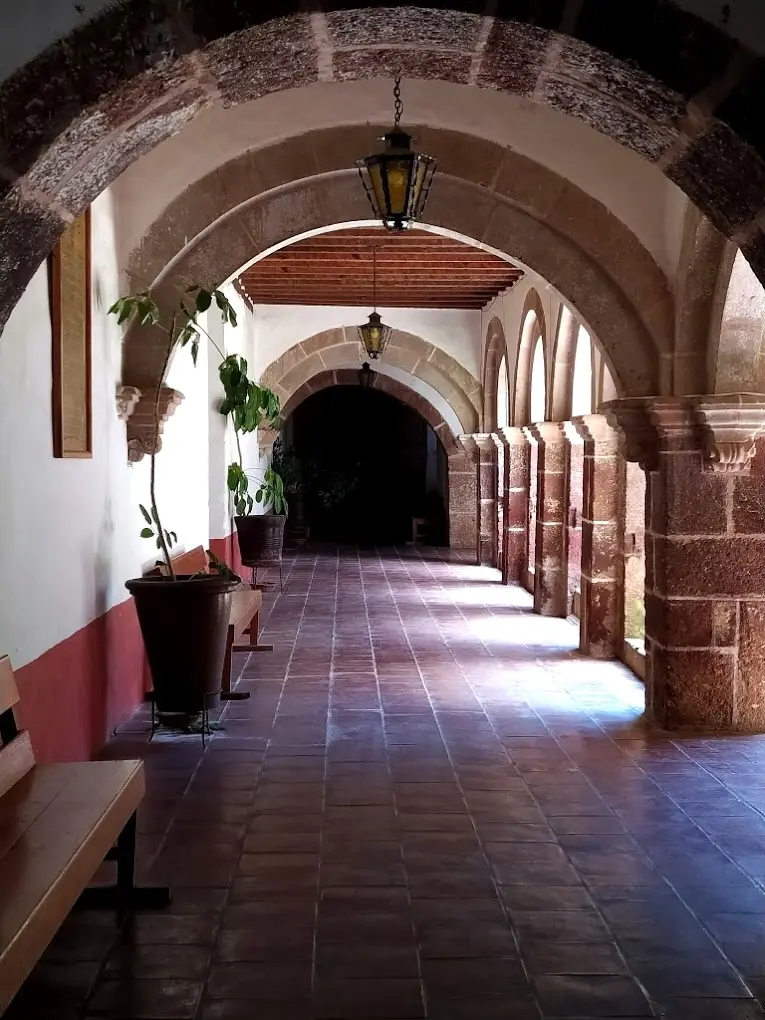
When you enter, pay close attention to the details, because here every stone has its reason:
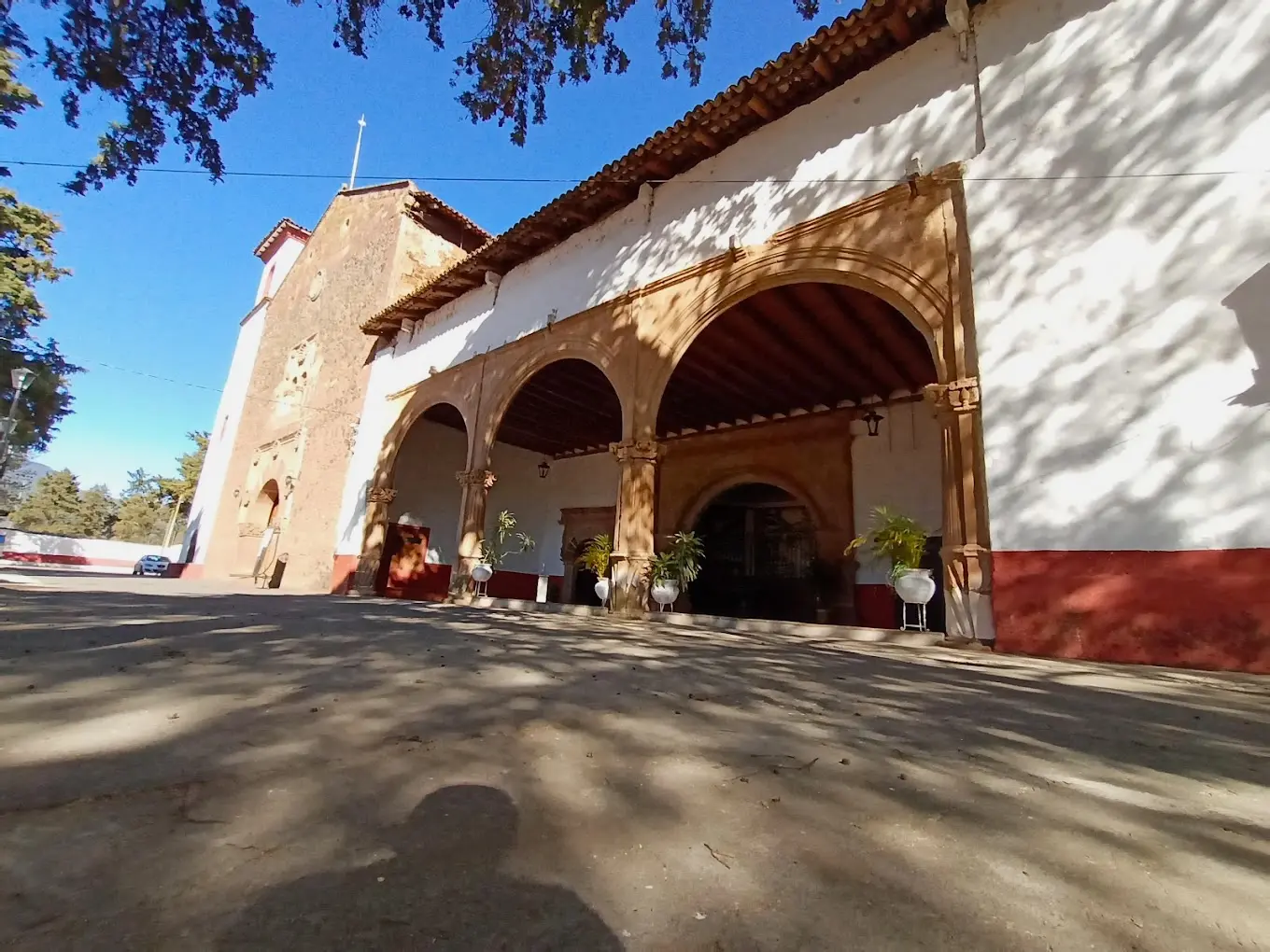
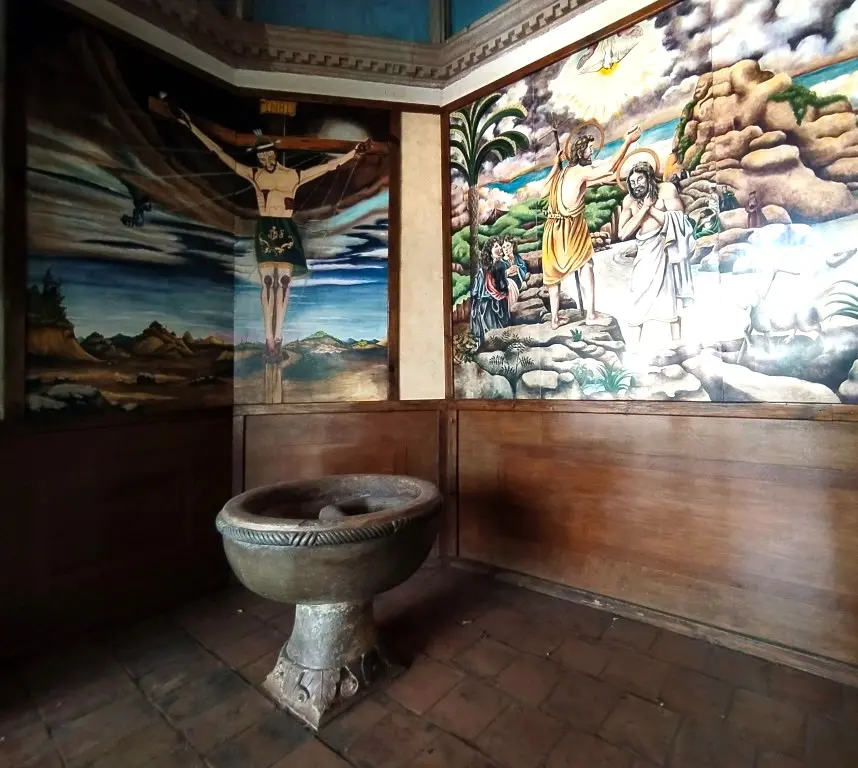
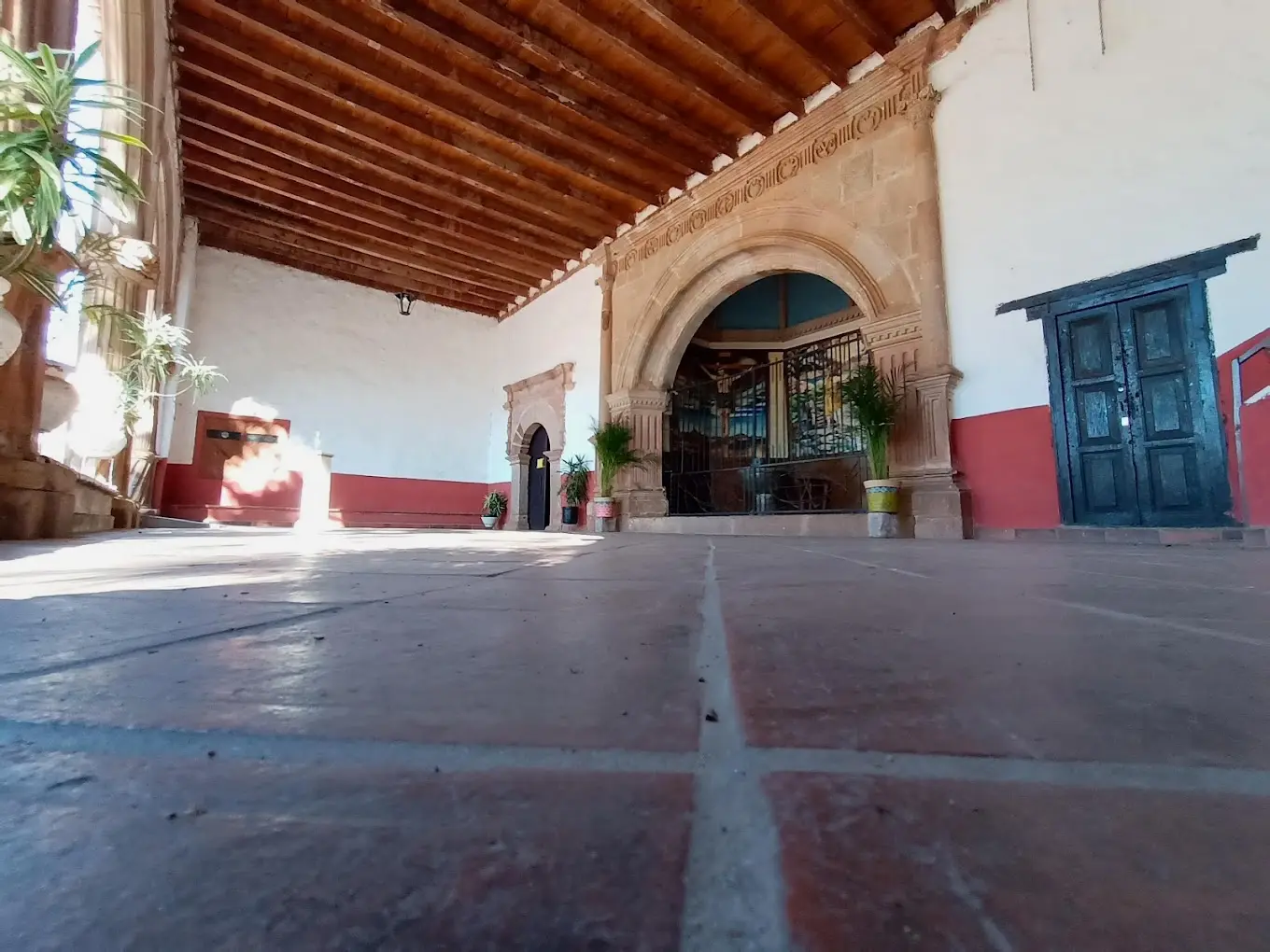
The Pilgrims' Portal: It's a Renaissance gem. Take a look at the columns of the three arches; they're called tritostyle (a colloquial term for columns that are most prominent in the first third of their shaft). Inside the portal is the Open Chapel with a 16th-century baptismal font, very similar to those you'll see in Tzintzuntzan or Cuitzeo.
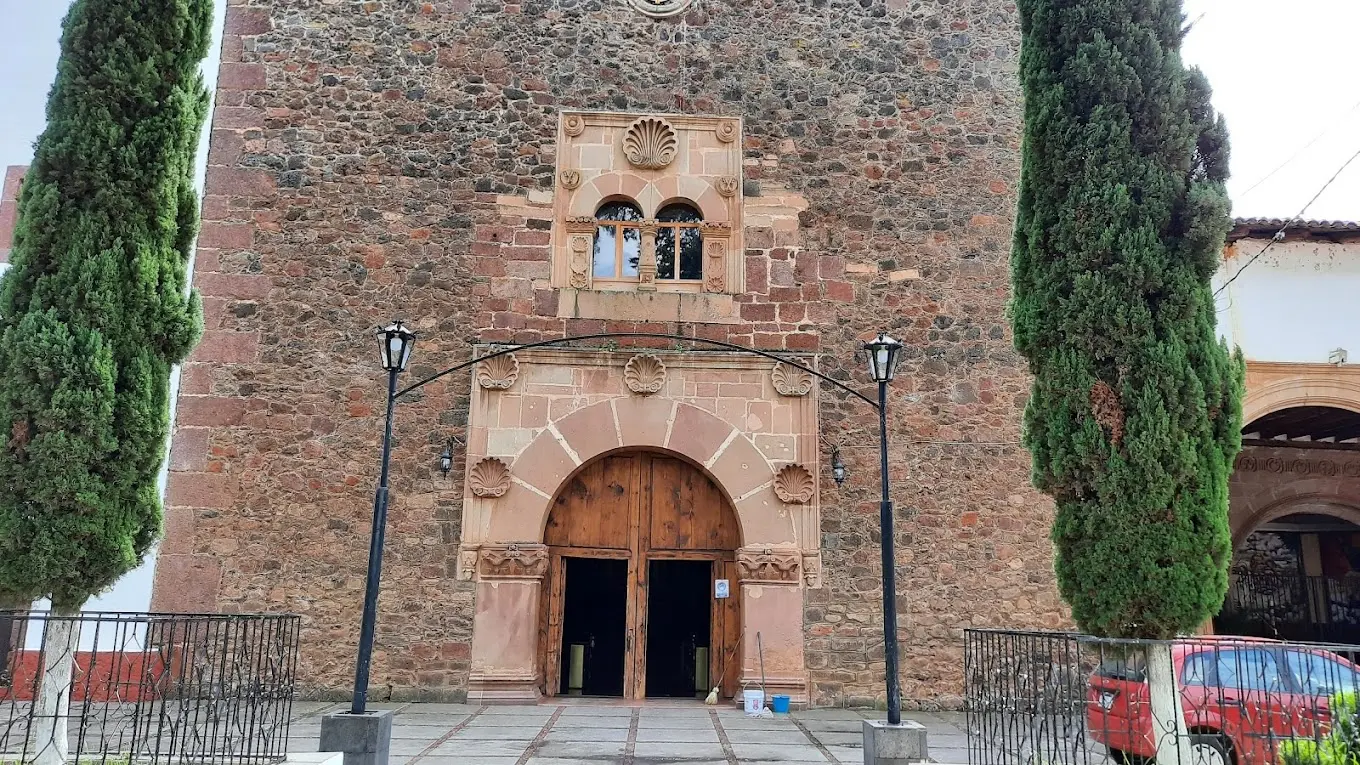
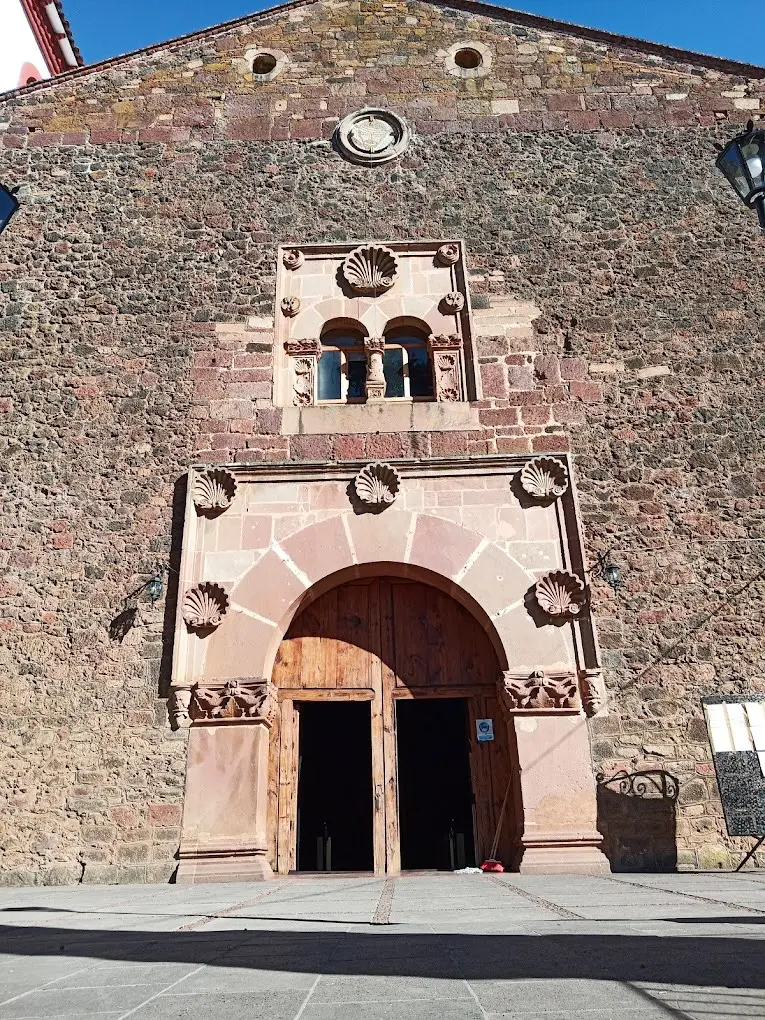
The Plateresque Façade: It dates from the last quarter of the 16th century. Simple but elegant, with the classic Franciscan ornament of the five shells and a biforated window (double arch) above.
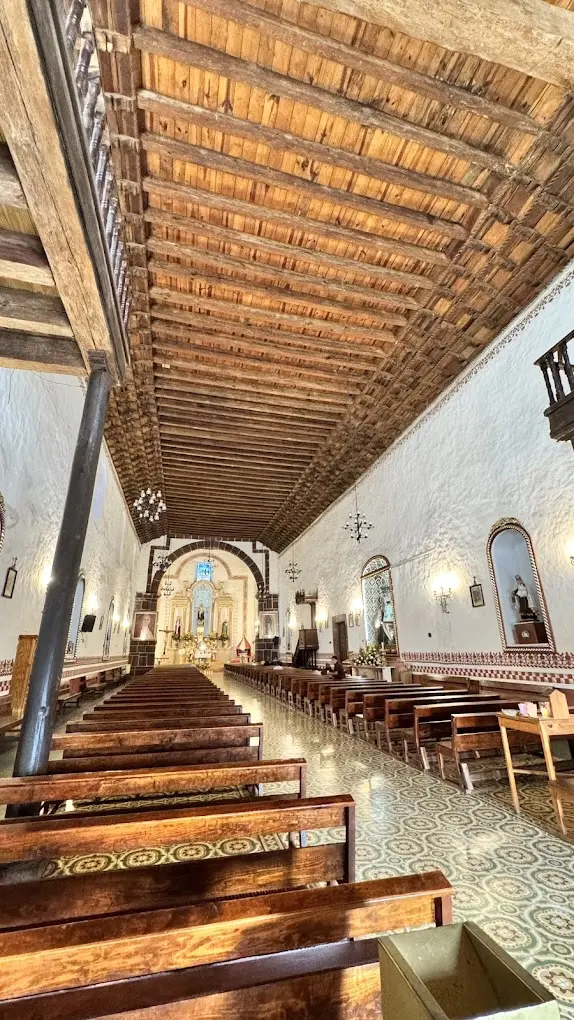
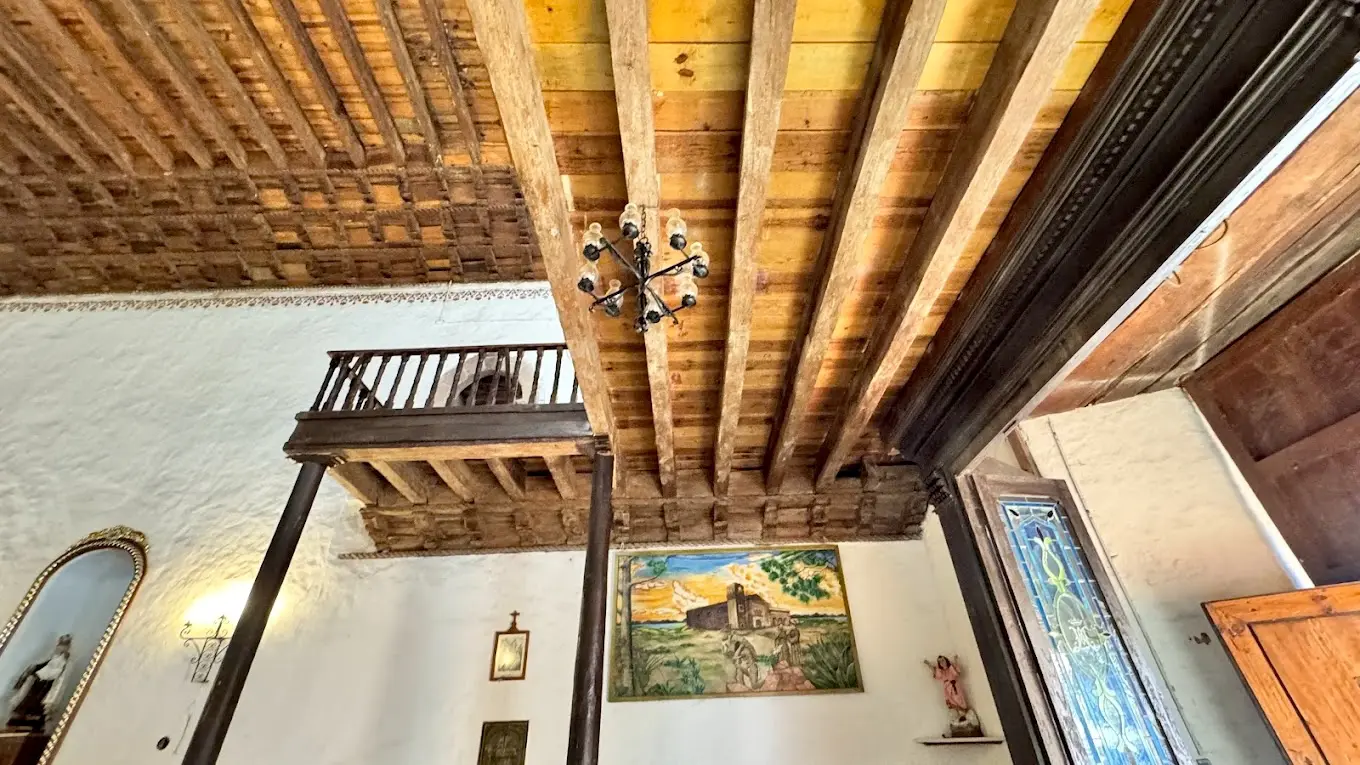
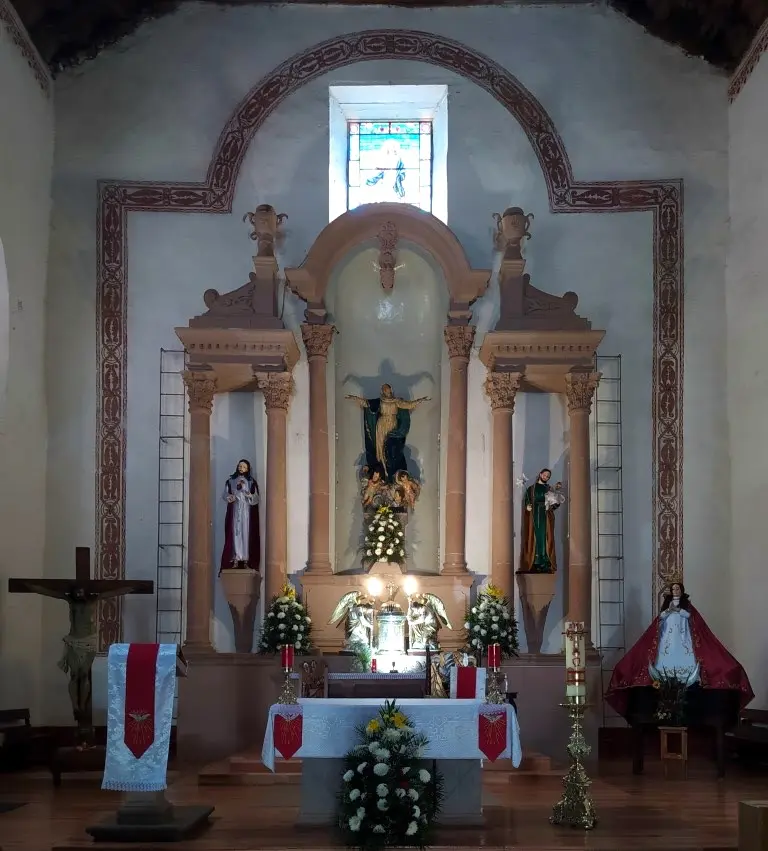
The Interior: Es de una sola nave con vigas de madera y zapatas. El altar mayor ya es de estilo neoclásico y, si pones atención a los muros, verás vestigios de murales antiguos que luchan por sobrevivir al tiempo.
🎨 The Surrealist Touch in the Atrium
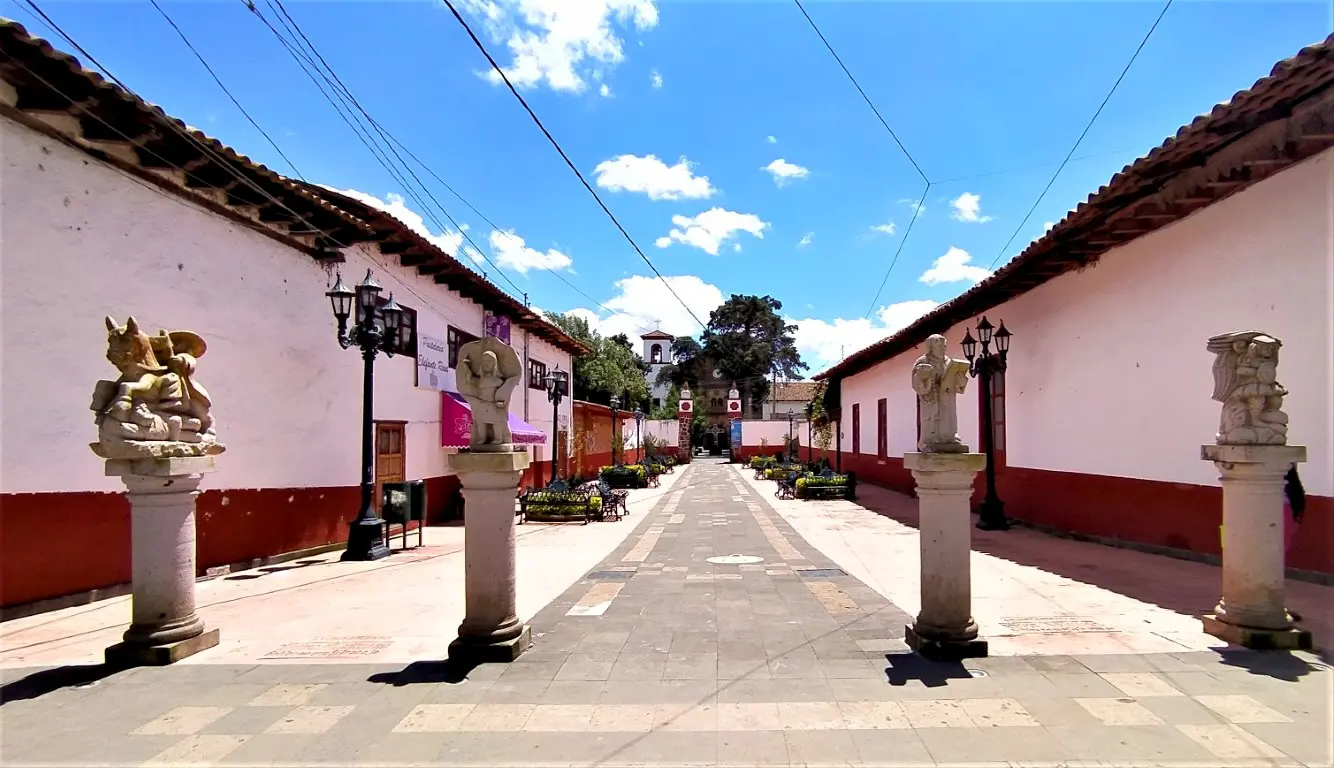
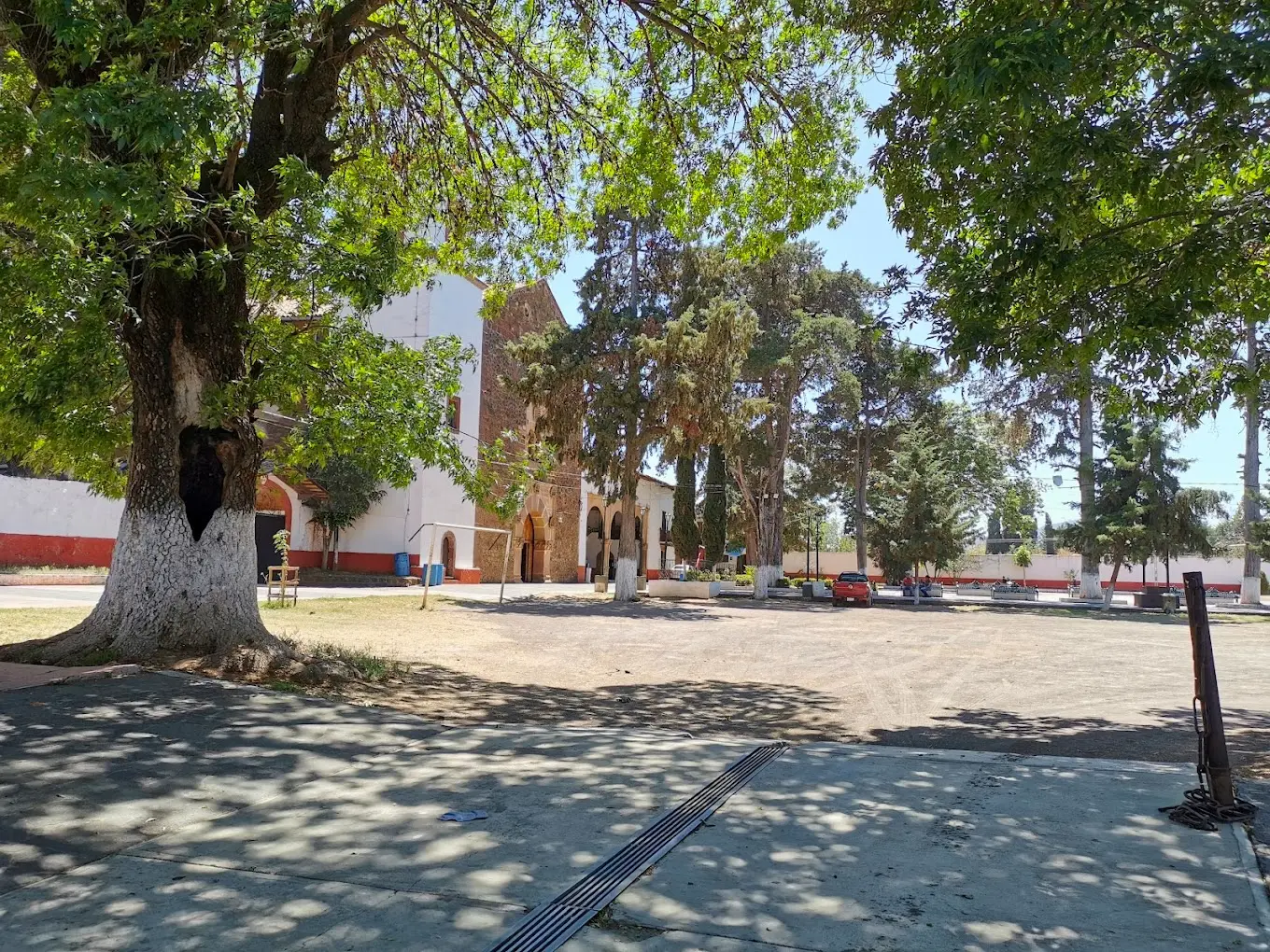
The atrium is enormous, retains its original layout, and is now a bustling plaza. But here's a fun fact to brag about: the iron Atrium Cross you see today (installed in 1942 to replace the old stone one) has a design attributed to none other than André Breton, the father of Surrealism. A truly wild contrast between viceregal art and the 20th-century avant-garde.
Pro Tip: Take a stroll around the convent courtyard (cloister) if it's open; at the back, from the garden area, you have a direct view of the lake that immediately connects you with nature.
 EN
EN  ES
ES