
 MAP
MAP SEARCH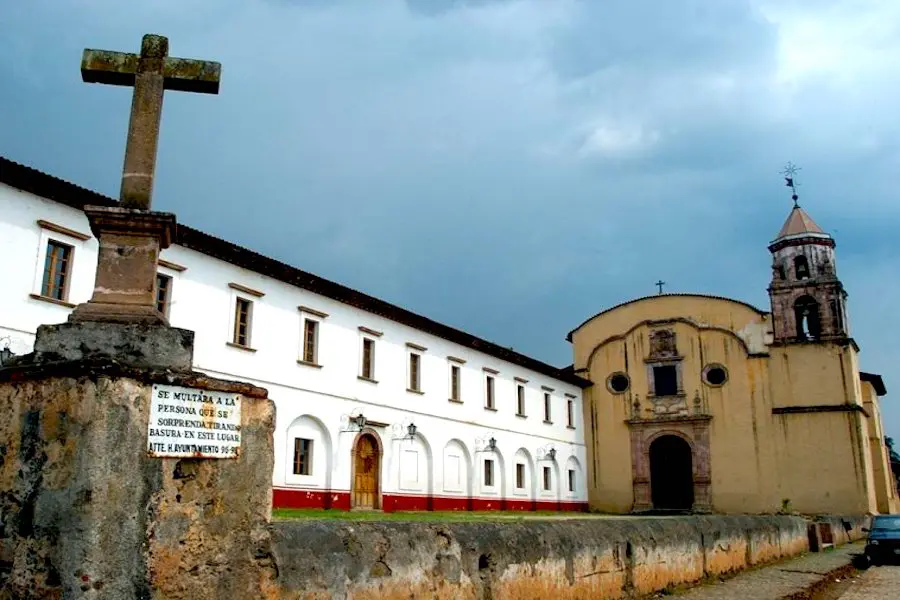
Adress
Enseñanza s/n, Colimillas, 61600 Pátzcuaro, Michoacan, México.
GPS
19.512813619617, -101.60747408867
Phone
KNOW MORE PLACES
VISITA OTRAS LOCALIDADES
The Temple of the Society of Jesus: Fortress of Faith and Art
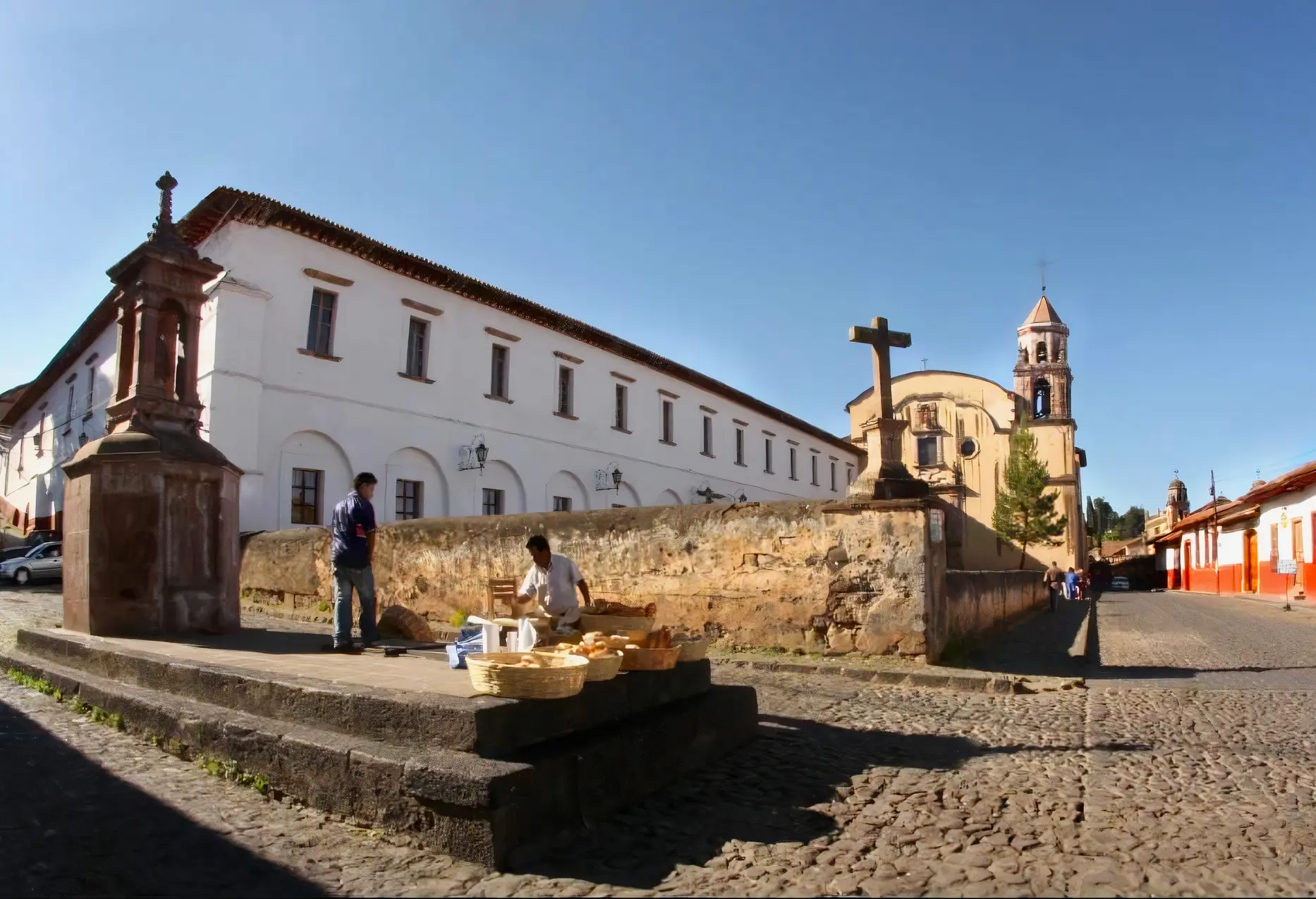
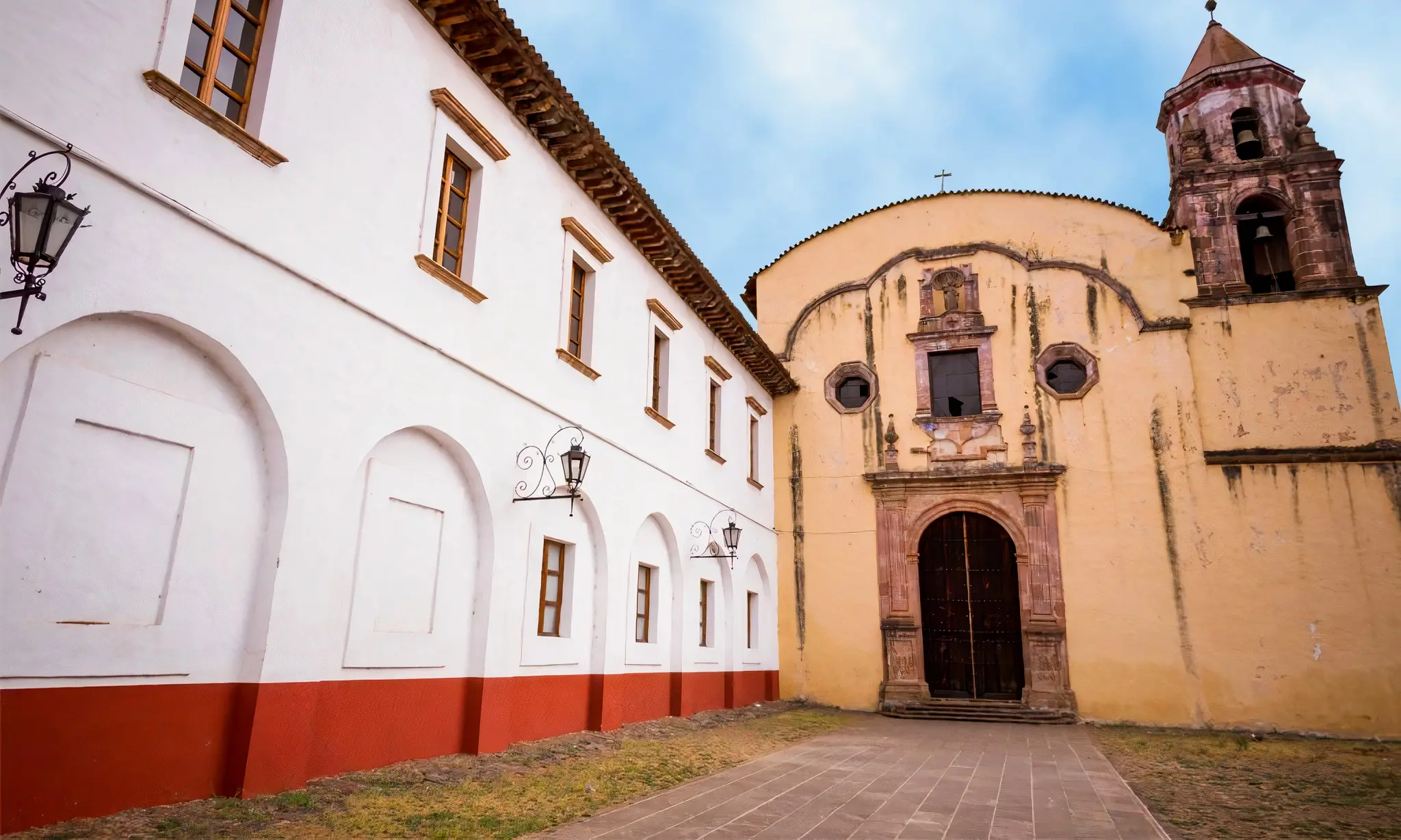
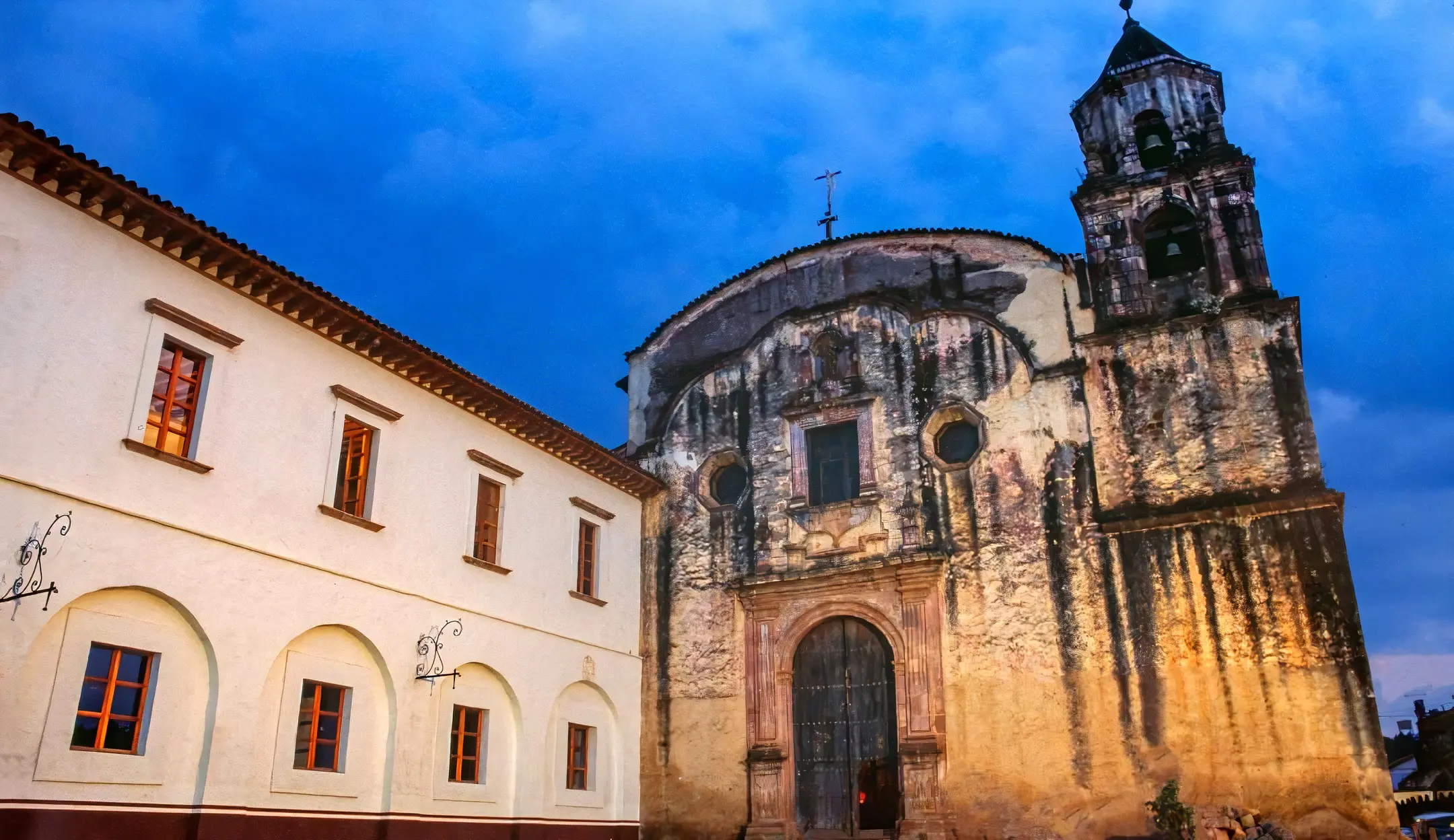
The Guardian of the College Adjacent to the Cultural Center stands the Temple of the Society of Jesus, built under the patronage of Saint Ignatius of Loyola. Although they now function as separate entities, historically this temple was the spiritual heart of the Jesuit educational complex established in Pátzcuaro around 1574.
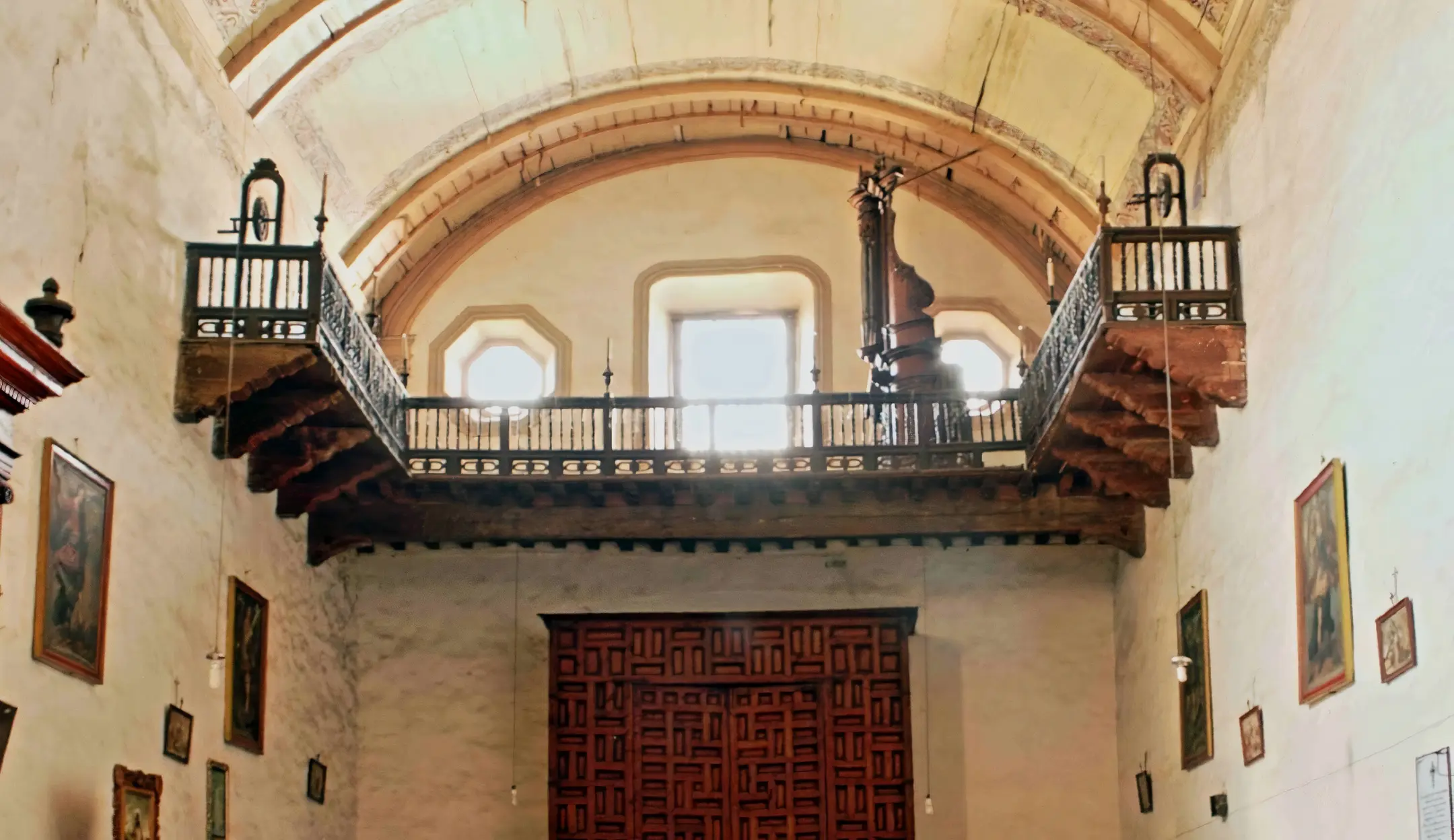
Its construction is a magnificent example of 16th-century religious architecture. Unlike the ornate Baroque style that would appear centuries later, this church features a Latin plan (cross-shaped) with a single barrel vault. Its style is austere, almost defensive, reminiscent of Renaissance fortresses, but adapted to the Michoacán context with the use of adobe, wood from local forests, and the distinctive clay tile roof.
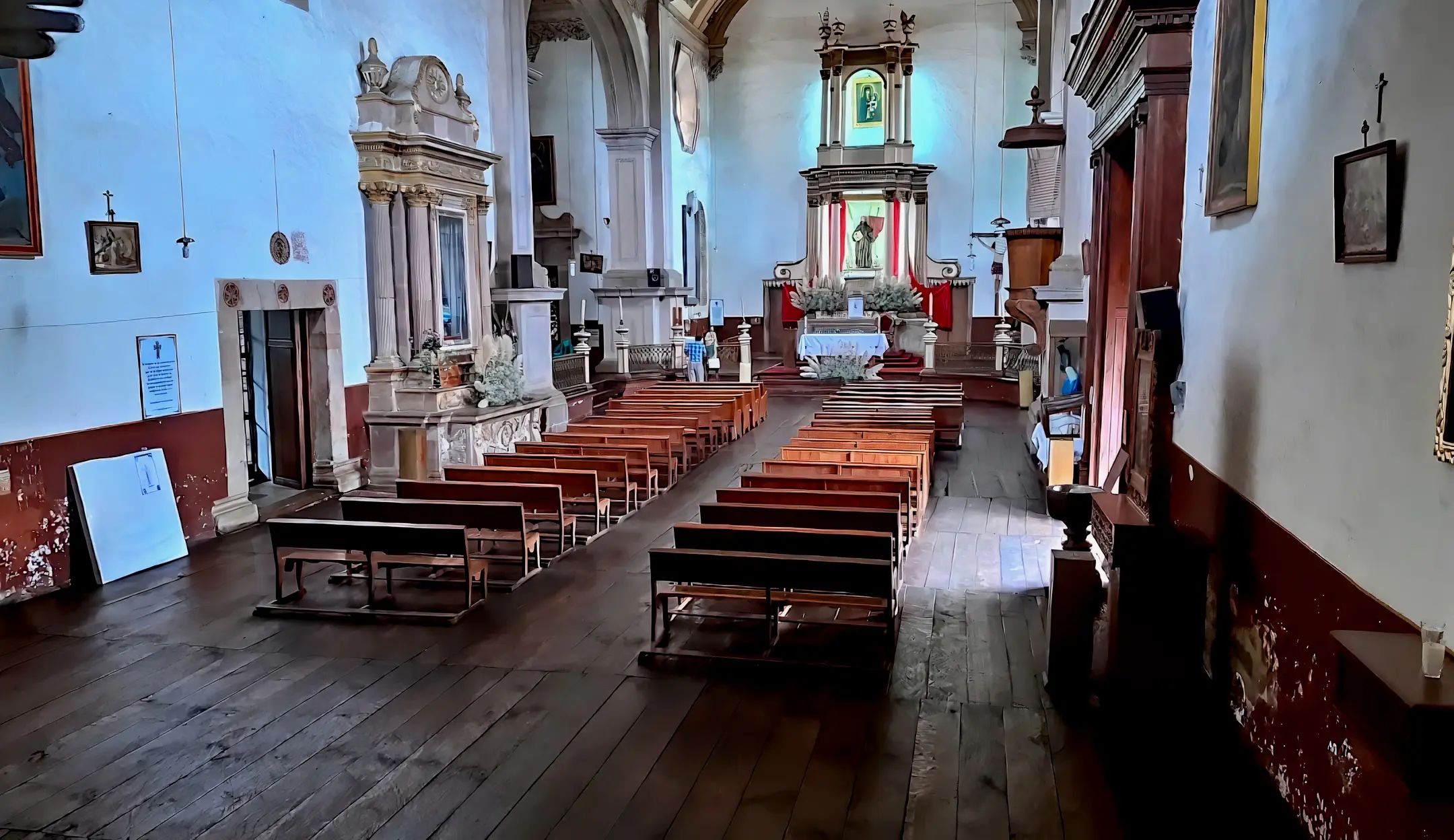
The Mystery of the Elevated Floor Upon entering, the keen observer will notice something odd: the proportions of the side doors and the bases of the columns appear sunken. This is neither an optical illusion nor a mistake by the original builders. During the 19th century, due to an aesthetic and practical decision of the time, the floor level was raised considerably. This resulted in the original base of the structure being buried, creating that visual effect of "displacement" or heaviness in the tower and the entrances—an architectural scar that tells the story of the building's layers of history.
The Legend: The Clock That Was Banished
If you look up at the tower, you'll see the clock that sets the rhythm of the city. However, few know that this clockwork wasn't born here; it arrived serving a sentence of exile.
According to the late Chronicler of the City, Enrique Soto González (+) in his work “Legends of Pátzcuaro”, this story begins in the Spain of Philip II.
The Miracle of the Eleven Chimes The King had ordered the imprisonment of the Duke of Ávila, accused of high treason and condemned to death. The execution was to take place in the public square precisely when the royal clock struck the last of the twelve chimes of the night. Everything was ready, but the inexplicable occurred: the clock struck eleven times and then stopped. The execution was postponed, but the same thing happened the following night. The clock refused to strike twelve. Intrigued, King Philip II himself attended the third night. Seeing that the mechanism functioned perfectly but fell silent after the eleventh chime, the monarch interpreted it as a sign from above. He decided to pardon the Duke, commuting his death sentence to exile in New Spain. But he decreed the same fate for the object: the clock, too, was banished to the colonies to be delivered to a distant city: Pátzcuaro.
The Promise and the Ghost The Duke of Ávila, already in Mexico, promised that he would travel to Pátzcuaro to have the clock that saved his life covered in gold and silver. However, on the way, he was robbed and chained. While trying to escape, he fell into a fast-flowing river and drowned. It is said that, at that precise moment, the clock's twelfth chime, which it owed him, could be heard in the distance.
The elders say that, on certain nights, at the stroke of midnight, the figure of a chained man appears walking through the streets of Pátzcuaro, then plunging into the ancient underground river, seeking to fulfill his eternal promise.
This and many other fascinating stories can be found in detail in the book "Legends of Pátzcuaro".
A Treasure of Sacred Art: The Salus Populi Romani The true treasure of this church lies not in its walls, but in its artistic collection. The altar safeguards a priceless piece: an image of the Virgin of the Snows or Saint Mary Major.
The story of this painting is fascinating. It originates from the famous Roman devotion, Salus Populi Romani. Thanks to the influence of Saint Francis Borgia (then Superior General of the Society of Jesus in Rome), the creation of a very few faithful reproductions was authorized to be sent to the missions in the Americas. It is said that only four reached the continent.
One in Mexico City (Church of the Profesa).
Two more whose exact whereabouts in Puebla and Oaxaca have become blurred over time.
The one in Pátzcuaro: Considered by experts as the best preserved of all, allowing one to admire the technique and devotion of the 16th century almost intact.
The Passion Archangels In addition to the Virgin, the church's art gallery houses a collection of canvases attributed to the renowned New Spanish painter Juan Miranda. These are the “Passion Archangels,” so named because, instead of swords or scales, these angels hold the instruments of Christ's Passion (the cross, the nails, the crown of thorns), an iconographic theme of great emotional power.

 EN
EN  ES
ES