
 MAP
MAP SEARCH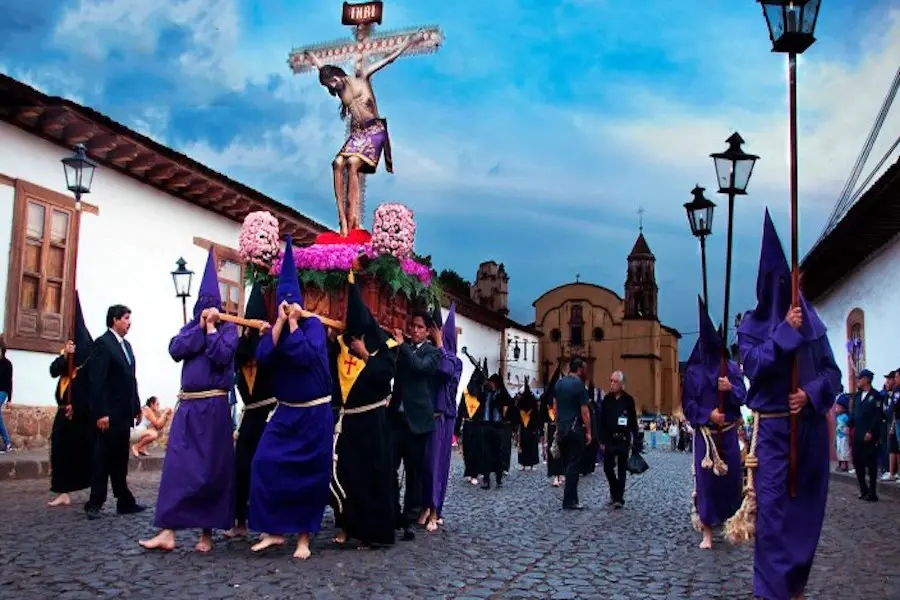
Adress
Pátzcuaro, Michoacán, México.
GPS
19.51528243413, -101.6082572937
KNOW MORE PLACES
VISITA OTRAS LOCALIDADES
A mystical journey: From the Christs of Pátzcuaro to the Penitents of Tzintzuntzan
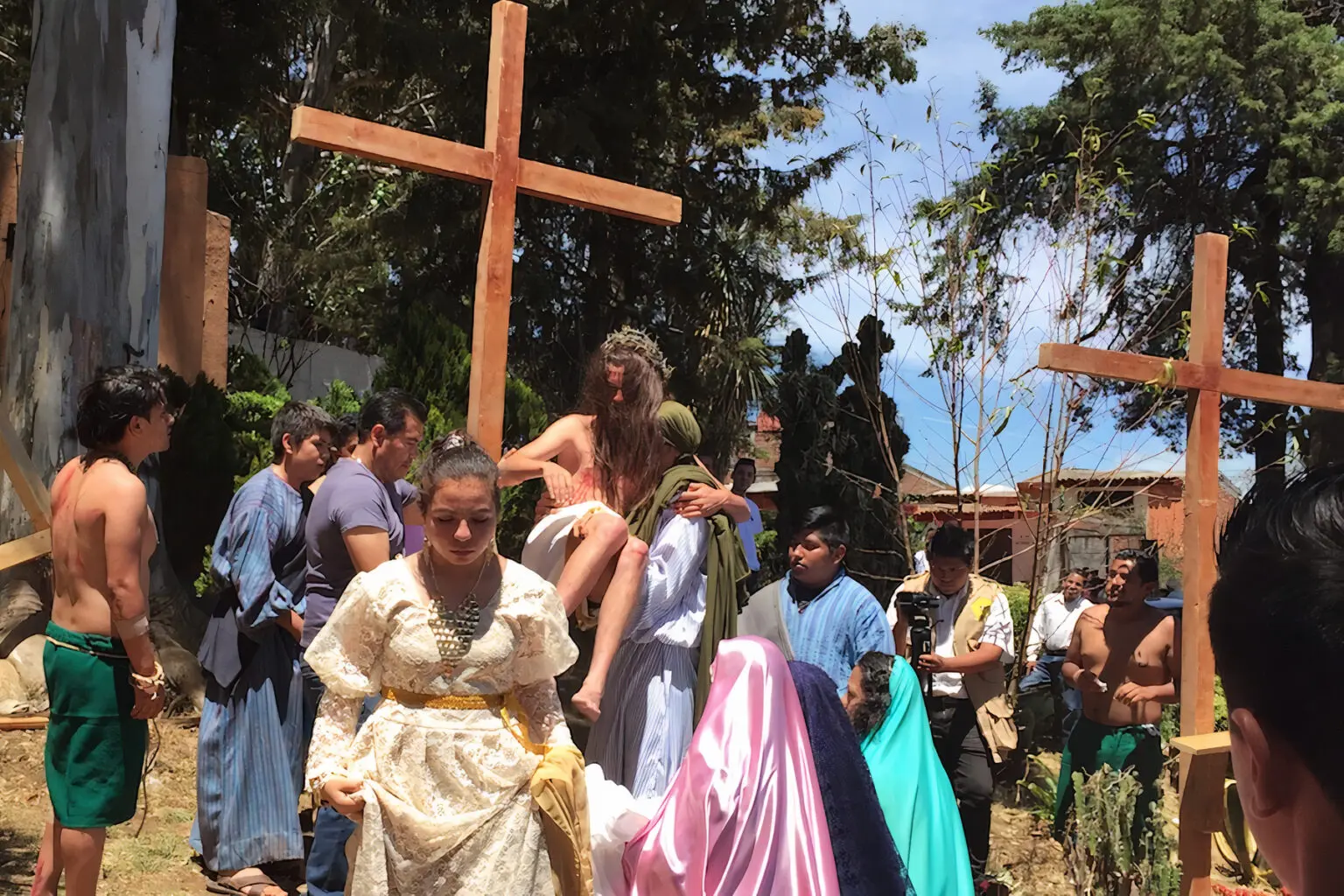
Holy Week in Michoacán is not an ordinary vacation; it's a journey through time. Here, faith is not just prayed about, it's lived with a dramatic intensity that blends the legacy of the Spanish conquistadors with the Purépecha worldview. Since the 16th century, this region has been the epicenter of a unique syncretism, becoming the most important cultural destination in the Americas for experiencing Holy Week.
Pátzcuaro: The Historical Supremacy of Two Traditions
If you're looking for the authentic origins of Holy Week in Mexico, Pátzcuaro is the answer. Unlike other famous celebrations in the country that are modern recreations (many from the mid-20th century), the processions of Pátzcuaro possess an indisputable historical superiority: they are living traditions with direct lineage from the 16th century, born from the first evangelizations of the continent.
Here, history is divided into two monumental days that dominate the Magical Town:
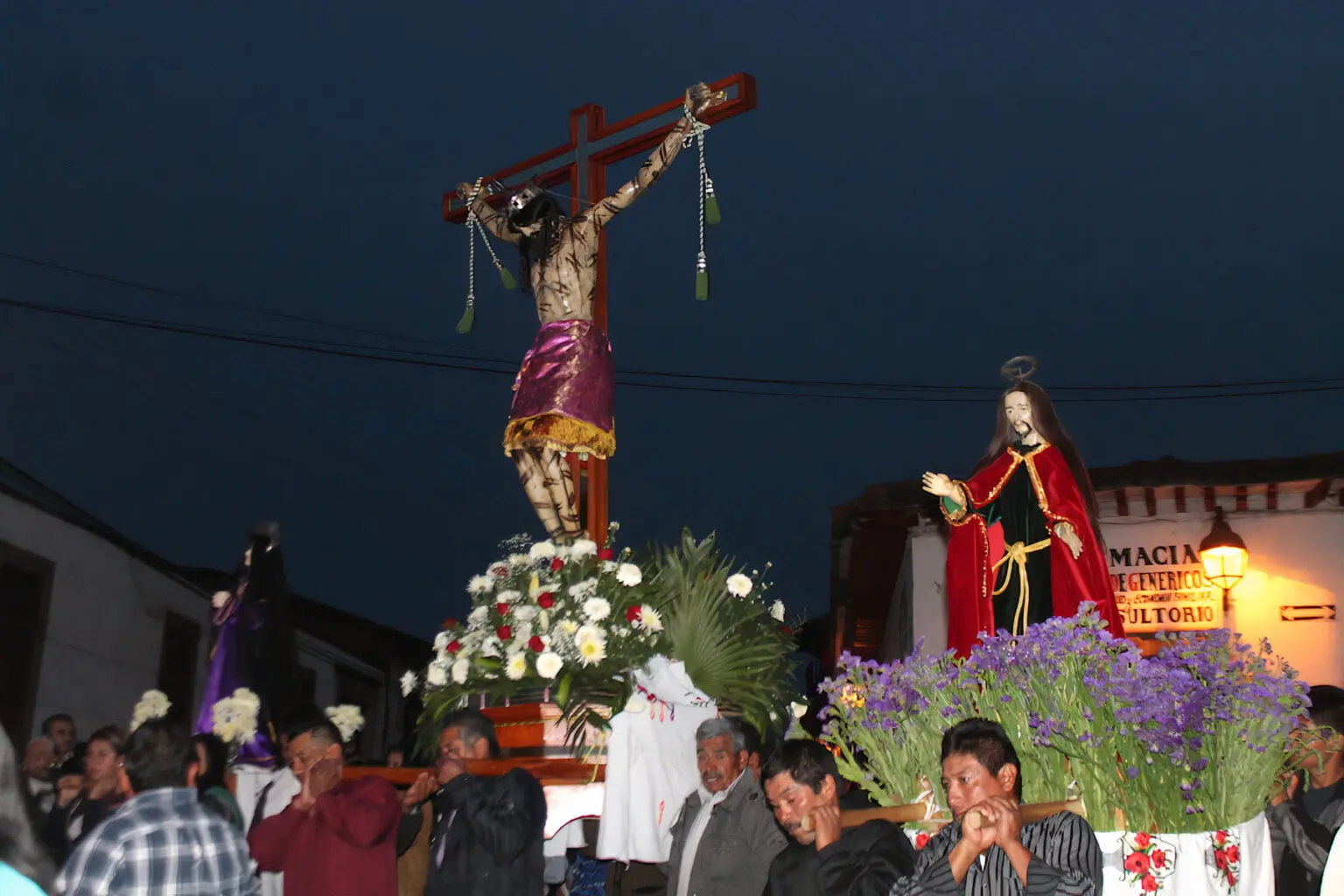
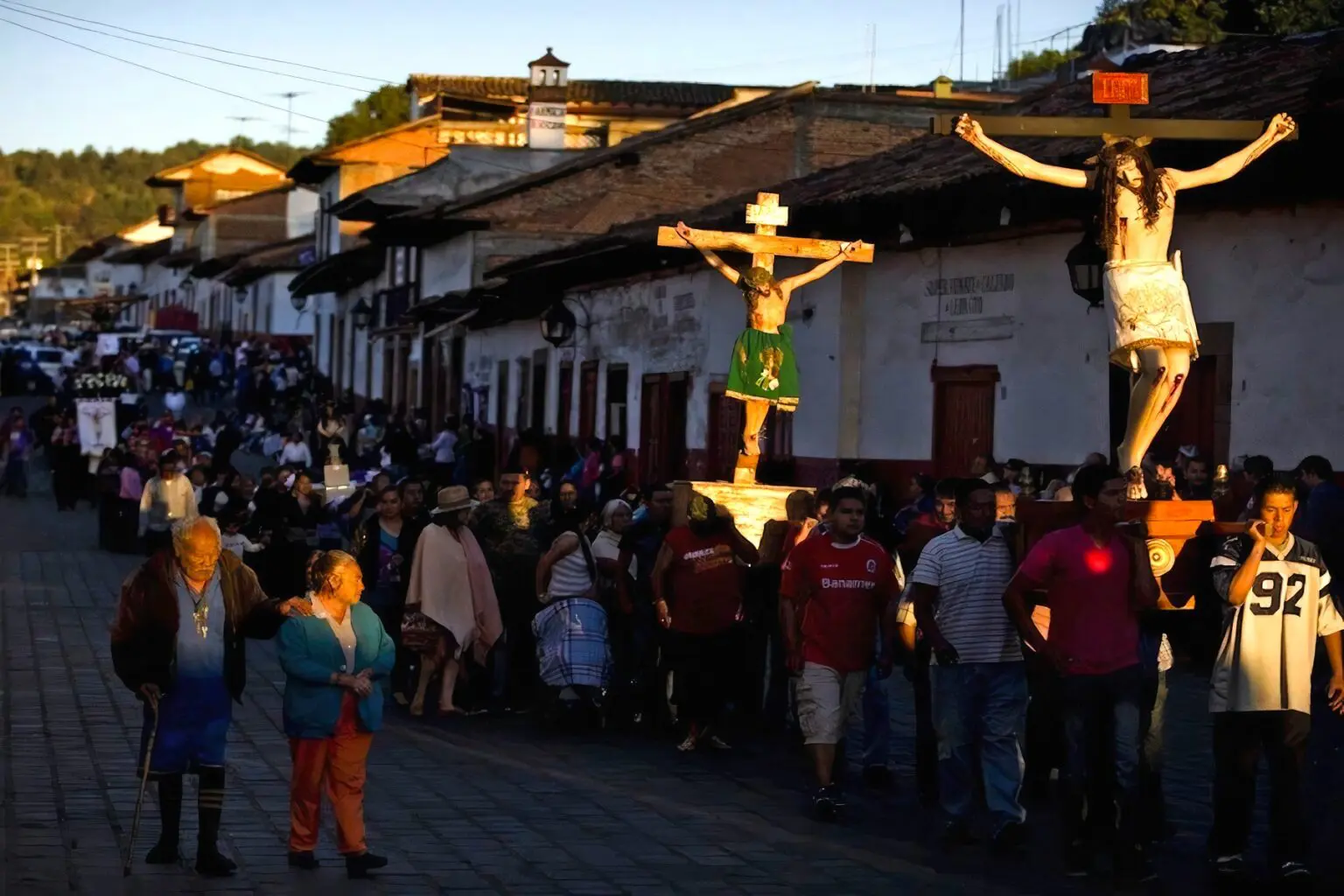
1. Good Friday: The Procession of the Christs
Mexico's oldest sacred legacy (Approx. 7:00 PM)
More than a parade, it is a living historical document and an assembly of peoples. This procession boasts an antiquity that surpasses the vast majority of religious events in the Americas.
The Route and the Encounter: The monumental procession gathers at the Basilica of Our Lady of Health. From this epicenter of faith, it departs to solemnly traverse the main streets of the city, enveloped in the mysticism of the vernacular architecture.
The Spiritual Center of the Region: The gathering for this procession is not by chance, but rather a matter of pure history. Pátzcuaro was established by the Purépecha people as a sacred place and confirmed by Vasco de Quiroga in 1538 as the seat of the bishopric, the center to which all should look. Faithful to this five-century-old mandate, the procession includes Christs from traditional neighborhoods and nearby towns, who come to the Basilica renewing the ancient pact of unity among the lakeside communities.
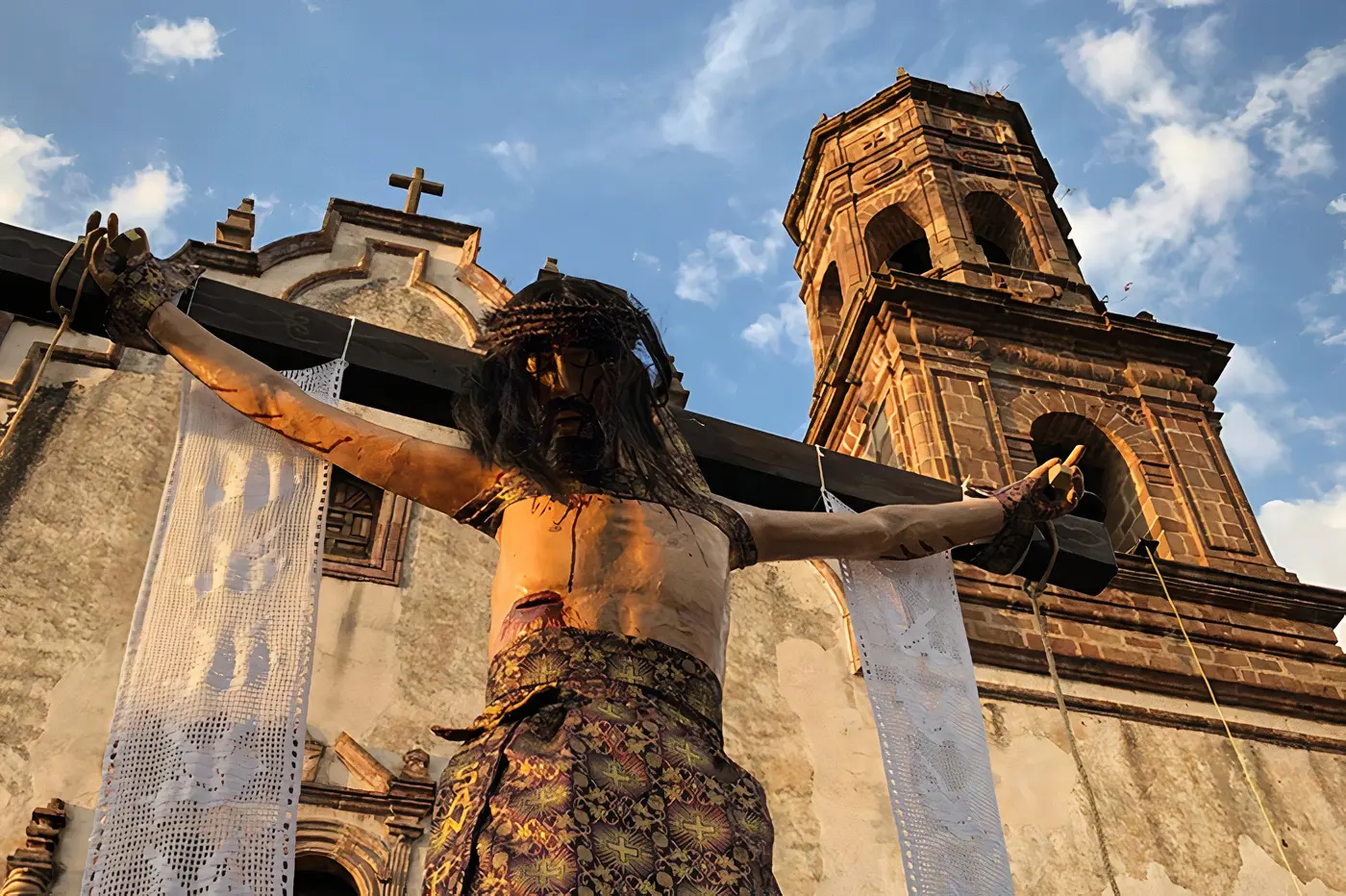
Imagery made of sugarcane paste: Participating are brotherhoods that safeguard an unparalleled collection of Christ figures. Most are original pieces from the 16th to 19th centuries, crafted using the indigenous technique of corn cane paste (Tatzingueni). This art, both light and dramatic, is a testament to how the Purépecha people redefined European iconography.
Conservation: To ensure that this visual monumentality remains intact, the complex sometimes incorporates high-fidelity replicas that preserve the aesthetics and splendor of the original rite before the eyes of thousands of worshippers.
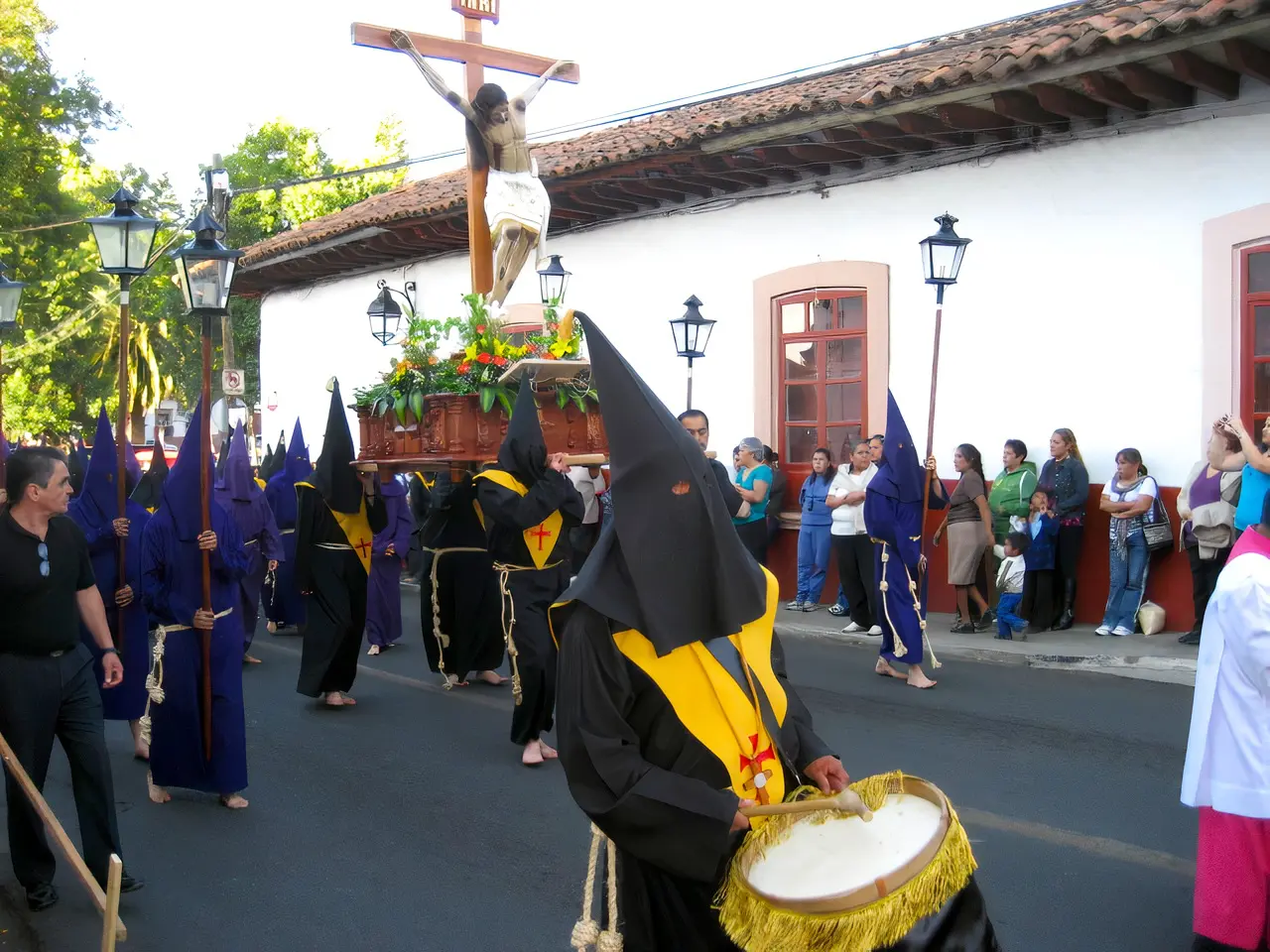
2. Holy Saturday: The Procession of Silence
The original duel (Approx. 7:00 PM)
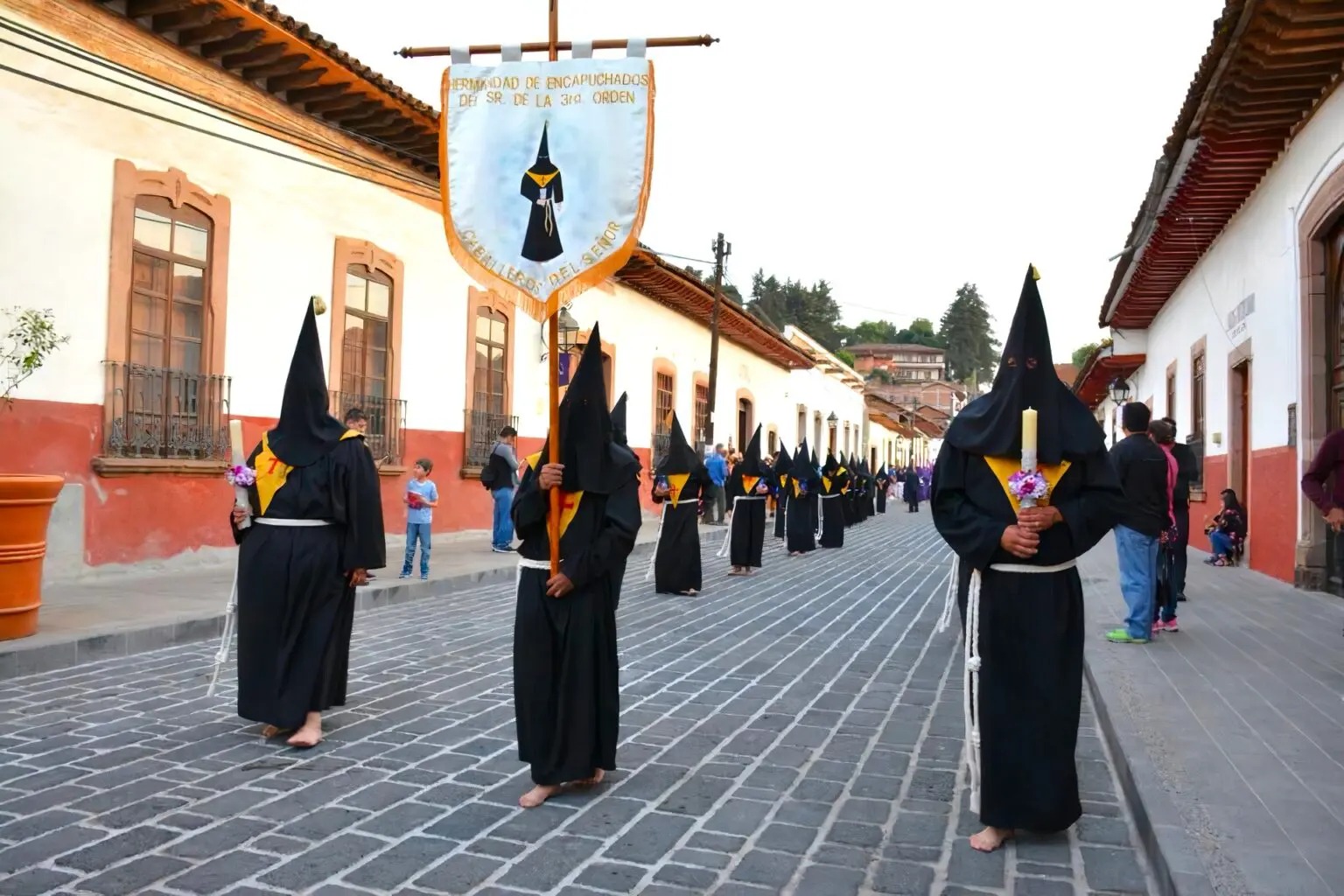
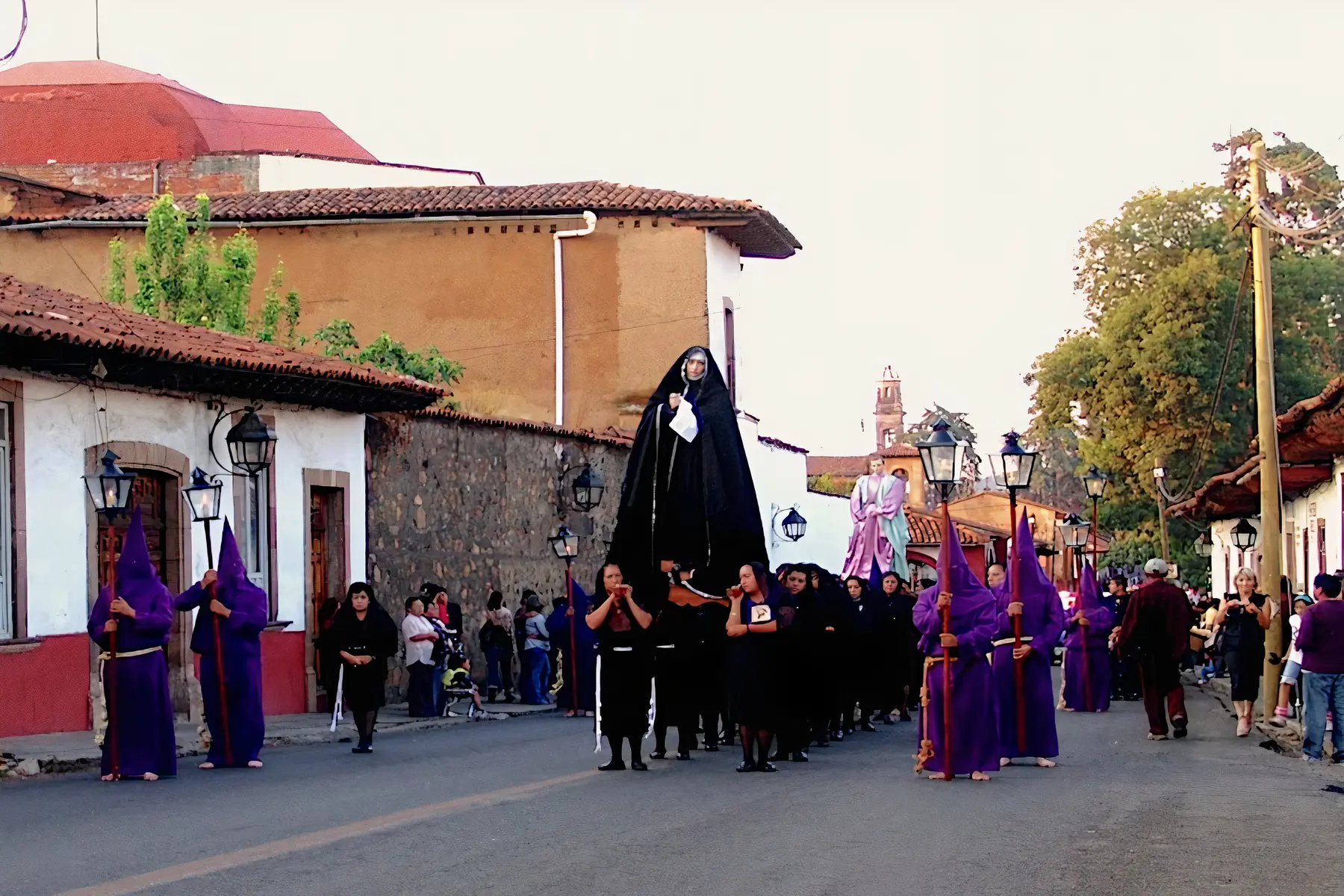
While other silent processions in the country date from 1950 onwards, the one in Pátzcuaro stands on deep colonial foundations, maintaining the rigor and austerity of the first New Spanish brotherhoods.
The Route: The procession departs from the historic Temple of San Francisco. From there, the brotherhood of silence begins its march through the historic center, plunging the city into respectful mourning.
The Atmosphere: The streets are darkened and illuminated only by candles. Participants walk in total silence, creating an atmosphere of deep reflection that few cities manage to replicate with such authenticity.
The Experience: It is a tribute to the Virgin of Solitude. The silence is broken only by the footsteps of the faithful, the sound of chains, and the crackling of candles, reaffirming that Pátzcuaro is the guardian of orthodoxy and viceregal mysticism in Mexico.
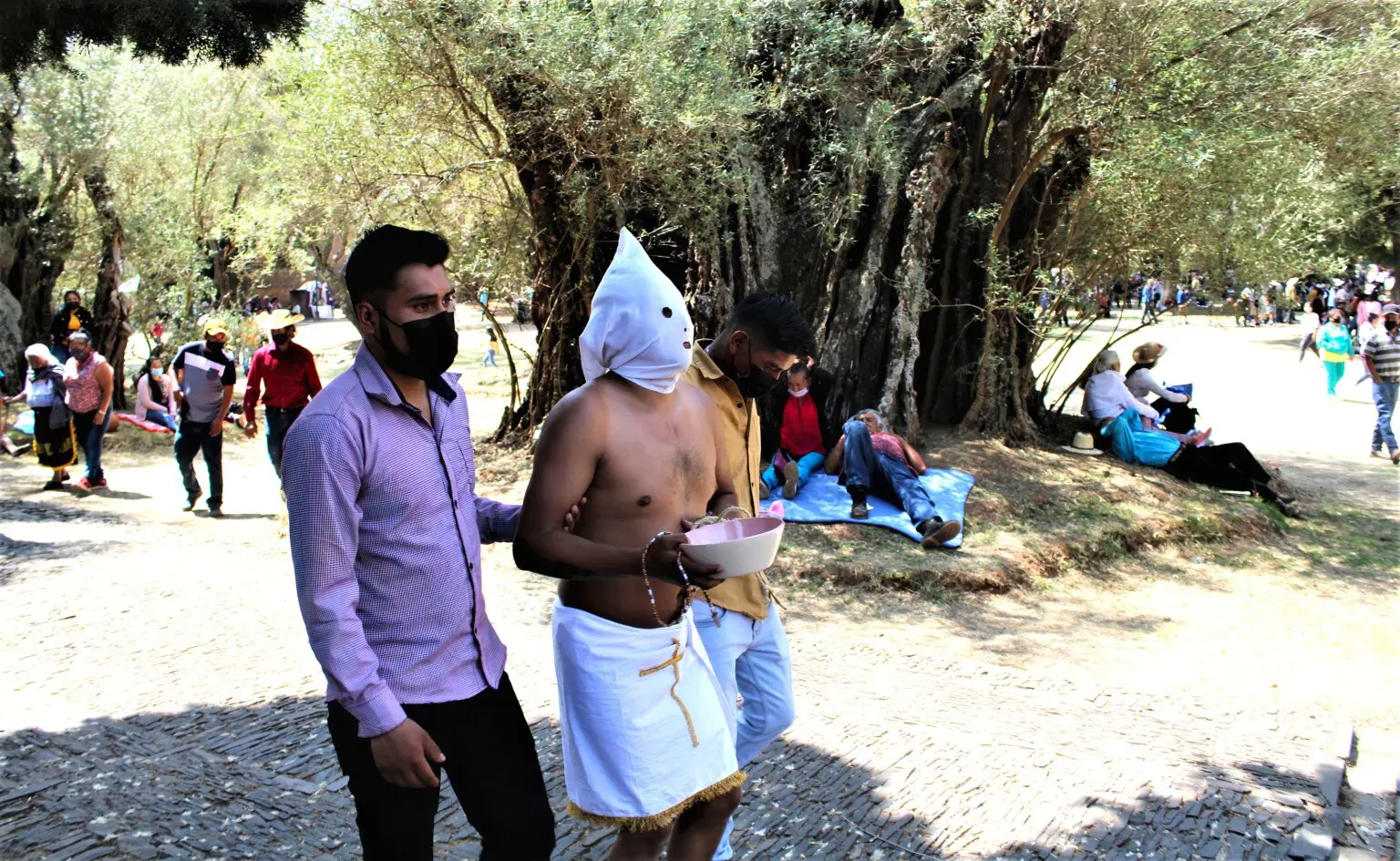
Tzintzuntzan: The Penitents and Shackles (Good Friday)
Just 15 minutes away, in the former capital of the Purépecha empire, faith manifests itself through physical pain and resilience.
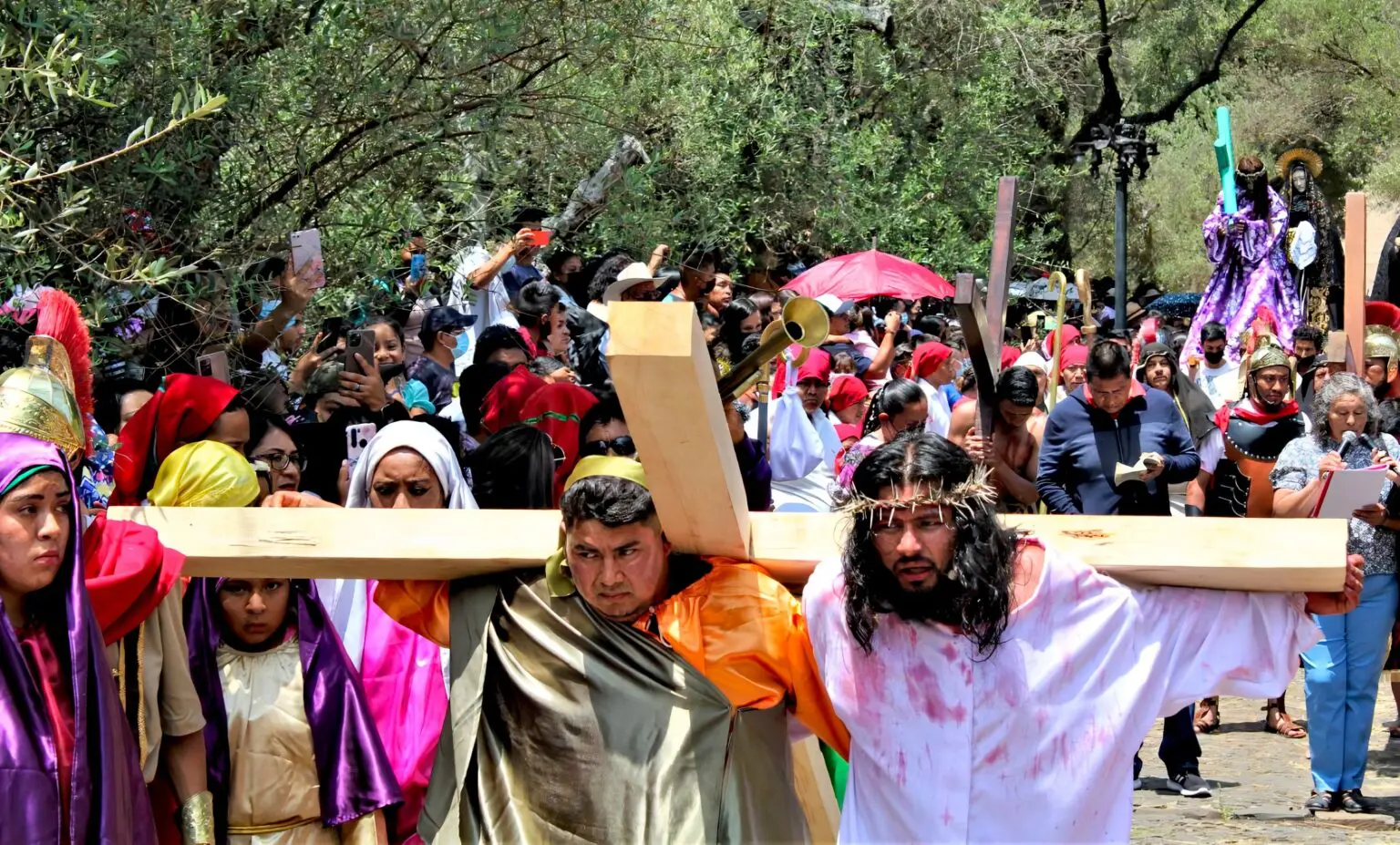
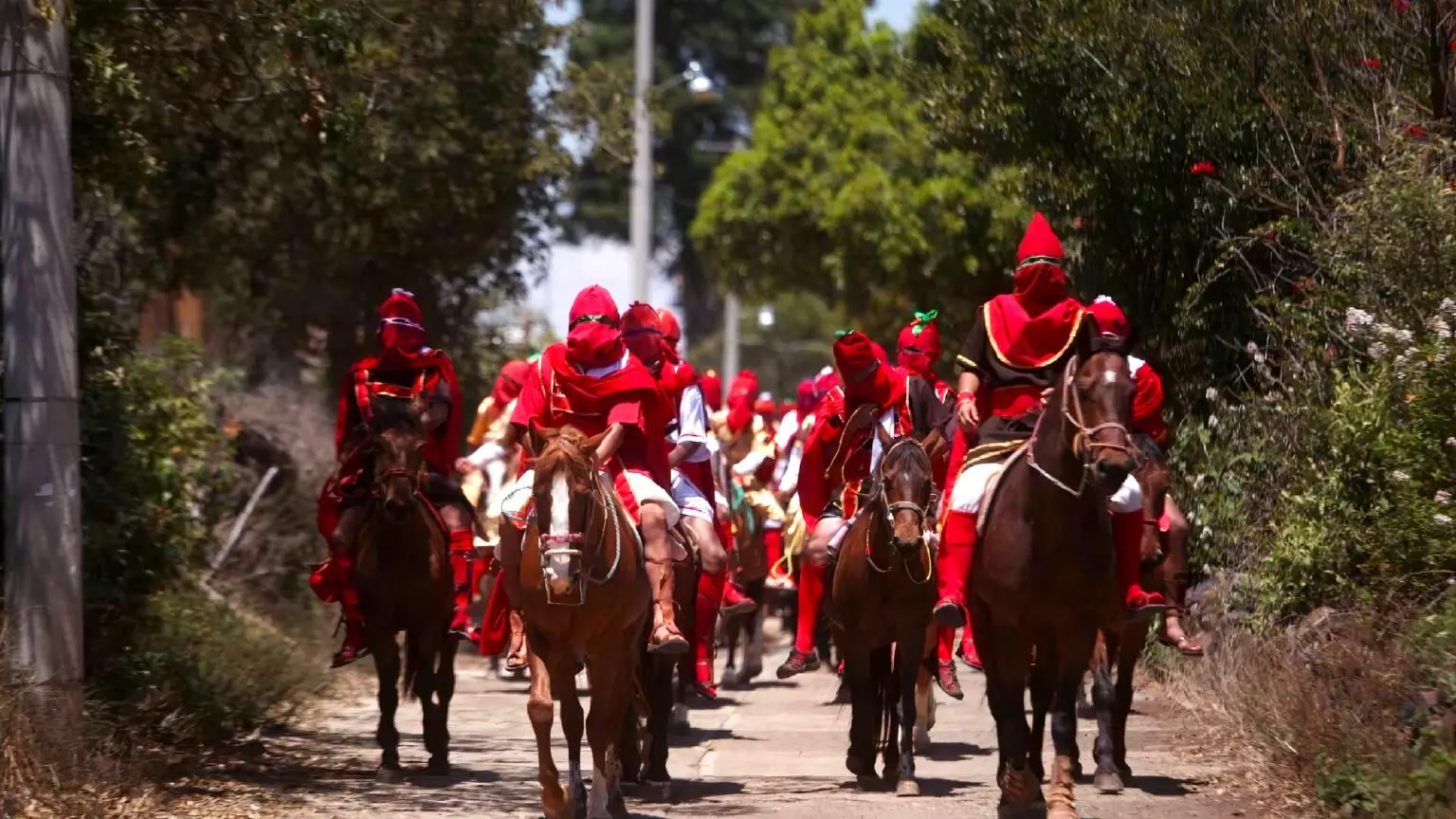
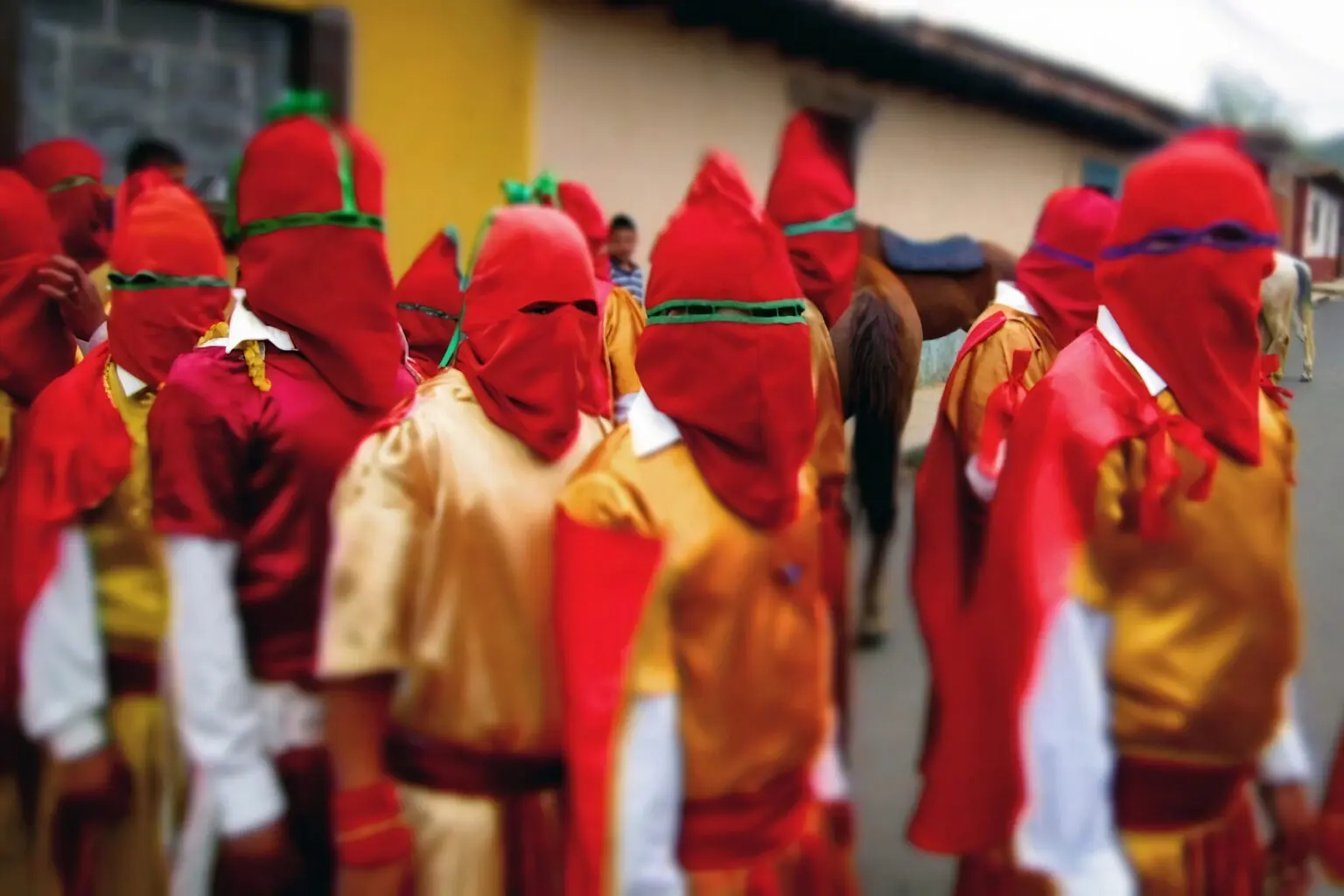
The Penitents: In a tradition that surprises the world, hooded men walk around the atrium of the Olive Trees carrying heavy crosses or original shackles from the colonial era on their ankles.
The Sacrifice: It is a unique expiation ritual in the country. Watching penitents throw themselves against thorn bushes or flagellate themselves is a display of extreme faith that connects with the harshest viceregal past.
Ephemeral Art: The Altars of Sorrows
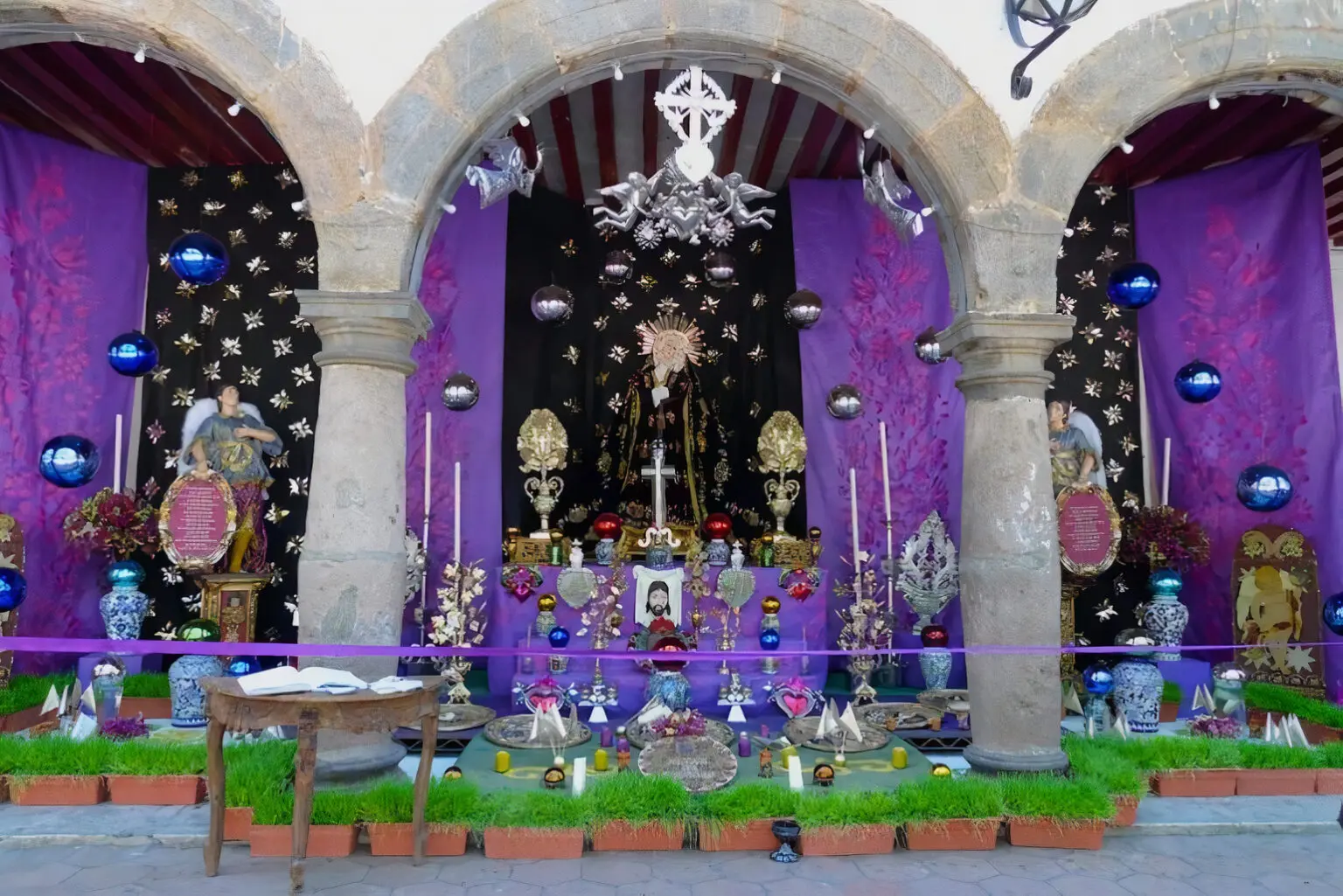
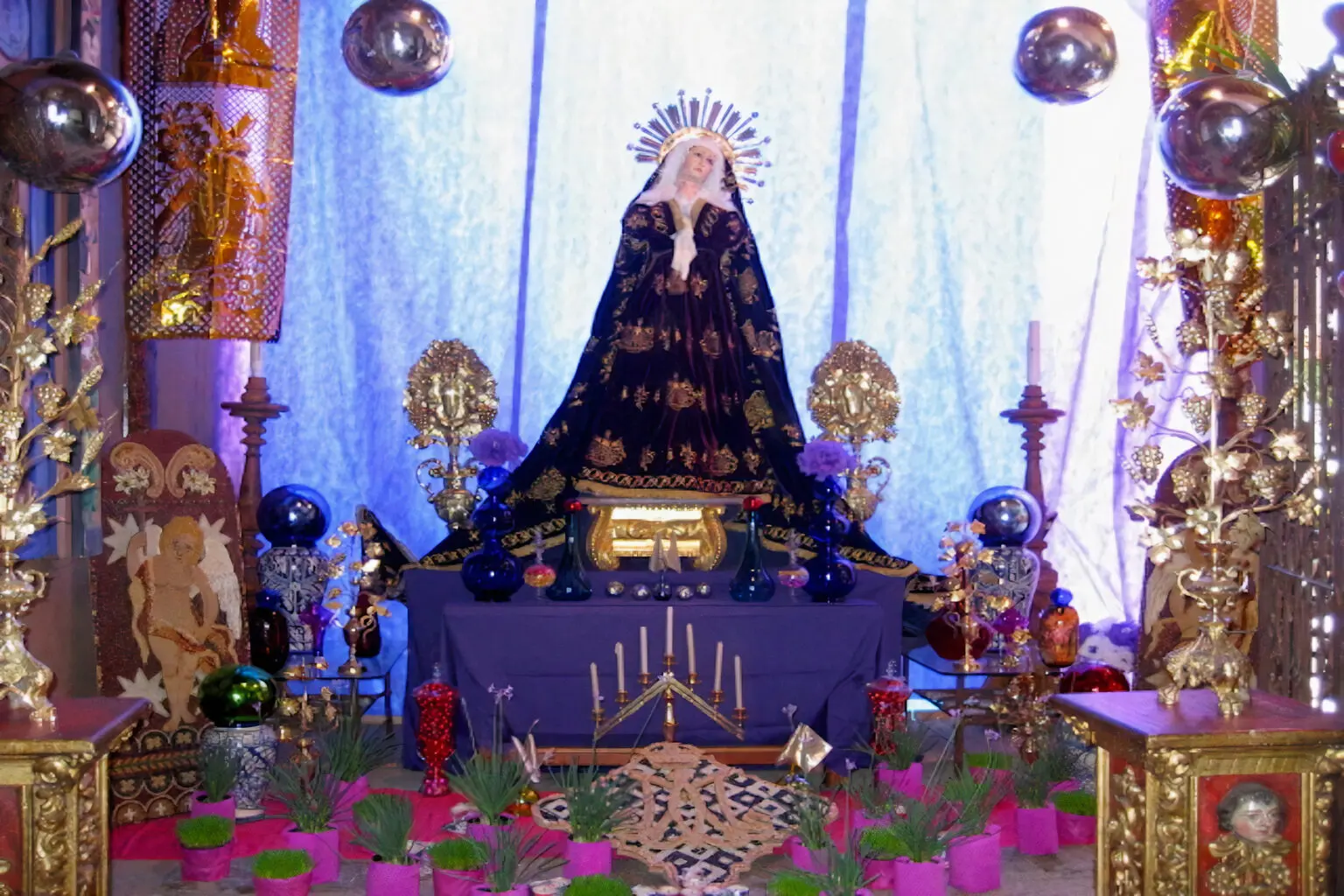
Not everything is darkness. On Good Friday (the day before Holy Week), Pátzcuaro is filled with color with the Altars of Sorrows. Look for these displays dedicated to the Virgin Mary in the arcades of the Municipal Palace and in the courtyards of the old houses; they are easily identifiable by their symbolic elements.
Sprouted wheat: They represent the Eucharist and the rebirth of life.
Colored glass and water spheres: They symbolize the tears of the Virgin.
Flores, frutas y semillas: La ofrenda de la tierra michoacana.
Lenten Gastronomy
La prohibición de comer carne desata la creatividad de la cocina local. Es la mejor época para probar:
Tarascan Soup: The classic must-try dish of beans, tortillas, and chili.
Chiles Capones: Stuffed with cheese and herbs, without batter.
Capirotada: The traditional dessert of piloncillo, bread, cheese and dried fruits.
Charales and White Fish: Fresh from the lake, straight to the table.
Location: Principalmente Centro Histórico de Pátzcuaro (Viernes y Sábado) y Atrio de los Olivos en Tzintzuntzan (Viernes).

 EN
EN  ES
ES