
 MAP
MAP SEARCH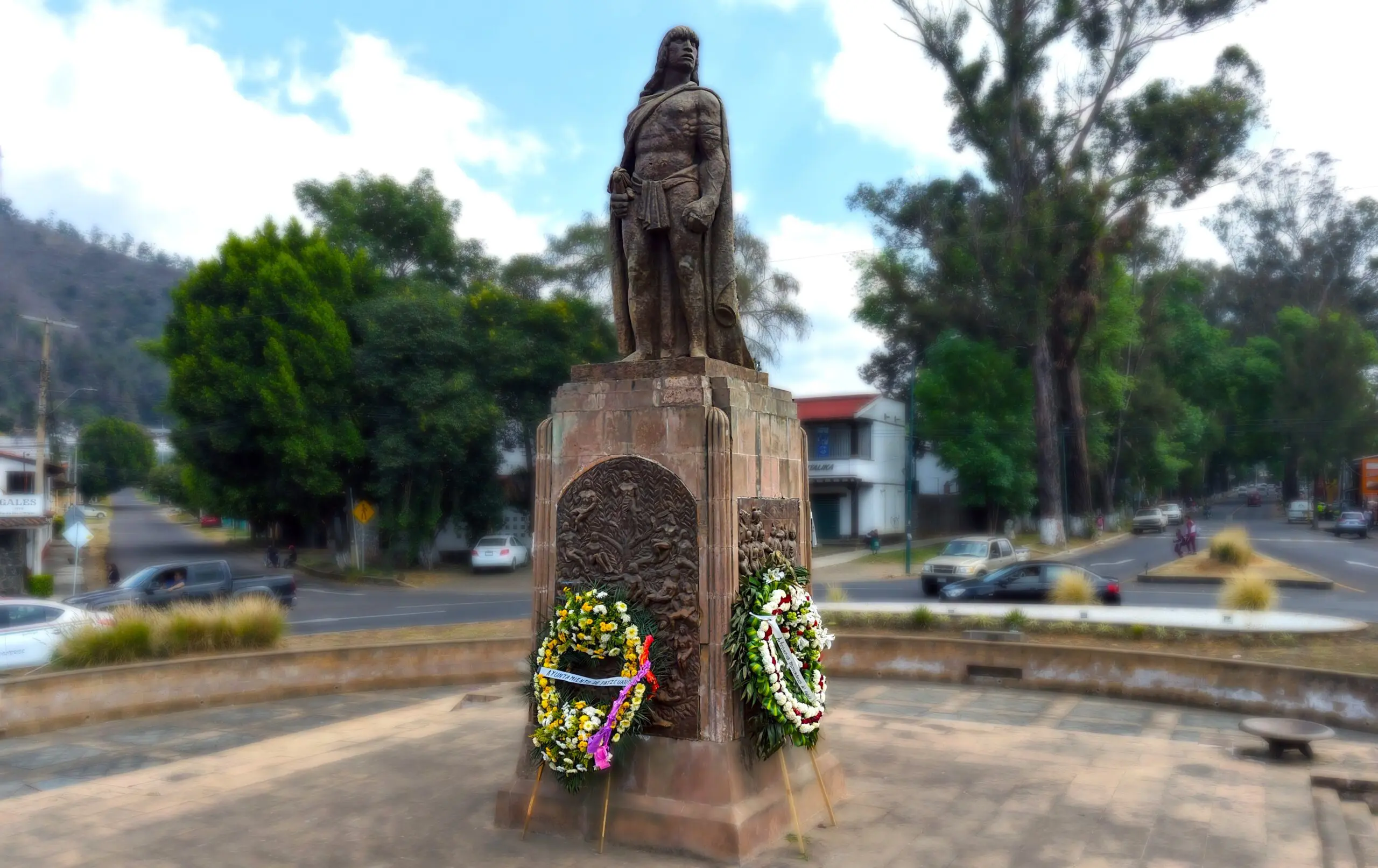
Adress
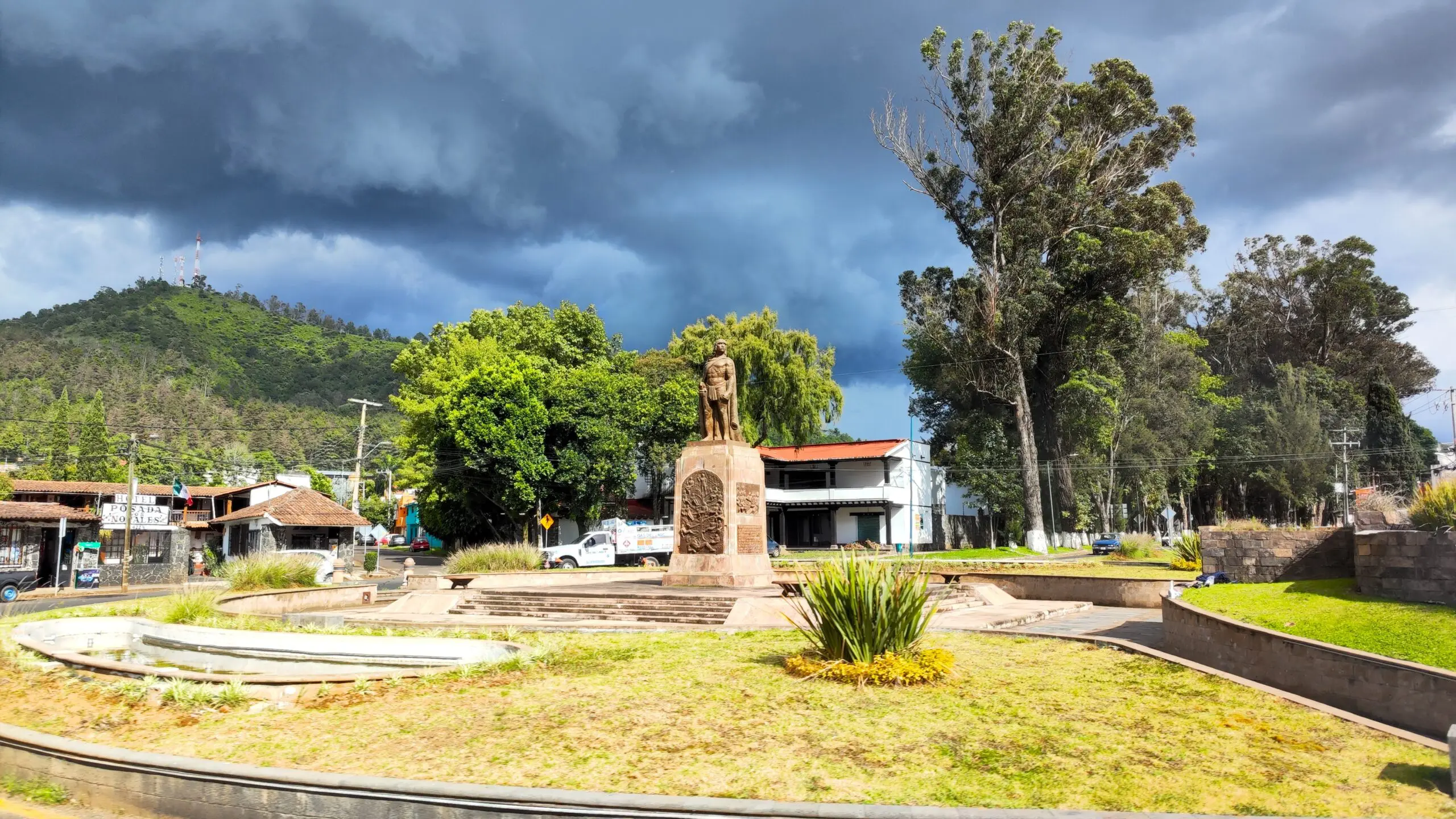
Glorieta de Tanganxoan, Pátzcuaro, Michoacán, México.
GPS
19.52966040792, -101.61002755165
KNOW MORE PLACES
VISITA OTRAS LOCALIDADES
The bronze memory of the last Purépecha Emperor
Located in the roundabout that bears its name, near Cerro Blanco, this monument is much more than a statue: it is the ultimate symbol of Purépecha resistance and identity. Erected in 1938, during the rise of nationalism promoted by General Lázaro Cárdenas, it honors the life and tragic end of Tzíntzicha Tangáxoan II, the last Cazonci (supreme ruler) of the empire.
History of a Sacrifice Tangáxoan II ruled the vast Purépecha empire when the Spanish arrived in 1522. Seeking to avoid a massacre like that of Tenochtitlán, he negotiated a peaceful surrender (an event that tradition places at the current Chapel of Humilladero), but his fate was cruel. In 1530, falsely accused of conspiracy by the bloodthirsty Nuño de Guzmán, he was dragged by a horse, strangled, and finally burned at the stake. His death was not the end, but rather the seed of later uprisings, such as the one led by his legendary daughter, Princess Eréndira.
Art and Symbolism (The Style) The monument is the work of the sculptor Guillermo Ruiz, the same one who erected the monument to Morelos in Janitzio and stands out for its Indigenous Art Deco style, very typical of the post-revolutionary era.
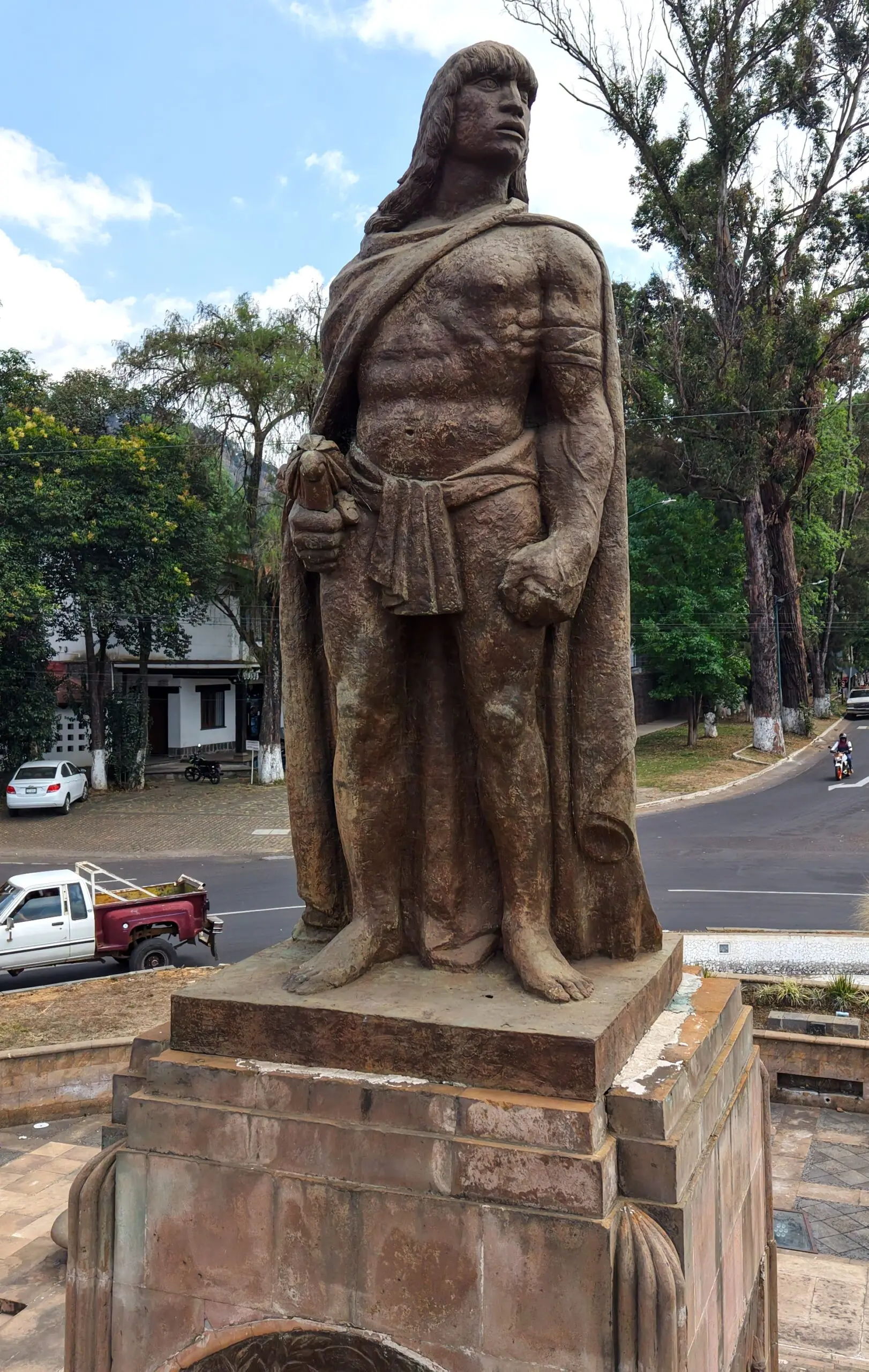
The Statue: Standing 3 meters tall, it depicts the Cazonci with prominent indigenous features and regal dignity, wielding his staff of command and gazing intently towards Lake Pátzcuaro, the heart of his domain.
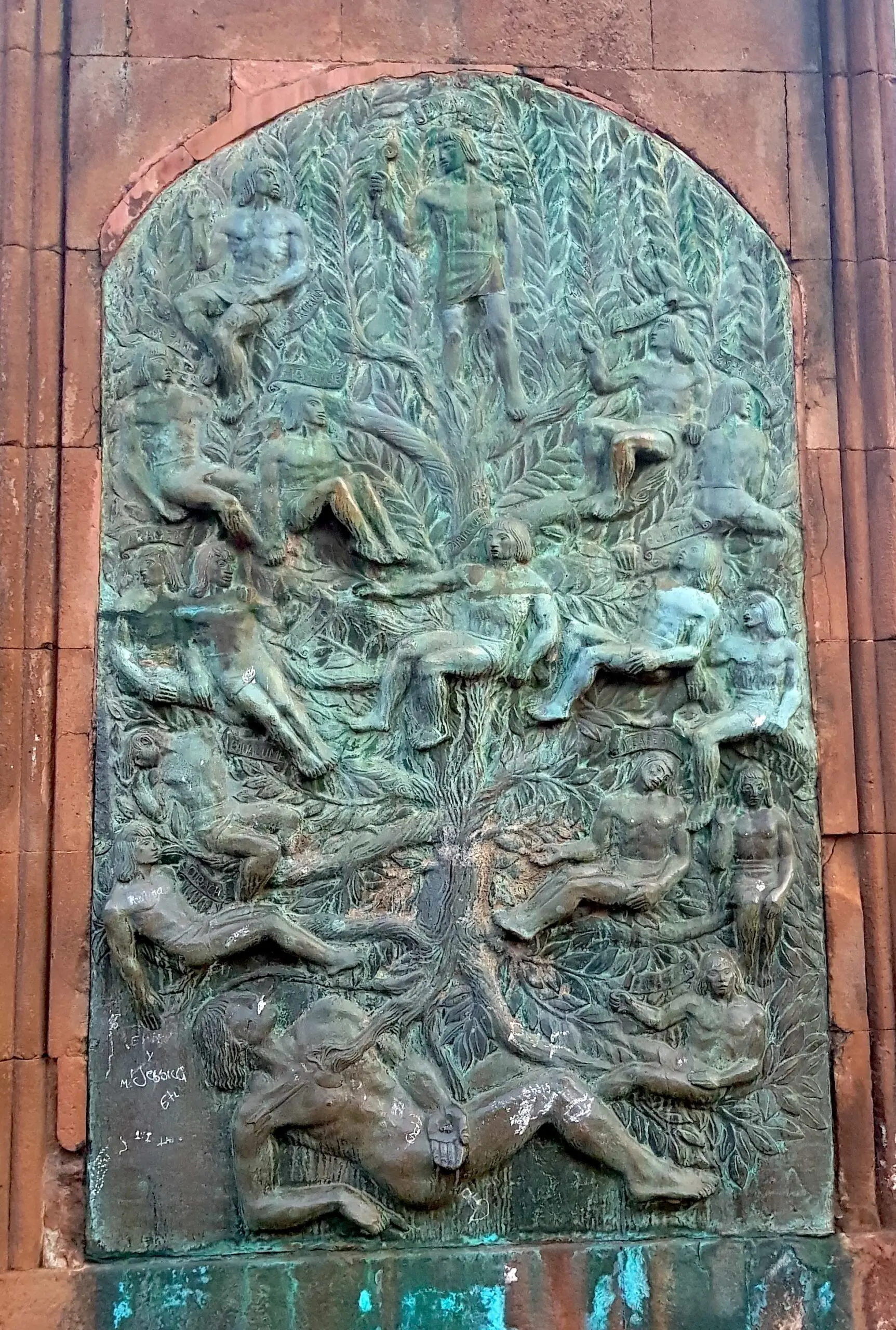
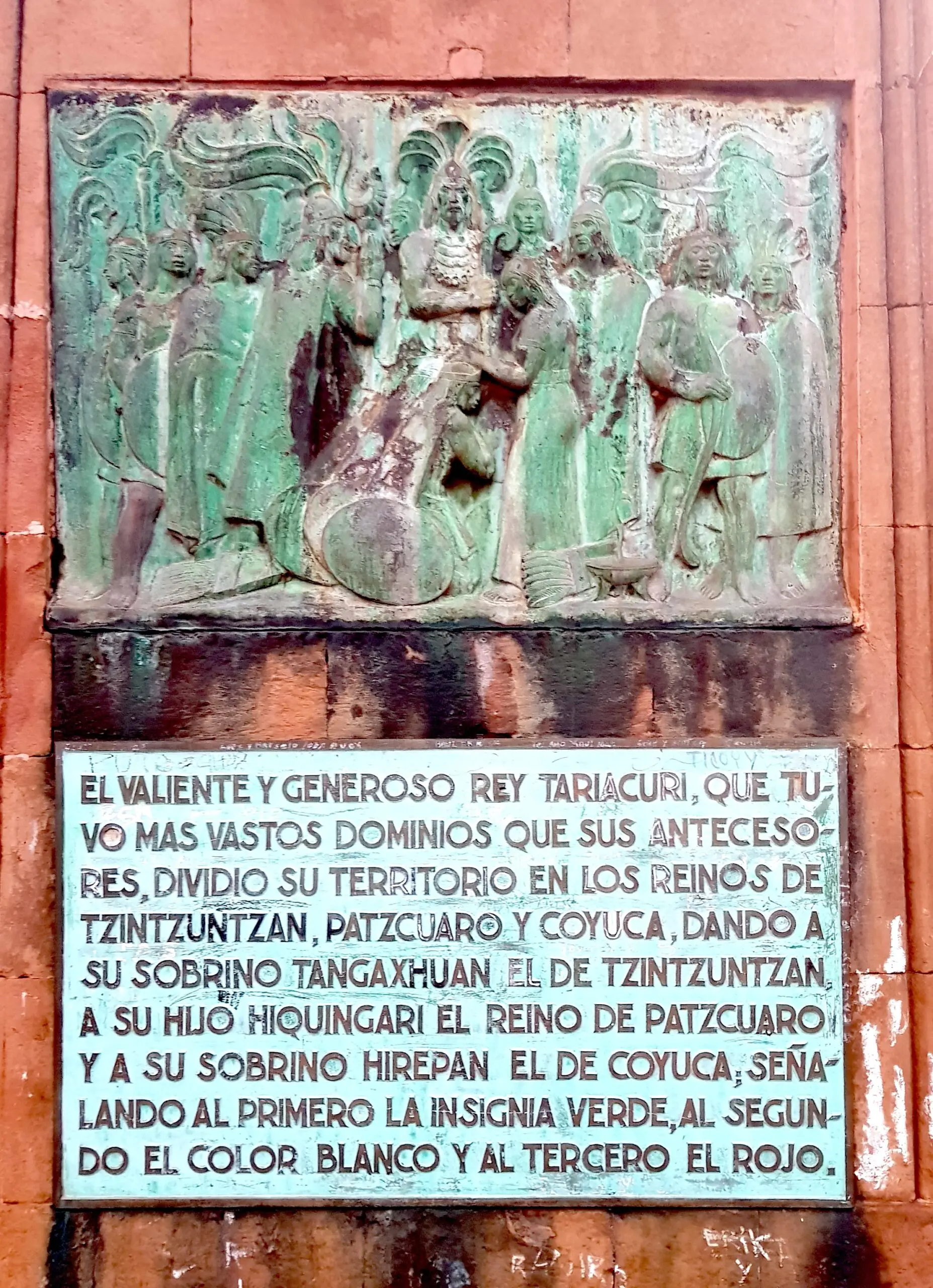
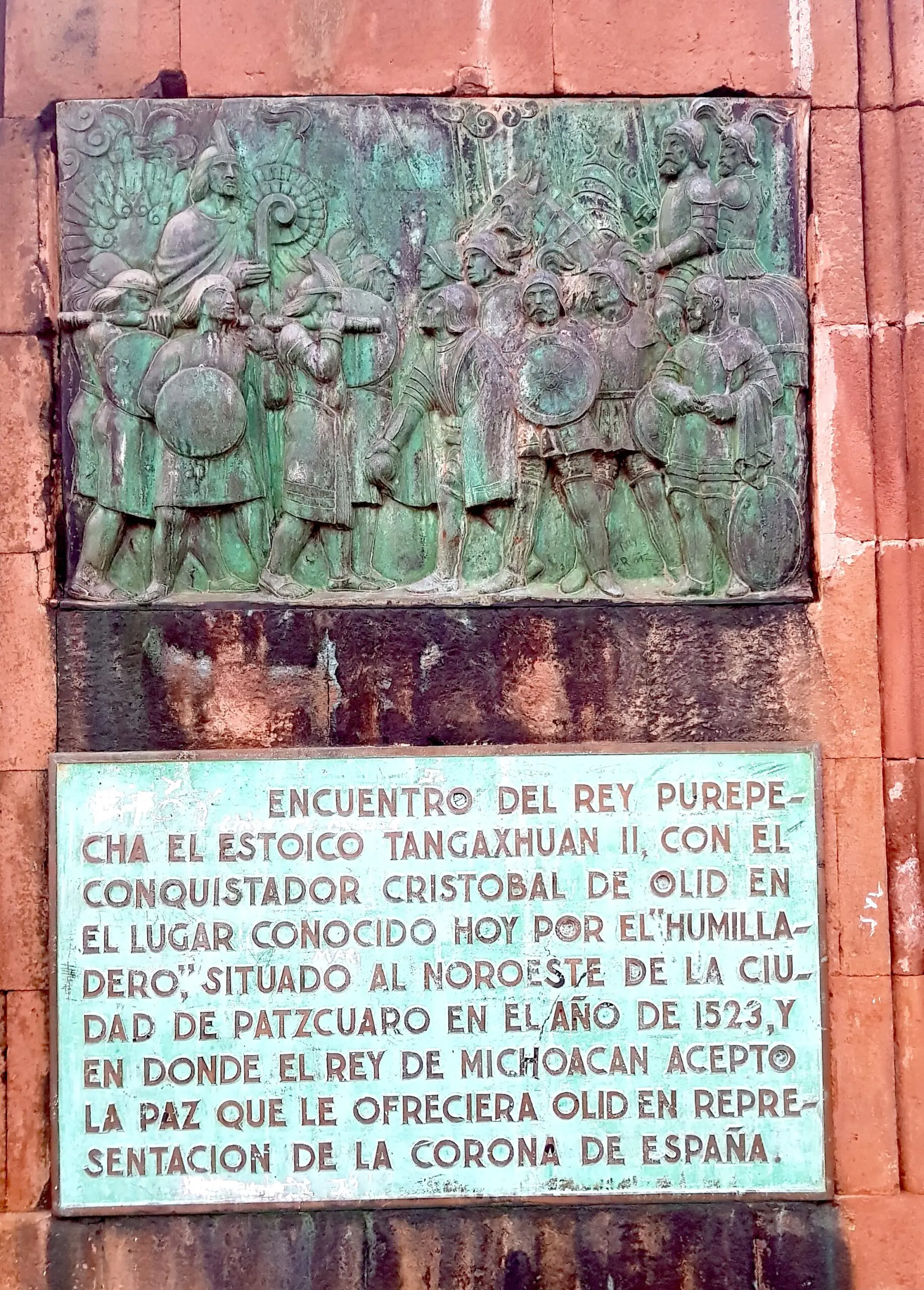
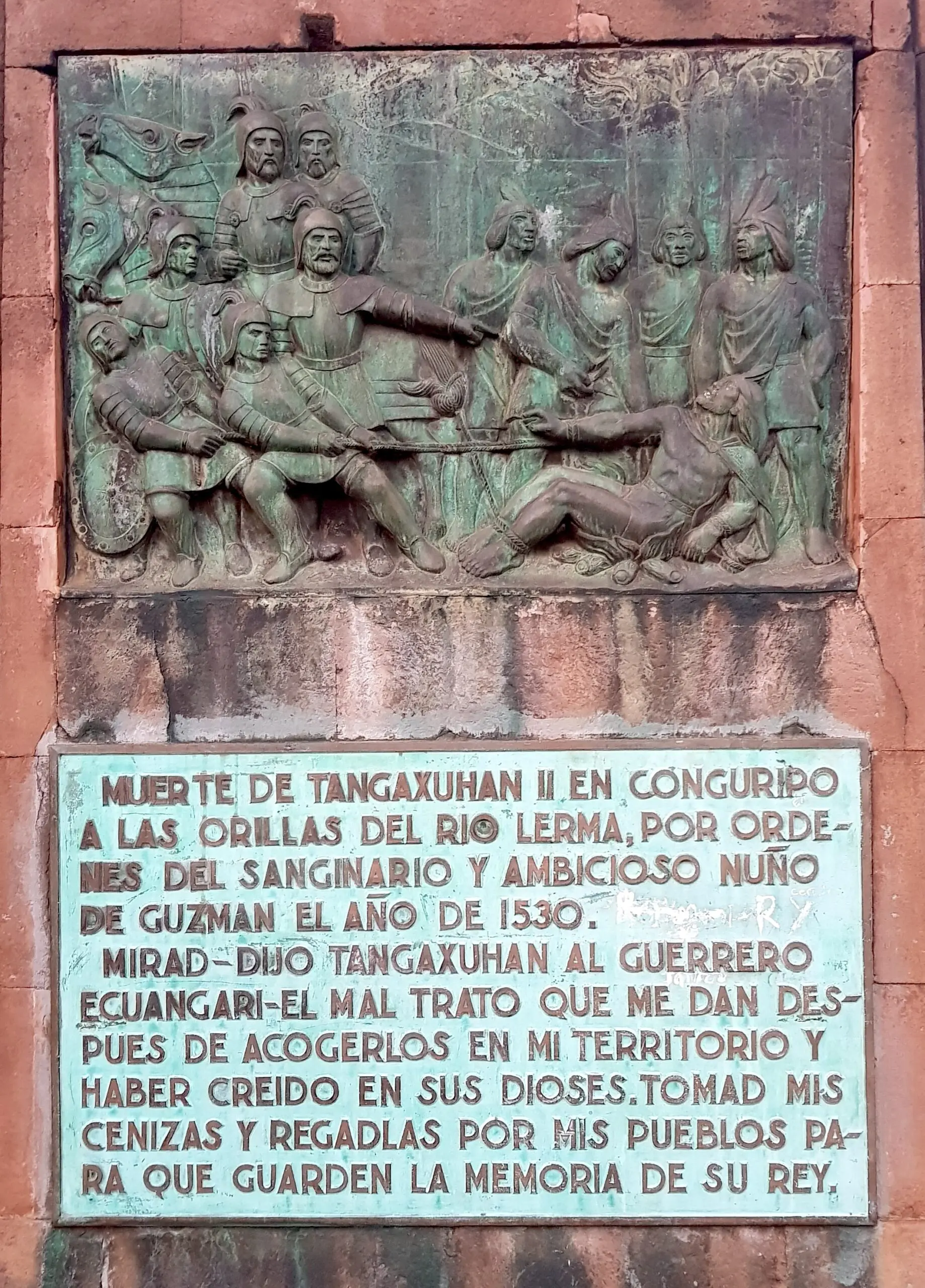
The Pedestal: The quarry stone base is a bronze history book. Its reliefs narrate three key moments:
The meeting with Cristóbal de Olid (1522).
The torment and death at the stake (1530).
The family tree of the Tarascan kings.
Annual Event: February 14th While the world celebrates love, Pátzcuaro remembers its king. Every February 14th (On the anniversary of his execution), a solemn ceremony is held with dances, music, and offerings. The event includes a symbolic procession from this monument to the Huitziméngari Palace en la Plaza Grande, conectando así al padre (el último emperador) con la casa de su hijo (Antonio de Huitziméngari), en un gesto de continuidad histórica.
 EN
EN  ES
ES