
 MAP
MAP SEARCH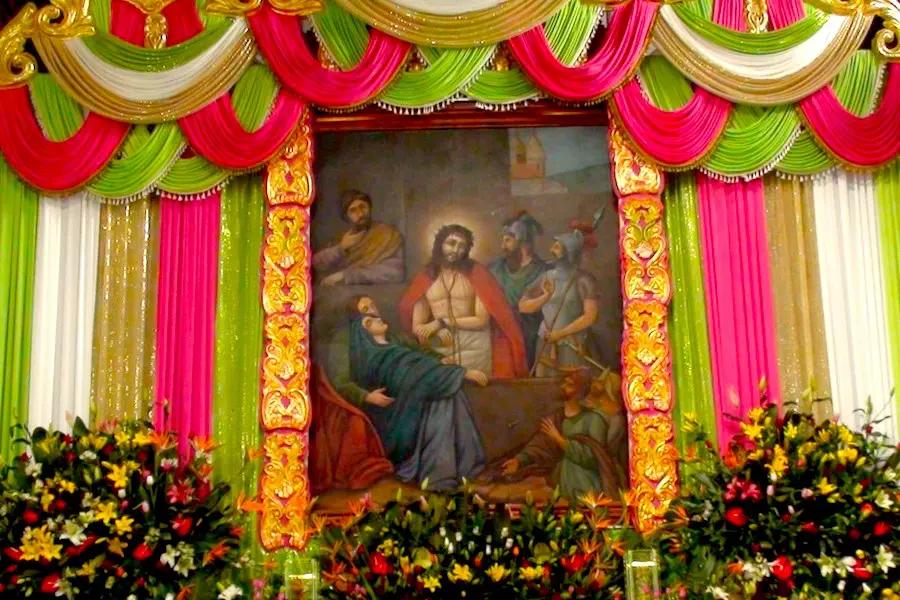
Adress
Tzintzuntzan, Michoacán, México.
GPS
19.626131845984, -101.5786242485
KNOW MORE PLACES
VISITA OTRAS LOCALIDADES
The miracle that saved the town and the great pilgrimage
A few kilometers from Pátzcuaro, in the historic Purépecha capital of Tzintzuntzan, one of the most deeply rooted festivities in Michoacán is celebrated: the Day of the Lord of the Rescue.
📅 Book 2026! This festival is movable, as it is governed by the Lenten calendar (traditionally celebrated eight days before Shrove Tuesday). 2026The festivities will begin on February 10, gathering thousands of worshippers in the majestic Court of Olives.
The Legend: The Rescue from the Plague The origin of this devotion dates back to the 18th century, when a terrible smallpox epidemic struck the region, claiming countless lives. Desperate in the face of the tragedy, the guardian of the Franciscan convent prostrated himself before an ancient oil painting already venerated within the convent walls. Through tears, he pleaded for the health of the indigenous communities, crying out:
“My most holy Father, rescue us from the power of death, through your shed blood!”
The story goes that the miracle occurred almost immediately: the plague began to subside until it disappeared completely. From that day forward, the image was known as the “Lord of the Rescue” and occupies a place of honor in the Temple of San Francisco.
The Image: A Canvas, Not a Sculpture Unlike other Christ figures in the region that are made of cornstalk paste, the Lord of the Ransom is a 16th-century oil painting on canvas. The painting depicts the biblical moment when Jesus of Nazareth is arrested by soldiers, while his Mother watches, suffering martyrdom. It is a historical piece in the colonial art collection of the former Convent of Santa Ana.
The Festival and the Pilgrimage The celebration is an explosion of faith and culture that transforms Tzintzuntzan:
The Pilgrimage: From dawn, the road and trails between Pátzcuaro and Tzintzuntzan fill with families, cyclists and groups of friends who make the walk to pay “mandas” (promises).
Music in the Olive Groves: The centuries-old atrium, under the shade of the olive trees planted by Don Vasco, becomes an open-air auditorium where orchestras and wind bands play traditional tunes, folk songs, and waltzes throughout the day.
Dances: Traditional dances are presented, highlighting the performance of the Dance of the Lord of the Rescue, in addition to sporting events and a popular fair.
Fireworks: The day concludes after the 7:00 PM mass with the spectacular burning of castles and fire bulls.
Location: Atrium of the Olive Trees and Temple of San Francisco, Tzintzuntzan (15 minutes from Pátzcuaro).
 EN
EN  ES
ES