
 MAP
MAP SEARCH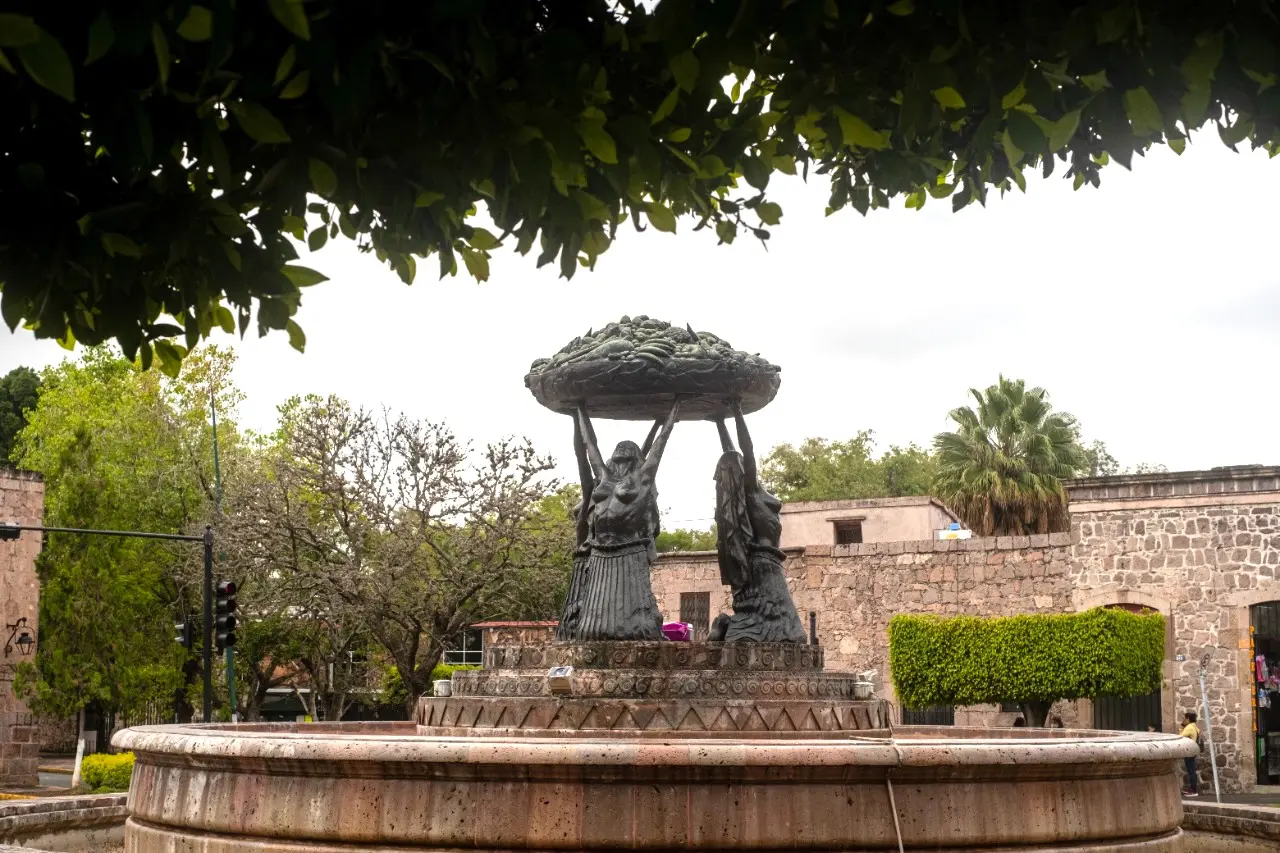
Adress
Av. Acueducto 890, Centro, 58000 Morelia, Michoacán, México.
GPS
19.702849563697, -101.1824297905
KNOW MORE PLACES
VISITA OTRAS LOCALIDADES
🗿 The Controversial and Traveling Icon 🥑
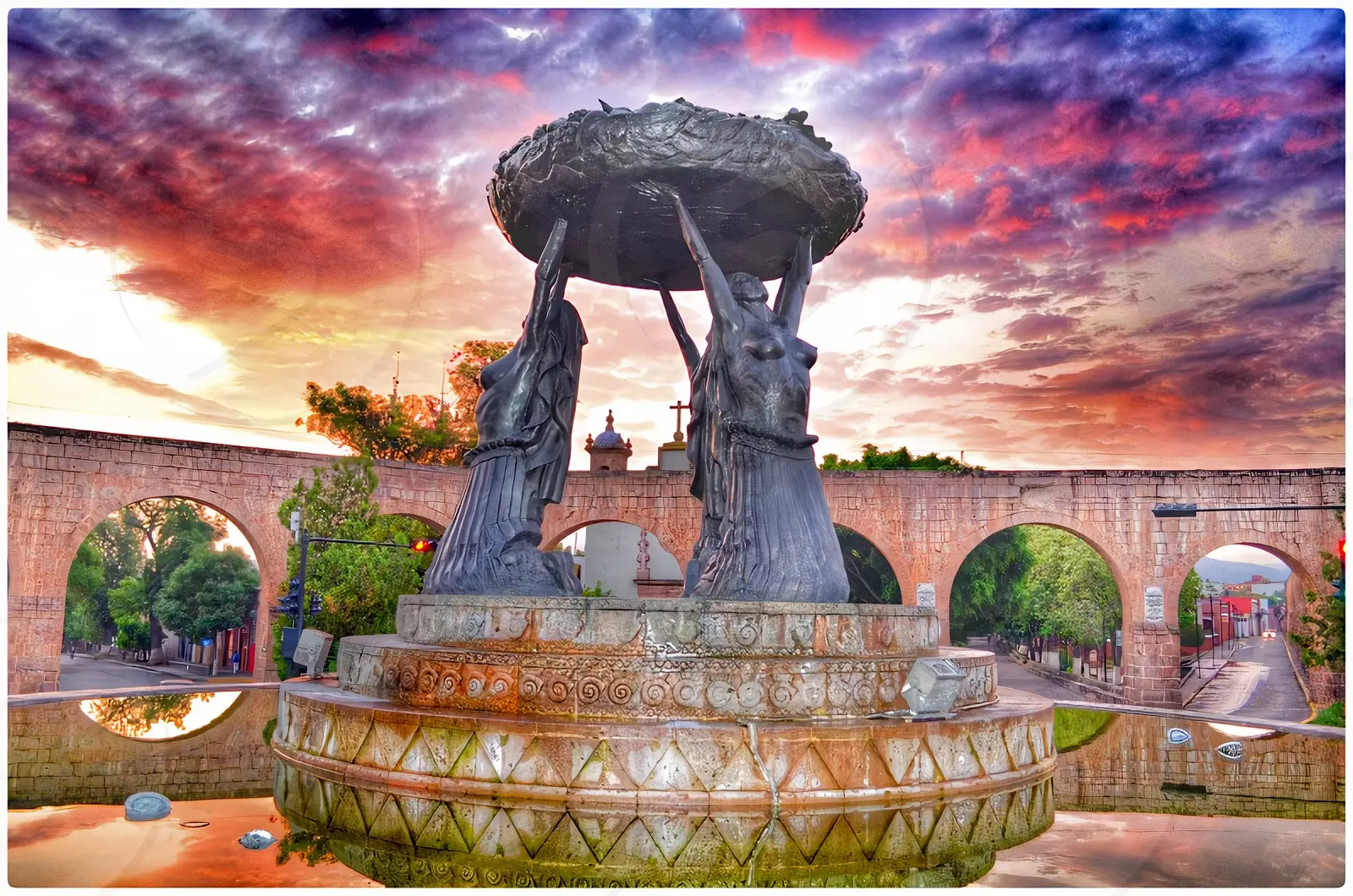
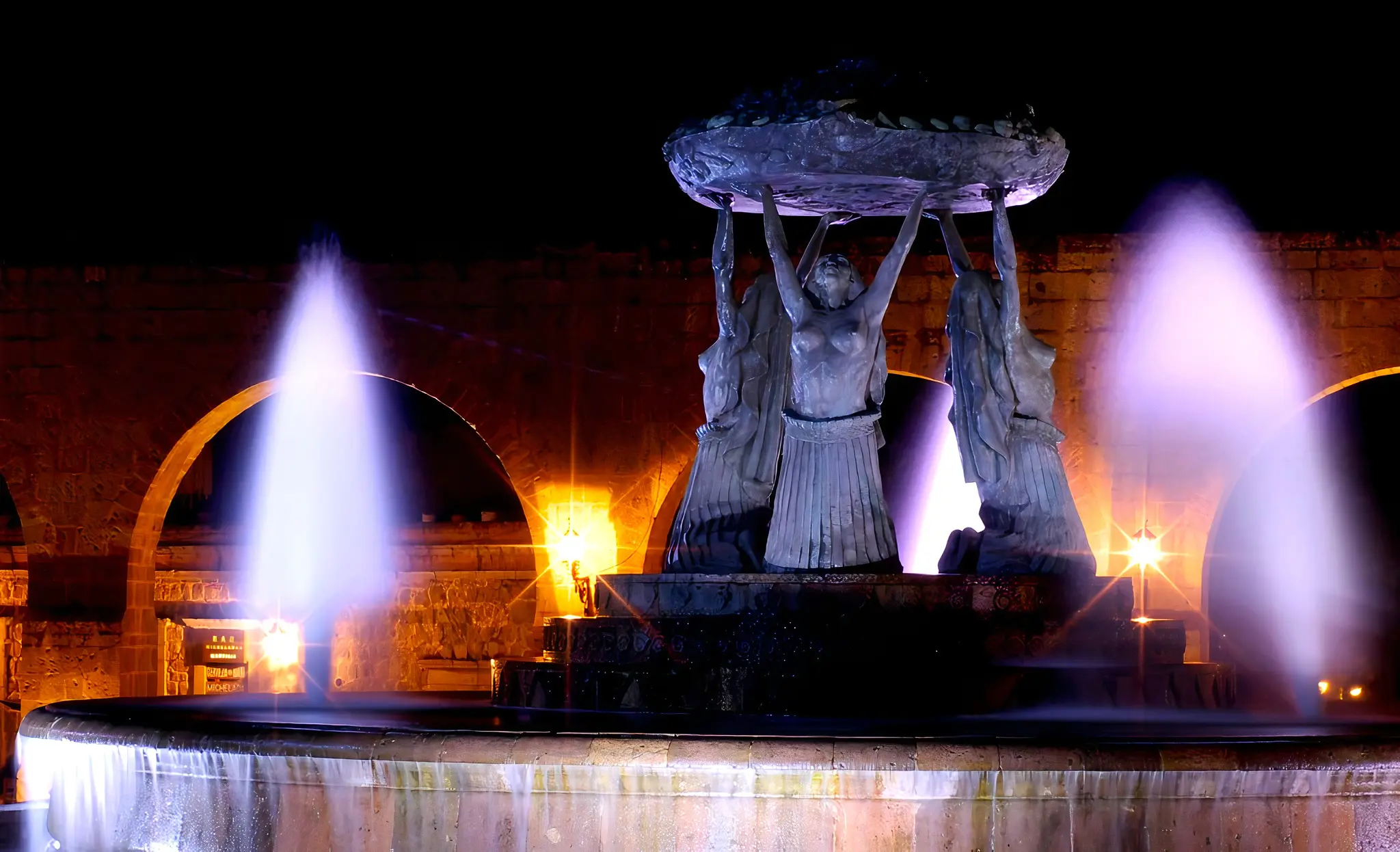
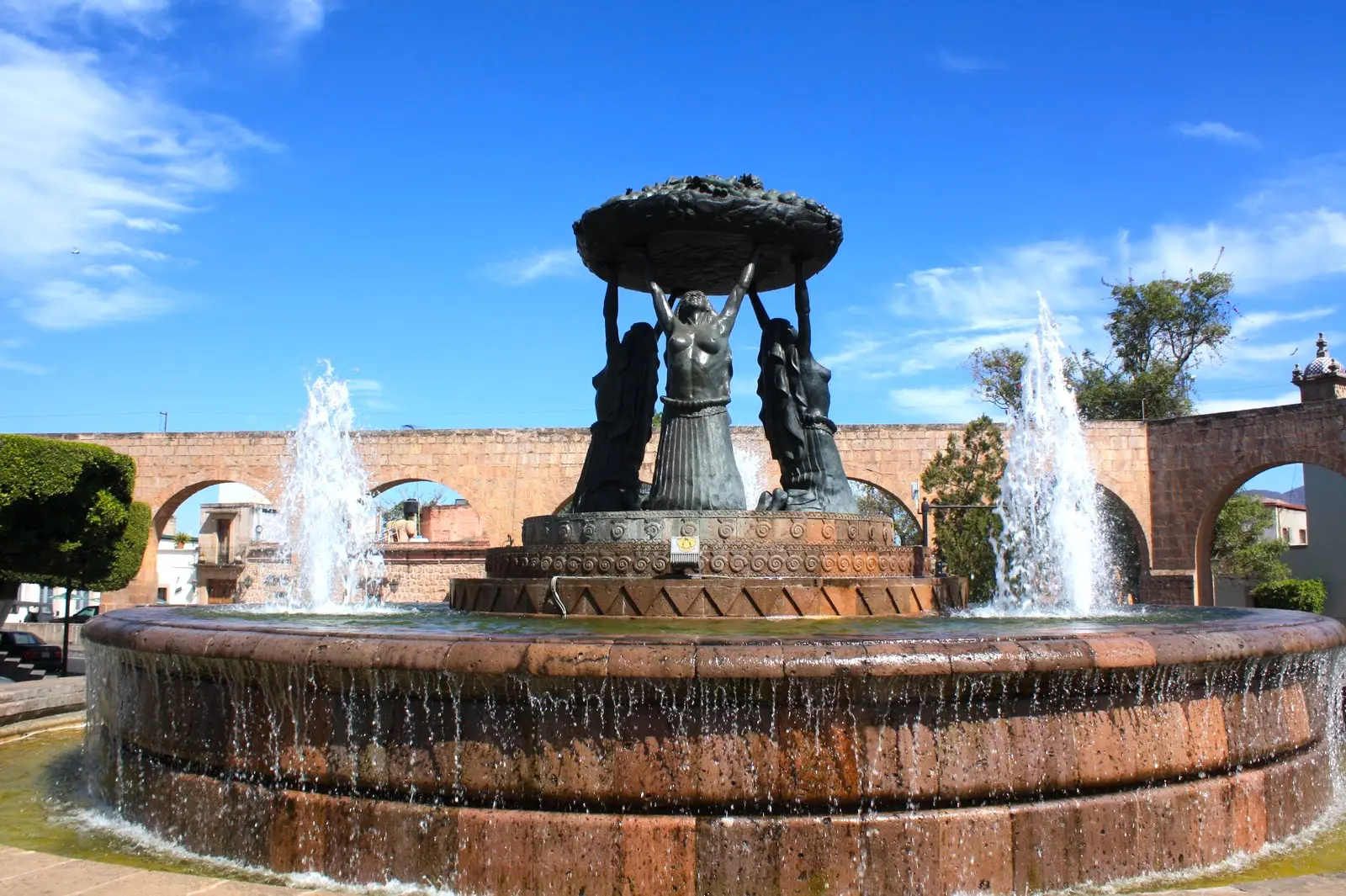
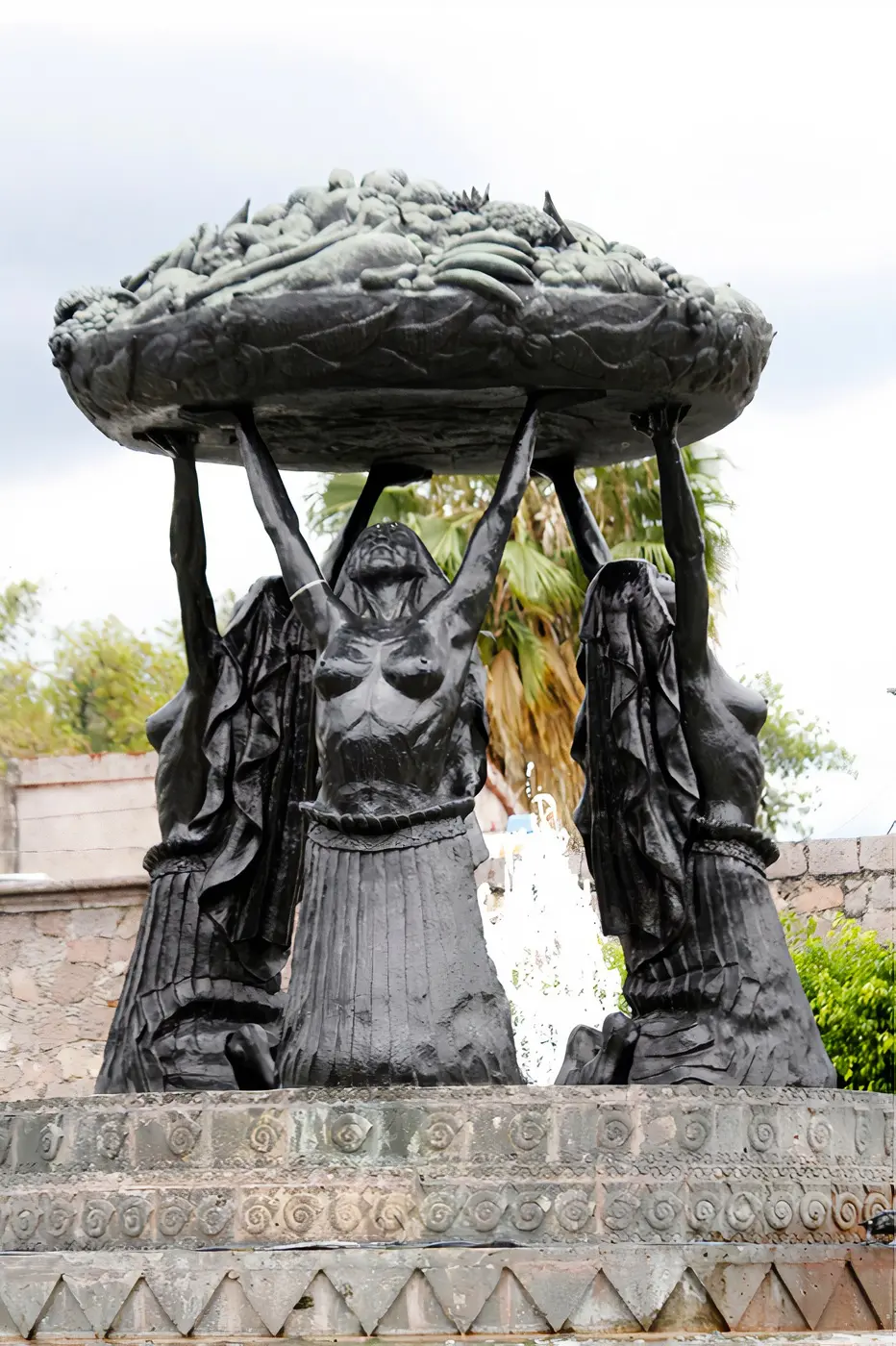
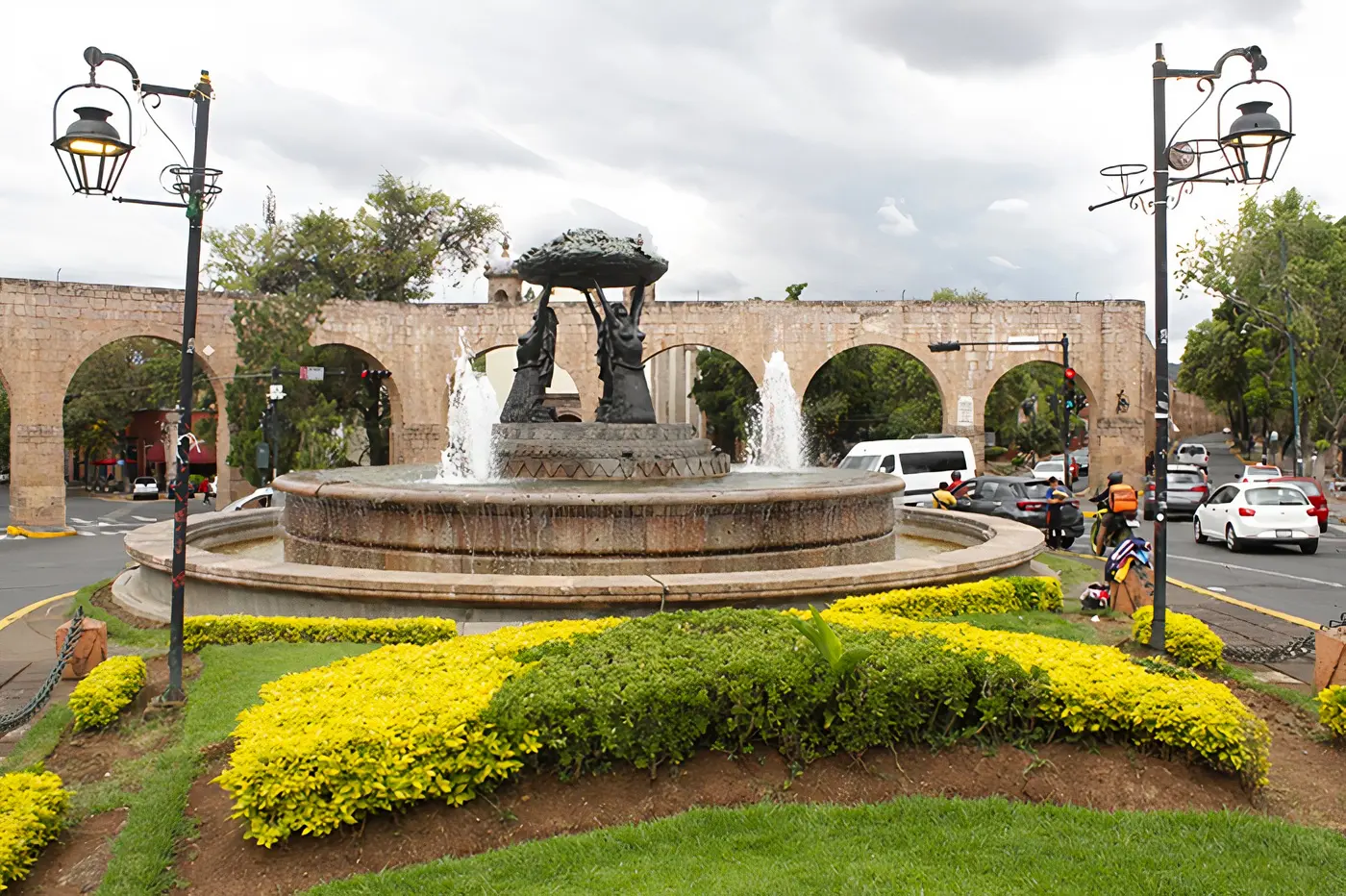
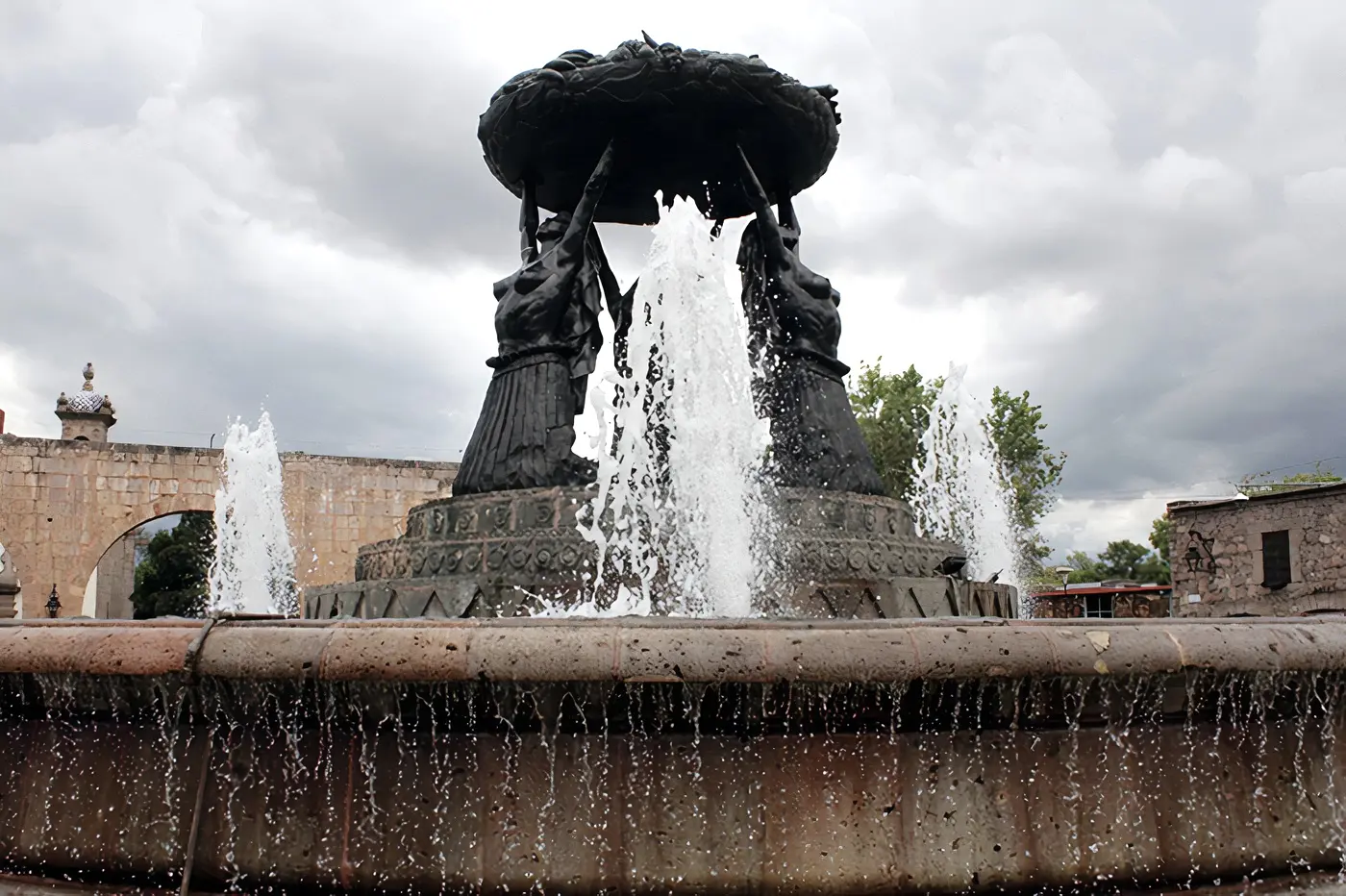
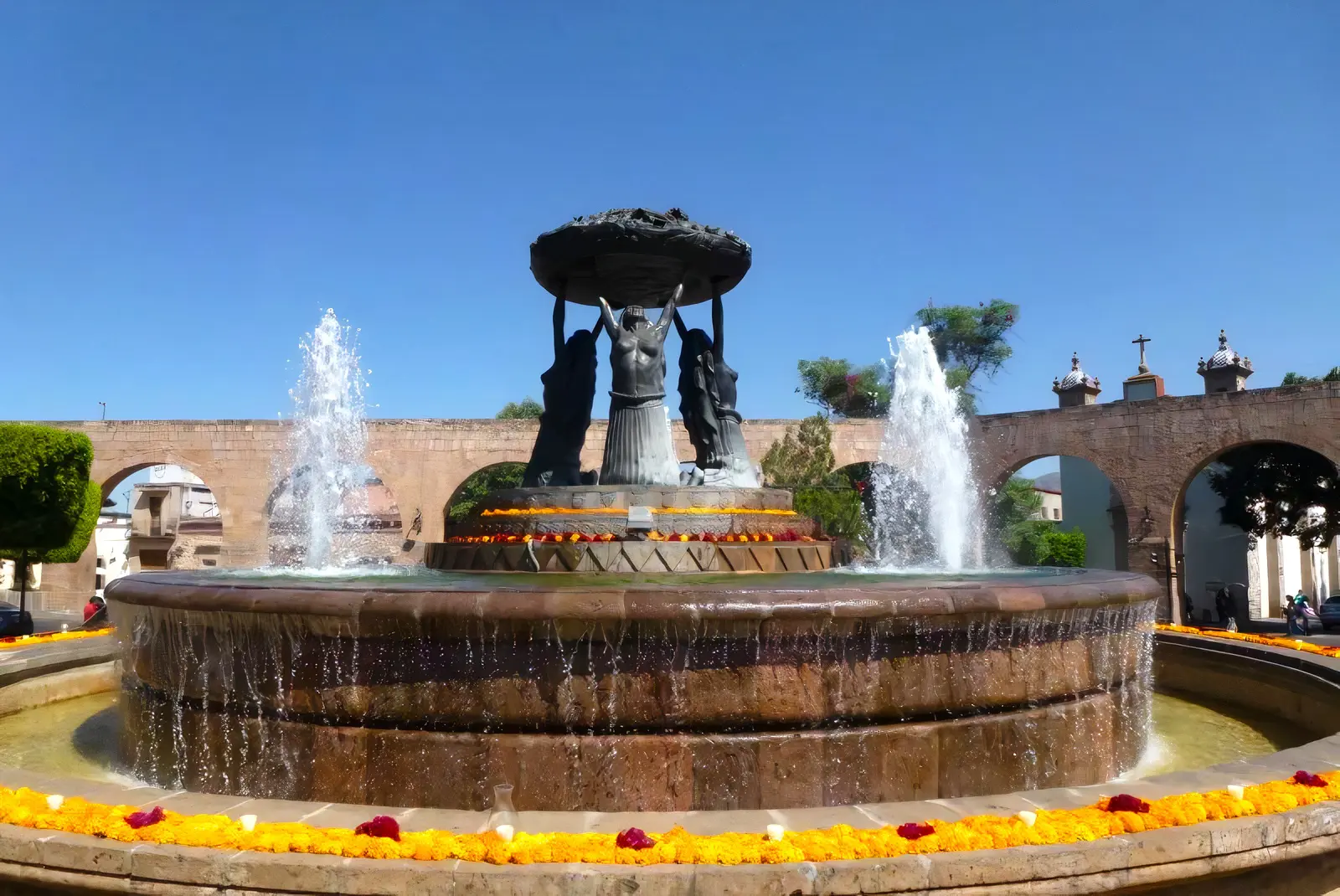
If you cross the street from the Villalongín Garden, you will come across Morelia's most famous image: the Fountain of the Tarascas. Three indigenous women holding a tray full of fruit, with the majestic Aqueduct in the background. It's a must-have photo for every tourist.
But did you know that what you see today is a modern replica? And that there was a nighttime operation to remove the originals that fueled conspiracy theories for decades? Here's the real story that few tour guides know.
🕵️ The Mystery of the Two Fountains
The fountain you admire today is made of bronze, but it's not the original.
The First (1931): It was commissioned by General Rafael Pedrajo. It was made of cement and rebar, and was painted in bright colors . The artists were Antonio Silva Díaz and Benigno Lara.
The Nighttime “Robbery”: The night of August 25, 1965, under orders from the local government (which considered the fountain "in bad taste" because of its colors), it was removed in the dark. By dawn, the fountain had vanished! This sparked rumors that it had been sold to a millionaire in Europe or the United States.
The Current One (1984): The city was without Tarascas for almost 20 years. The bronze fountain we see today was inaugurated on May 18, 1984, a work by the sculptor José Luis Padilla Retana, who used a woman from the island of Yunuén as a model for the faces.
🔍 Where are the originals (and what is “El Huarache”)?
Here we debunk the myths: the original cement ones didn't go to Europe. They are currently located in the Exhibition Grounds (near La Aldea), although they suffered damage during the transfers and their original fruit tray was broken (the current one looks, curiously, like a pizza).
And what was in this place between 1965 and 1984? There was a very simple fountain, without statues, popularly known as “El Huarache”. Today, that forgotten fountain rests in a garden in the Lomas de Hidalgo neighborhood.
🤔 What does it really mean?
Officially: Nothing. There is no document that explains their meaning. Popular opinion says that they represent the three Purépecha princesses (Atzimba, Eréndira and Tzetzangari), or the three capitals of the empire (Pátzcuaro, Tzintzuntzan and Ihuatzio).
The Name: It was originally called “Fuente de las Indias” (Fountain of the Indies). The name “Tarascas” was given to it by the people, derived from the term “Tarasco” (which, according to history, was what the Purépecha people called the Spanish): Tarhaskua, which means “brother-in-law” or “father-in-law”, but the Spanish thought it was the name of the town).
📸 The Perfect Postcard
Despite the controversy, it is the most beloved monument. It represents the fertility of the Michoacán lands and the beauty of indigenous women (although the original 1931 statues caused a scandal by showing bare torsos).
📍 Why visit it from Pátzcuaro?
Because here the historical circle closes. You are seeing a (modern) allegory of the culture you authentically experience in Pátzcuaro. Furthermore, it is the visual connection point between the Royal Street (Av. Madero) and the Aqueduct. Tip: The best time for the photo is at sunset, when the sun hits the quarry of the Aqueduct and the fountain is illuminated.

 EN
EN  ES
ES