
 MAP
MAP SEARCH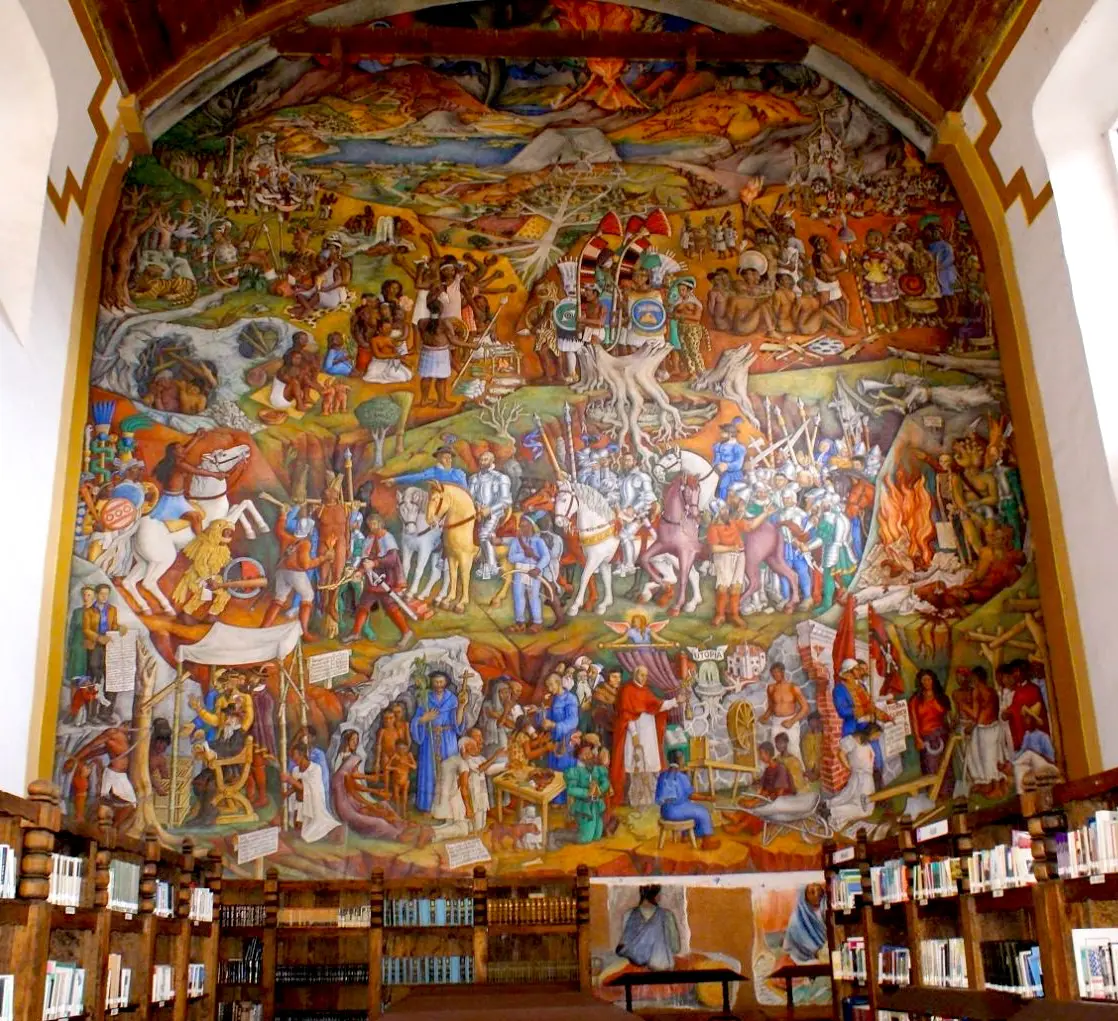
Adress
Padre Lloreda 34A, Centro, 61600 Pátzcuaro, Michoacán, México.
GPS
19.516580535933, -101.60840749741
Monday
09:00 – 19:00
Tuesday
09:00 – 19:00
Wednesday
09:00 – 19:00
Thursday
09:00 – 19:00
Friday
09:00 – 19:00
Saturday
10:00 – 16:00
Sunday
10:00 – 16:00
KNOW MORE PLACES
VISITA OTRAS LOCALIDADES
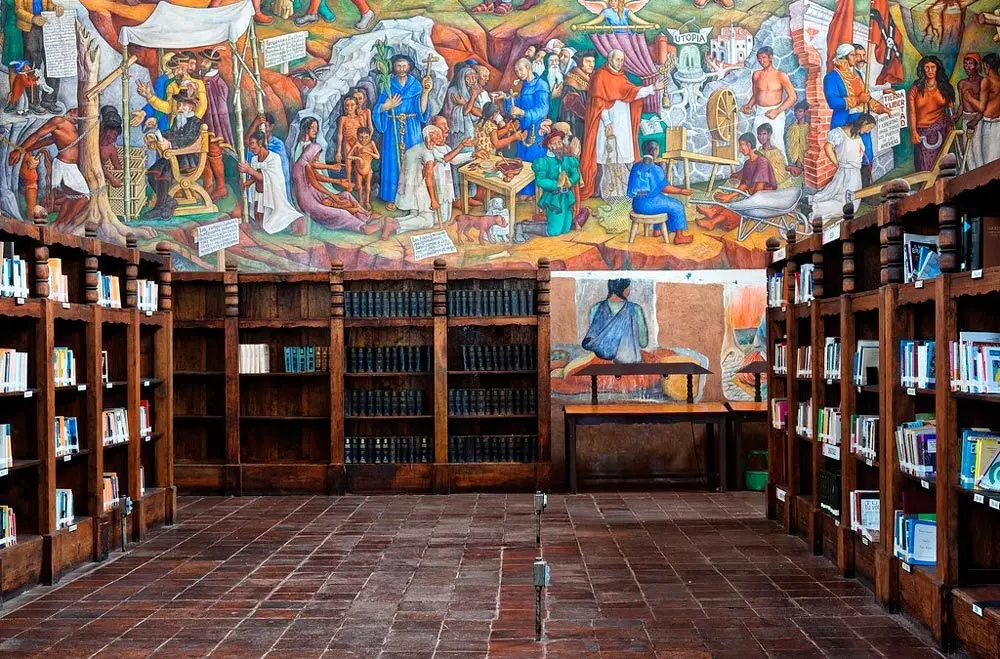
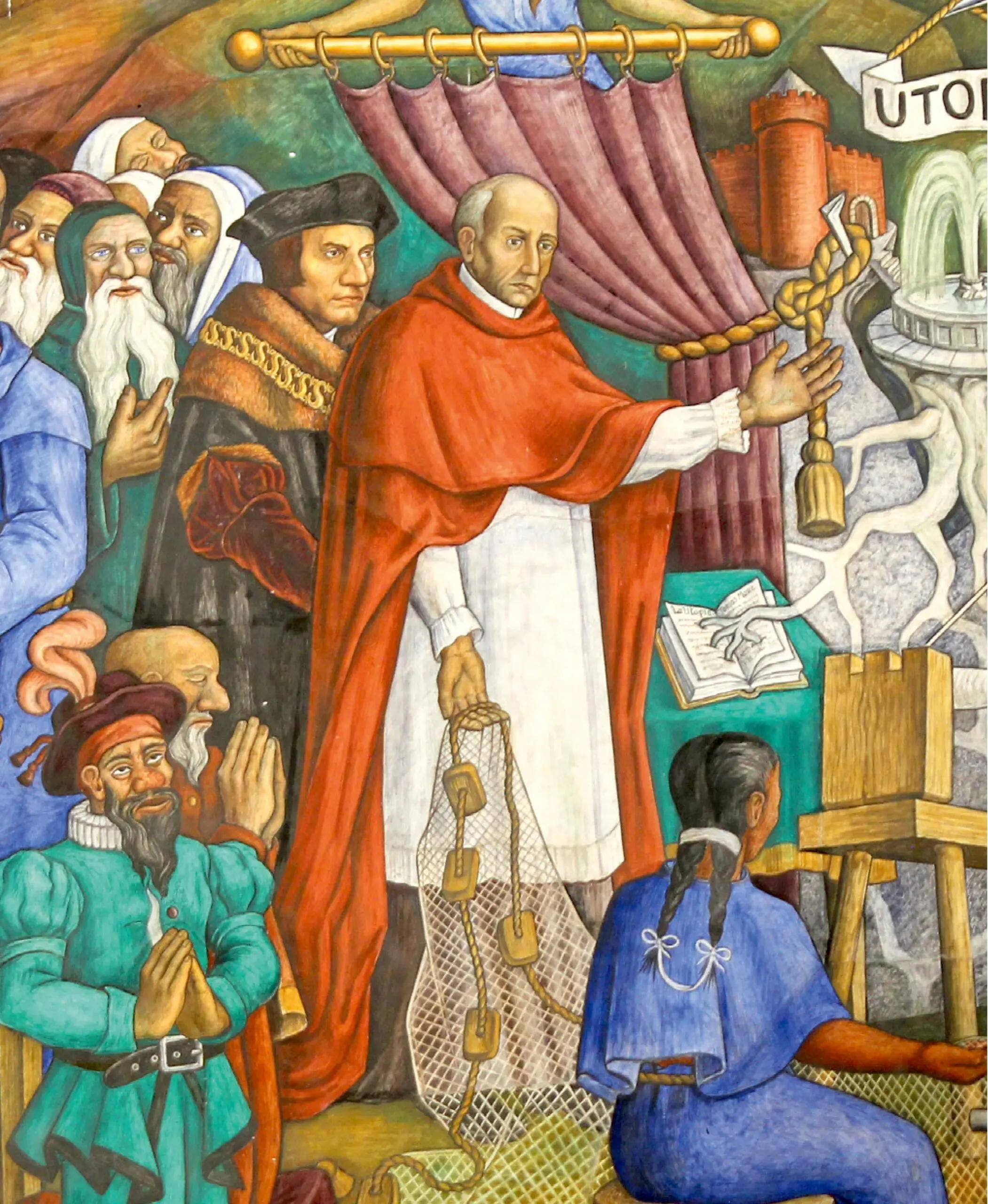
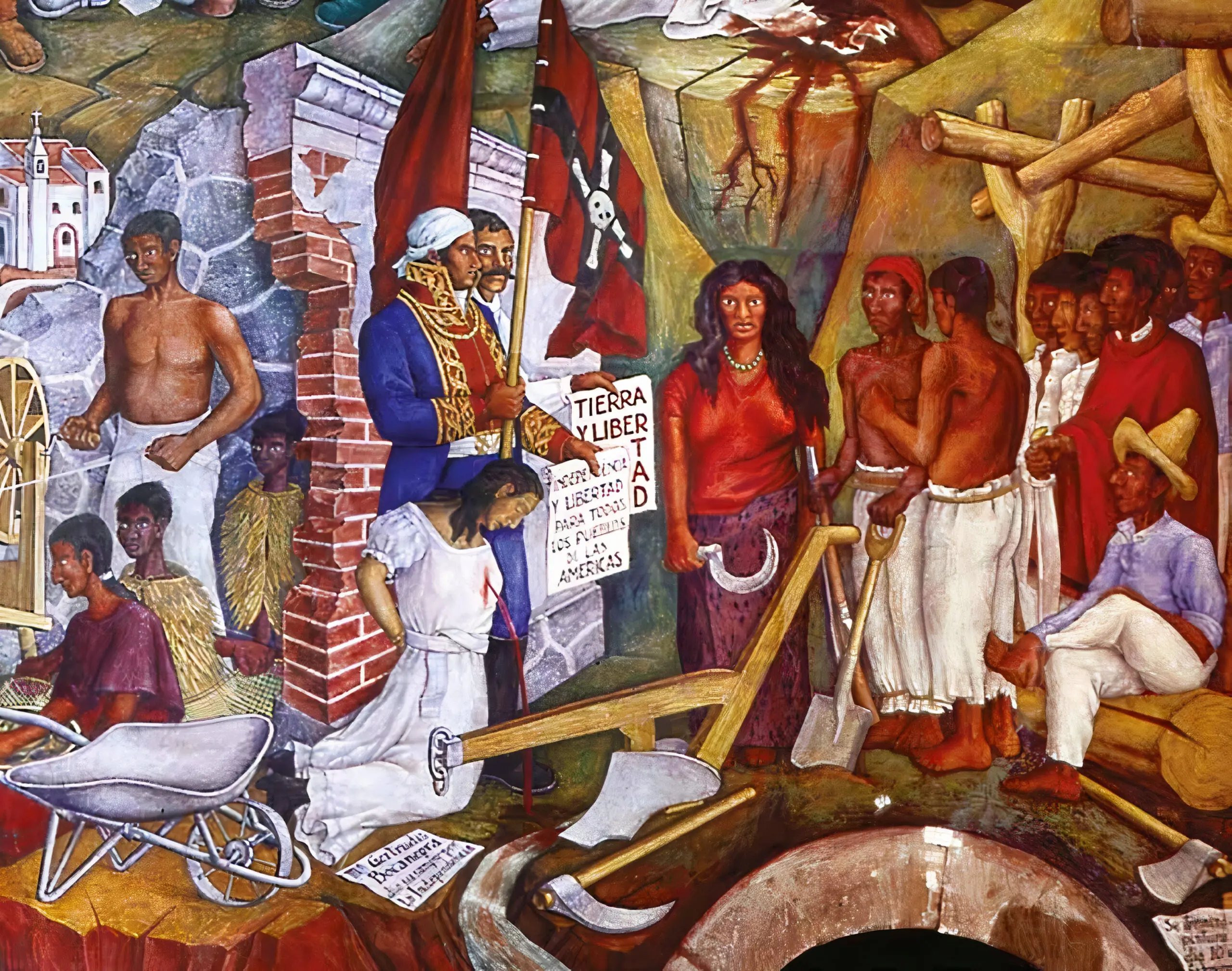
Entering the Gertrudis Bocanegra Public Library is to witness a dialogue between centuries. What we see today in the apse of the old temple—the monumental mural *History of Michoacán* (1941-1942)—is the result of an exceptional convergence where 16th-century Augustinian architecture, the patronage of the North American elite, and the most ambitious cultural project of post-revolutionary Mexico intertwine.
The Site: The Old Temple of San Agustín and the Mystique of the Stone
To understand the magnitude of the mural, we must first decipher the building that houses it. This building was the Temple of San Agustín, the heart of a convent complex founded by the Augustinian order, who arrived in Pátzcuaro around 1576.
Unlike other orders, the Augustinians distinguished themselves through their intellectual rigor and their role in training academics. The architecture of the church, with its austere stone walls and monumental proportions, reflects this pursuit of transcendence through study. Its spacious naves and deep apse were designed to allow the orator's voice to resonate with authority, a characteristic that centuries later would facilitate its transformation into a sanctuary of the written word: the library.
Saint Catherine: Wisdom as Destiny
One fact that reveals the historical significance of the place is its original dedication: Saint Catherine of Alexandria, Virgin and Martyr. In iconographic tradition, Saint Catherine is the patron saint of philosophers, students, and libraries due to her legendary erudition.
Therefore, the conversion of the temple into a public library under the government of Lázaro Cárdenas was neither a random occurrence nor a simple reuse of space; it was a coherent transition that restored the building to its original intellectual purpose. Pátzcuaro not only gained a library, but also recovered a center of thought that time and the Reform Laws had temporarily silenced.
From Pittsburgh Steel to Lake Pátzcuaro
The financial origins of this masterpiece are worthy of a novel about cultural diplomacy. The mural was financed by the American businessman Edgar J. Kaufmann, the same patron who commissioned Frank Lloyd Wright to build Fallingwater.
Originally, Kaufmann commissioned Juan O’Gorman to create a mural in Pittsburgh. However, the artist’s sketches—laden with a biting social critique of industrial dehumanization—were rejected by the conservative establishment of the steel city. Thanks to the efforts of his wife, the sculptor Helen Fowler Alger, Kaufmann was able to transfer the funding to Mexico. It was then that Lázaro Cárdenas’s vision intervened, offering the Augustinian church in Pátzcuaro as the perfect canvas for O’Gorman’s “creative revenge.”
The Invisible Axis: A Territorial Hypothesis
As an architect by training, O’Gorman didn’t just paint; he interpreted the landscape. The longitudinal axis of the Temple of San Agustín shows a slight deviation to the northeast. If we draw a straight line from the mural to the horizon, this direction points approximately toward the archaeological zone of Tzintzuntzan, the ancient capital of the Purépecha Empire.
This orientation suggests that the building was constructed respecting an older spatial logic. By painting history on this wall, O’Gorman visually reconnected the mestizo present with the navel of the Purépecha world, integrating painting, architecture, and the sacred geography of Michoacán into a single discourse of identity.
A mural that narrates and questions
The work is a sweeping narrative that should be read from bottom to top:
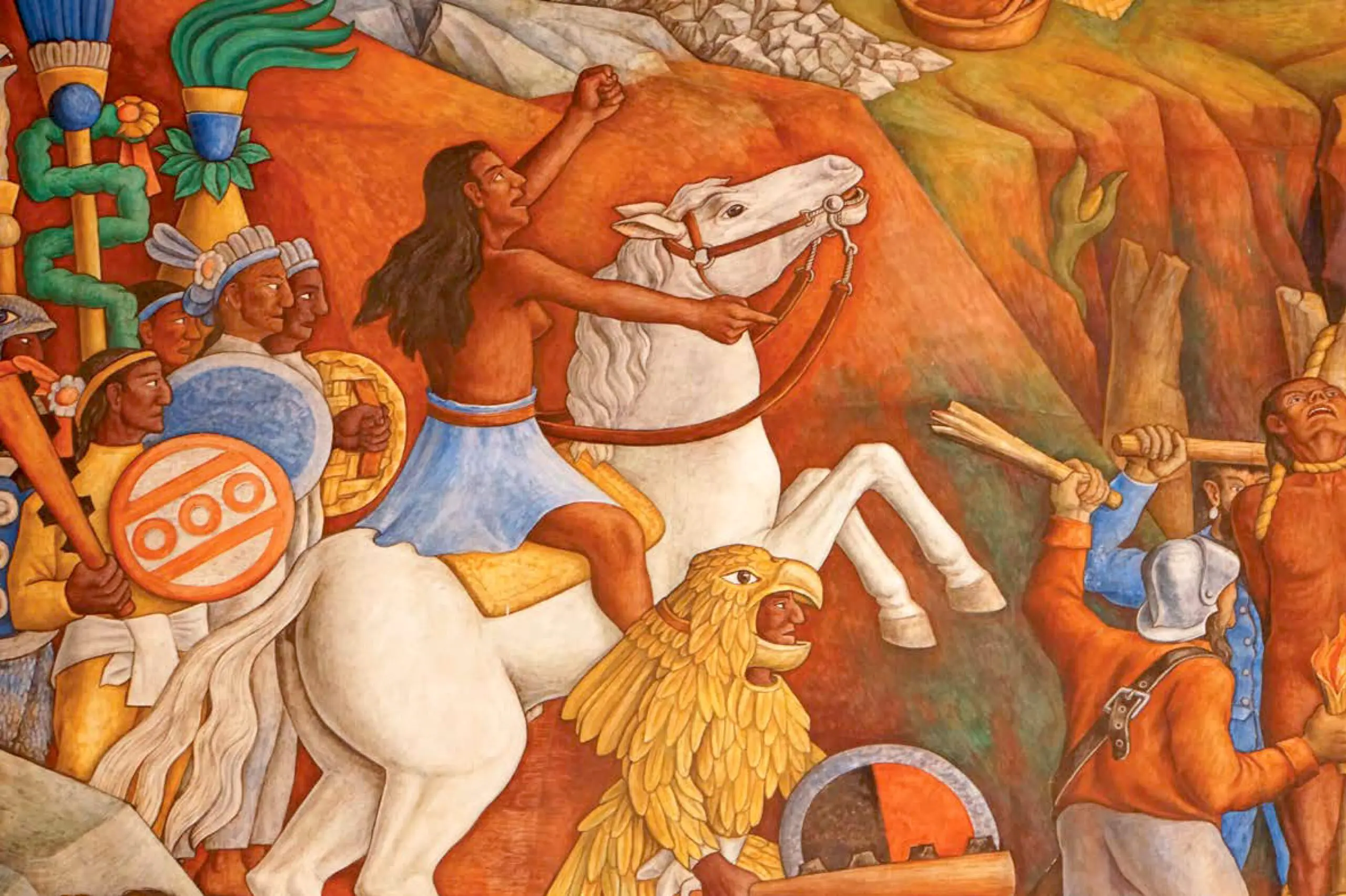
- The Base (The Purépecha World): An exaltation of lake life, astronomical knowledge, and social harmony before the rupture. O’Gorman rescues the value of indigenous ingenuity.
- The Center (The Clash of Worlds): The brutality of the conquest personified in Nuño de Guzmán, contrasted with the humanism of Vasco de Quiroga. The artist uses color and form to denounce exploitation and celebrate cultural resistance.
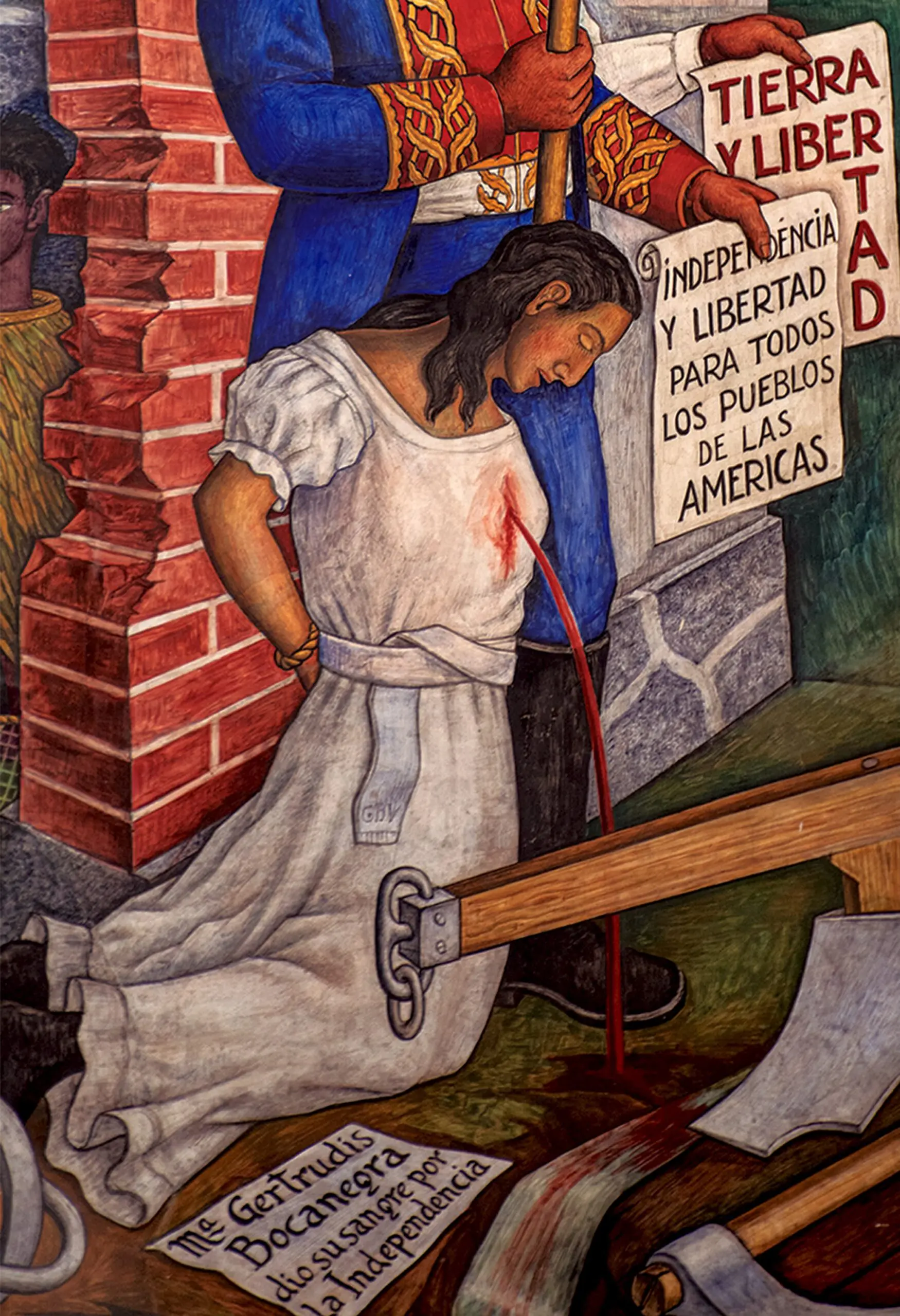
- The Summit (Emancipation): The sacrifice of the local heroine Gertrudis Bocanegra and the triumph of public education. It is here that Pátzcuaro reaffirms itself as the site of the First Inter-American Indigenous Congress of 1940, an event that consolidated the city as a center of continental thought and gave rise to the now defunct CREFAL.
The Impact of Your Visit
To do justice to history is to acknowledge that this masterpiece did not arrive here by accident. A colonial temple, a post-revolutionary educational project, and international funding converge on this wall.
In Visit Pátzcuaro, we invite you to visit the library with this new perspective. Pause, observe, and let the story unfold. Contemplate this work with the depth it deserves: not just as a visitor, but as a witness to the historical truth that resonates within these walls.
Come to Pátzcuaro and enter into a conversation between centuries.
 EN
EN  ES
ES