
 MAP
MAP SEARCH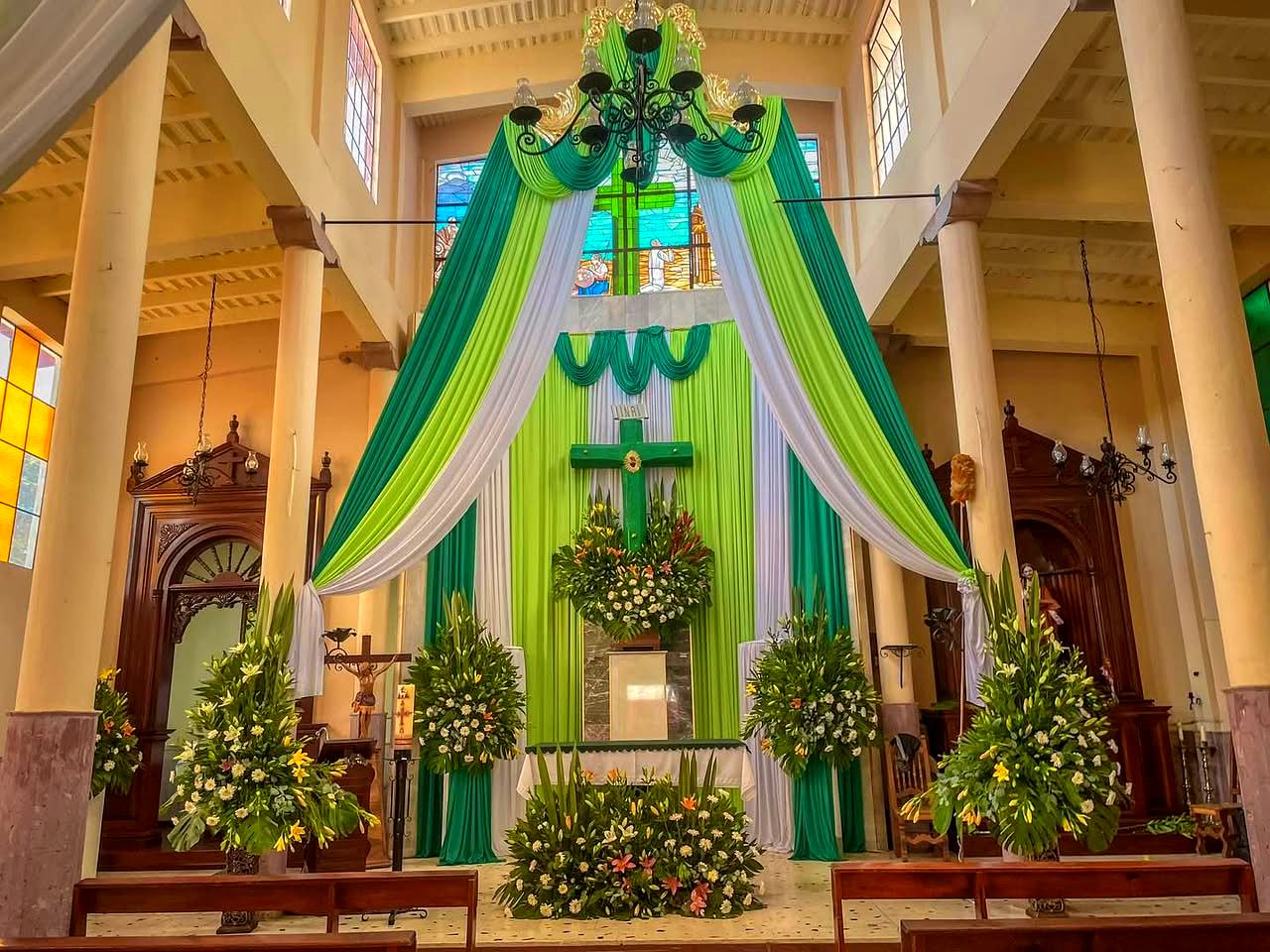
Adress
Pátzcuaro, Michoacán, México.
GPS
19.51952069217, -101.60873202901
KNOW MORE PLACES
VISITA OTRAS LOCALIDADES
If you walk through our streets today, you will notice that Pátzcuaro is not just a static postcard, but a living, reverberating structure. The roar of the cohetes (firecrackers) breaking the silence of dawn is not merely a warning; it is the pulse of a city that has learned to sustain itself on the invisible.
From Universal History to the Heart of Adobe
Your journey through this tradition begins centuries ago, far from our lake basin, in Jerusalem and Rome. History tells that in the 4th century, Empress Saint Helena found the cross of Christ's martyrdom, while Emperor Constantine I saw a cross in the sky with the legend “In hoc signo vinces” (with this sign you shall conquer) before a crucial battle. “In hoc signo vinces” (con este signo vencerás) antes de una batalla crucial.
Although the official liturgy moved to September, in Mexico we have kept May 3rd as the immovable date to honor the sacred wood. Here, what you may know as “ Mason’s Day” carries a sense of artisanal pride. In Pátzcuaro, we do not build concrete skyscrapers; we are dedicated to preserving adobe , the millenary technique of earth and straw that provides coolness to our historic manor houses. Those who master this art are the true guardians of our vernacular architecture.
The Embrace of the Four Cosmic Directions
If you look closely at the atriums of our neighborhoods, you will see that the stone crosses are often "clean," without the figure of Christ. This is no coincidence; long before the arrival of the Spaniards, the Purépecha people already venerated the cross as a representation of the four cosmic directions (North, South, East, and West) and the center where the earth meets the sky.
When the missionaries planted the Christian cross in the 16th century under the humanist vision of Vasco de Quiroga (“Tata Vasco”), there was no rupture, but a sacred continuity. The cross became a cultural tool to order our space—a symbol that has guarded the city since its recognized foundation date on September 28, 1534.
La Cruz Verde: The History and Heart of the Neighborhood
If you let the smell of mole and woodfire guide you, you will arrive at the corner of Álvaro Obregón and Cruz Verde. Here, the celebration is one of the most traditional in the region and is born directly from the genuine effort of the neighbors:
The Legend of the Wood: The cross that gives its name to the neighborhood and that you see today in its temple is considered a direct legacy of Vasco de Quiroga. Oral tradition says it was carved from wood so "tender" that it never fully matured, preserving that green color that symbolizes the life and identity of this area.
The Eve and the "Boteo": Since May 2nd, the neighborhood has been in motion with a convite (parade) through the streets featuring bands and traditional characters. You will notice the community organized in “"boteo" (fundraising) to finance the decorations, music, and festive atmosphere.
The Shared Feast: Around mid-morning on May 3rd, tables appear on the sidewalks. Food—mole, carnitas, and atole—circulates from hand to hand. If someone asks you, “Have you eaten yet?”,, accept it as the invitation it is; here, food is not sold, it is shared.
The Castillo: At nightfall, fireworks and the traditional "castillo" (pyrotechnic tower) light up Obregón Street, marking the climax of a festival that unites the entire neighborhood in a spectacle of light and gunpowder.
The Prayer for Rain
Finally, understand that this festival is also a prayer for survival. May 3rd symbolically marks the end of the dry season and the beginning of the wait for the rains. You will see workers climb Cerro Blanco to bless their crosses adorned with fresh flowers—often buganvillas—and colorful paper, praying for the water that will make the corn sprout in the nearby fields.
Today, as you walk through Pátzcuaro, look at the crosses crowning the works in progress. Remember that every adobe wall carries an implicit blessing and that what truly sustains us is that invisible web of faith, work, and community that needs no explanation to be felt.
Have you already heard the ringing of the bells announcing that the neighborhood is celebrating?
 EN
EN  ES
ES