
 MAP
MAP SEARCH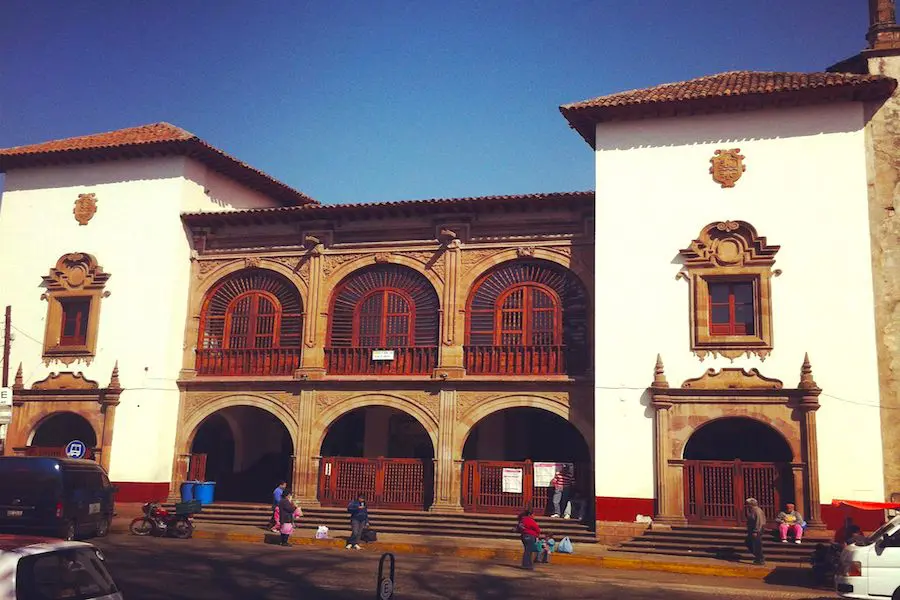
Adress
Plaza Gertrudis Bocanegra s/n, Centro, 61600 Pátzcuaro, Michoacán, Mexico.
GPS
19.516641210377, -101.60858988762
Phone
Web
KNOW MORE PLACES
VISITA OTRAS LOCALIDADES
THE EMPEROR CALTZONTZIN THEATRE: A CHRONICLE OF ART AND MEMORY
The fascinating story of the site where the convent past, the forgotten prison and the vision of Lázaro Cárdenas coexist.
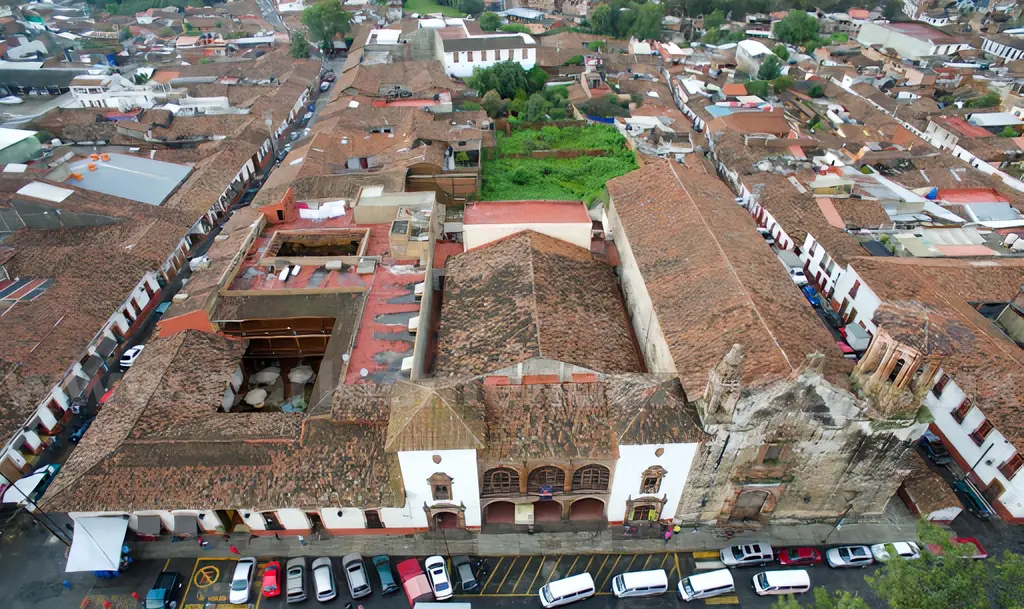
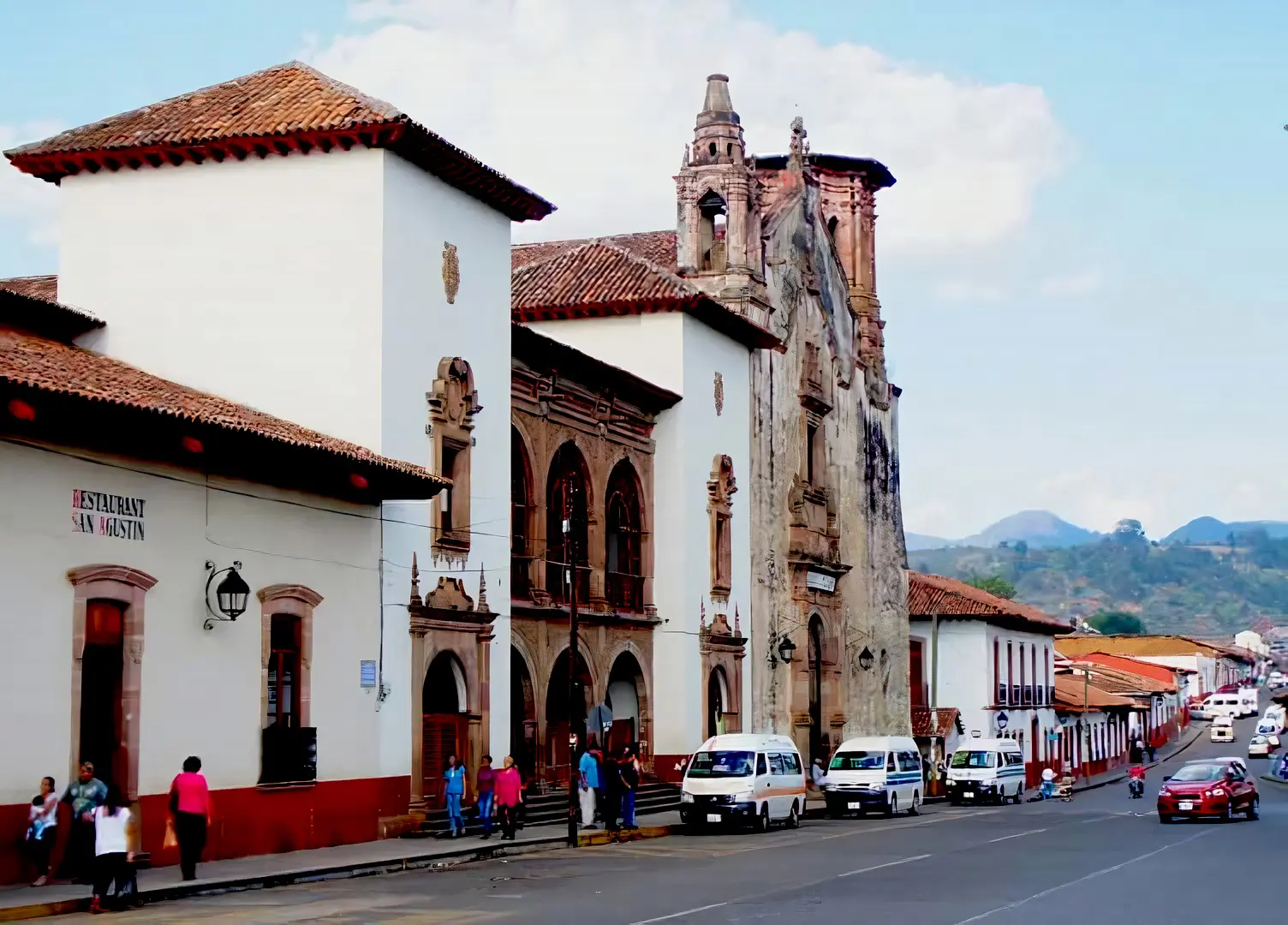
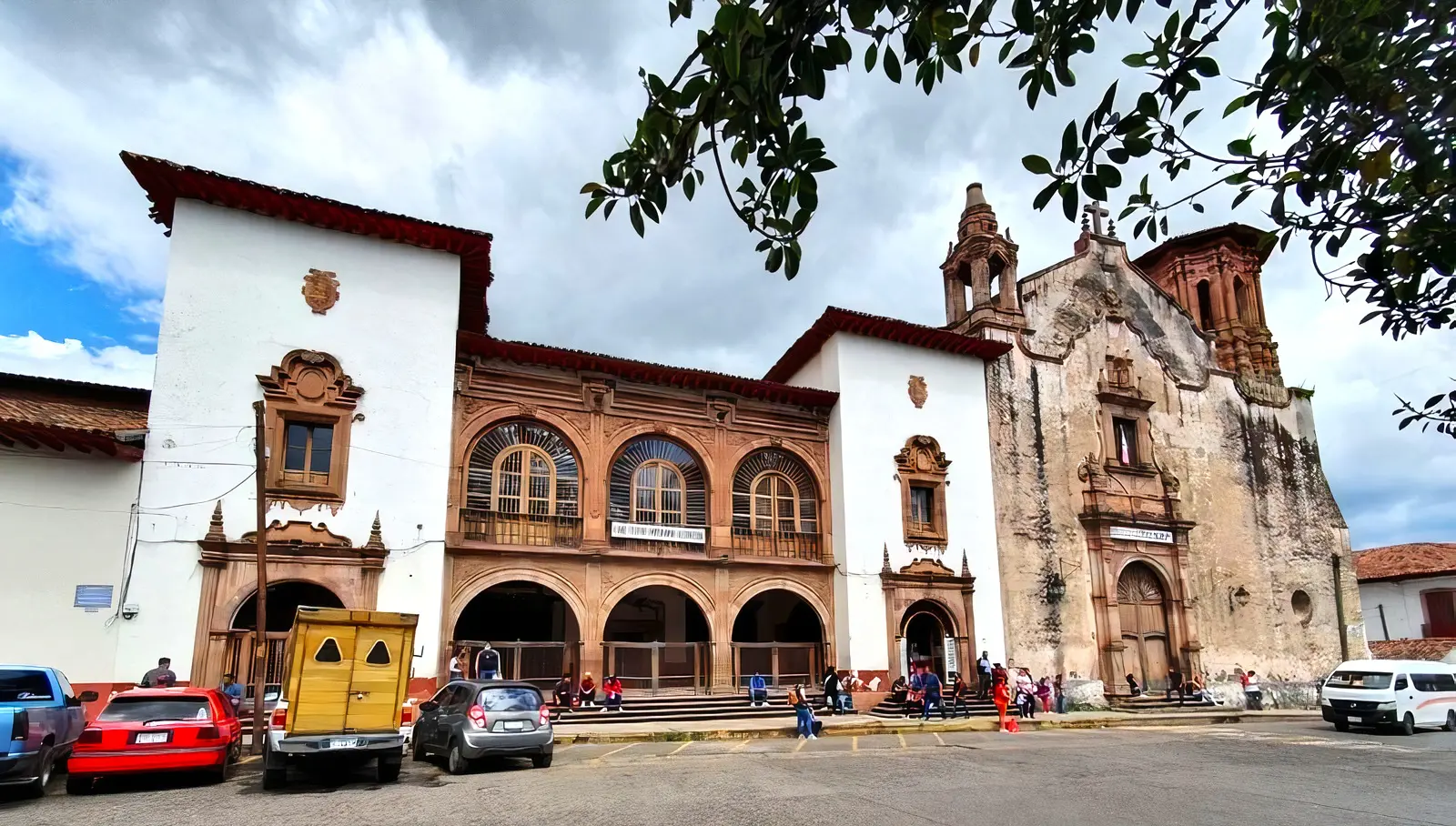
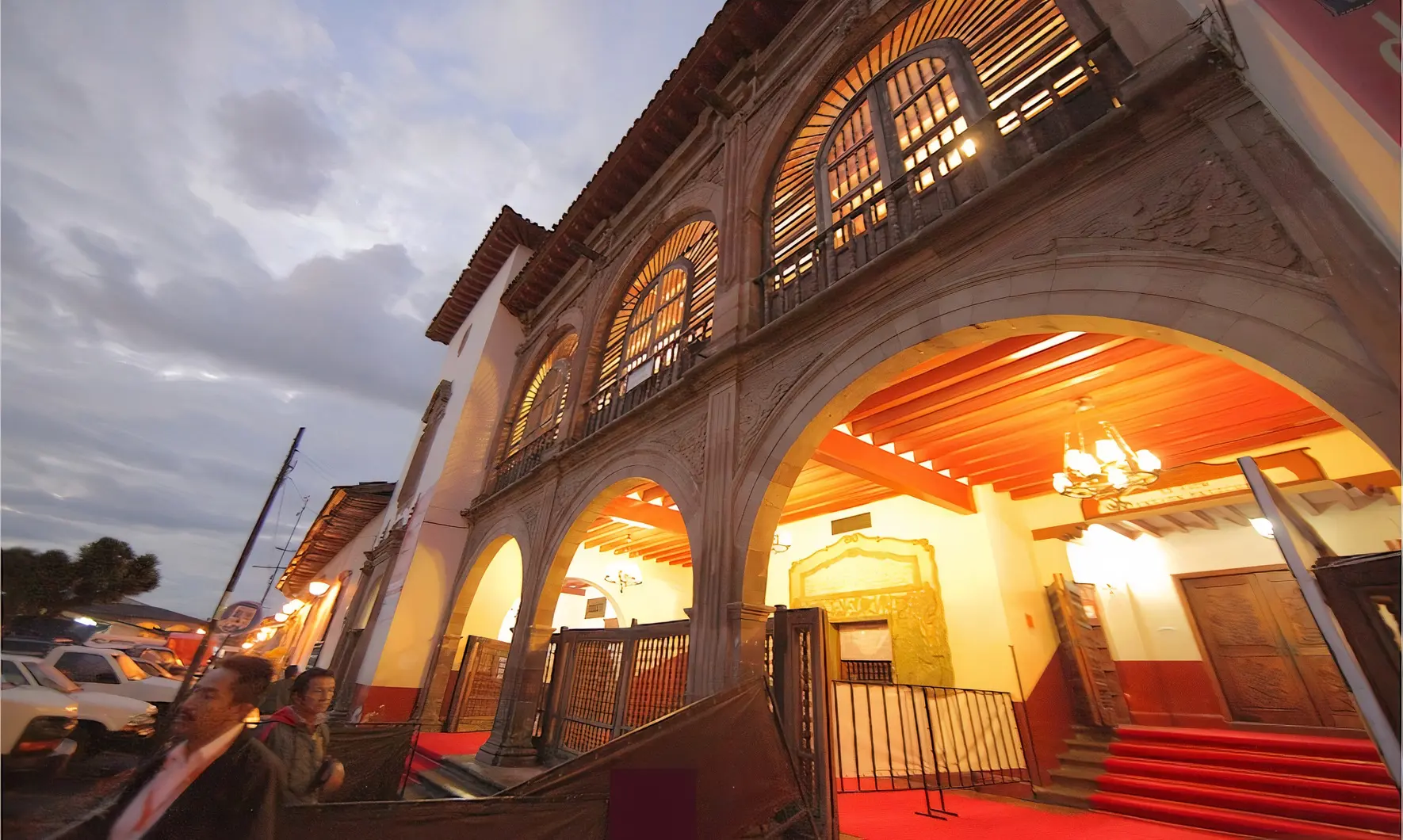
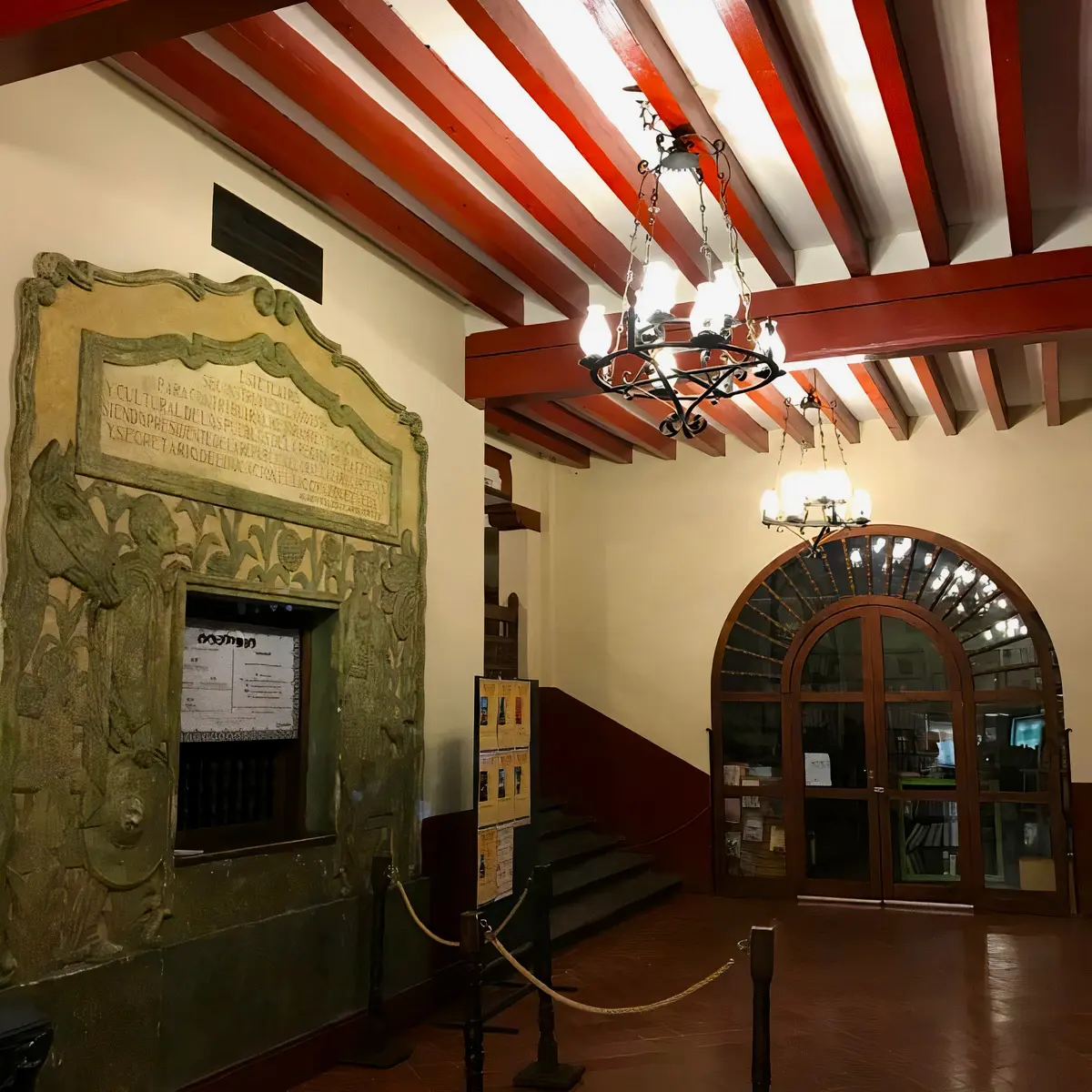
If the walls of the Emperor Caltzontzin Theater could talk, they would tell a story spanning almost four centuries of stark contrasts. Located in the heart of Gertrudis Bocanegra Square (Plaza Chica), this imposing neo-Baroque building is not just a place to watch movies; it is the guardian of a heritage that unites friars, prisoners, generals, and muralists.
We invite you to discover their story, chapter by chapter.
Chapter 1: The Sacred Foundations (17th Century)
Although today we see it as a 20th-century jewel, the ground you walk on upon entering has a viceregal lineage. The history of its origins is intimately linked to two fundamental colonial institutions:
The Dr. Gabriel García General Hospital: Originally called “Hospital of Indians” (1672), an inseparable neighbor whose destiny would become intertwined with that of the theater centuries later.
The Dr. Gabriel García General Hospital: Originally called “Hospital de Indios” (1672), an inseparable neighbor whose destiny would become intertwined with that of the theater centuries later.
Chapter 2: The Dark Stage (From Convent to Prison)
With the arrival of the Reform Laws (1860), the fate of the property changed drastically. The convent was confiscated by the government and stripped of its sacred character, giving way to its most brutal period:
Prison and Public Services: Confirming historical records, after the secularization of the monasteries, the robust stone building was not left empty. Its monastic cells and walled courtyards served ideally as the Municipal Prison and headquarters of the Political Authority. Where prayers were once heard, sentences were pronounced for years.
The Fragmentation: In 1882, the Government of Michoacán ceded the former convent to the City Council with the hope of establishing the Municipal Palace there. When this did not materialize, the complex was divided: the church was preserved (now the Library), but the annexes and the orchard—the exact site of the theater—were sold to private individuals, becoming warehouses and tenements that fell into ruin.
Chapter 3: The General's Gift and the Architect's Secret (1936-1938)
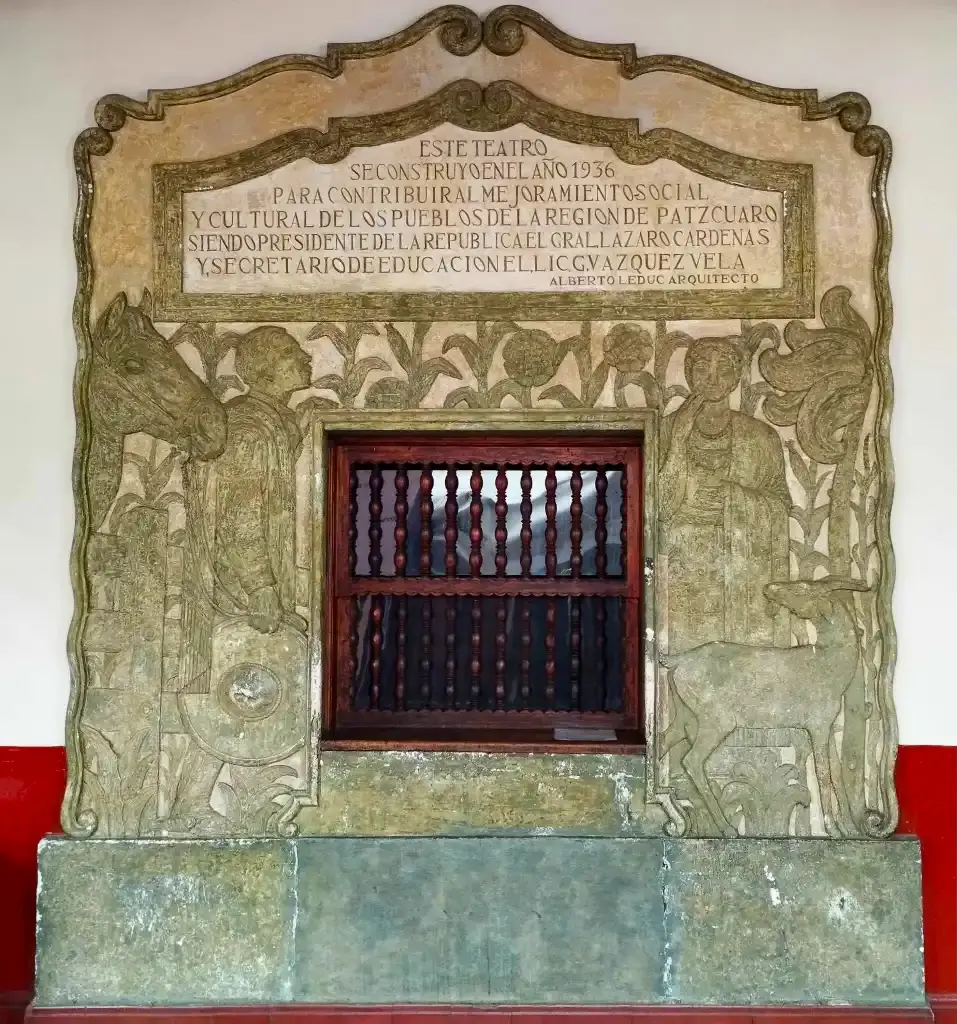
The site's redemption came in 1936. Lázaro Cárdenas del Río expropriated the property again with a clear vision: to erase the neglect and give Pátzcuaro a "City Theater." The titanic task fell to architect Alberto Le Duc and engineer H. Gómez, who carried out a feat of historical engineering:
The Secret of the Façade: Stop and look at the entrance arches. What you see wasn't originally designed as a façade. Le Duc rescued the old arcade from the convent's inner courtyard and moved it stone by stone to the front. It's not an imitation; it's the heart of the 17th century beating in a 1938 structure.
The curtain finally rose on January 1, 1938, closing the chapter of prison forever and opening that of art.
Chapter 4: A Visual Treasure
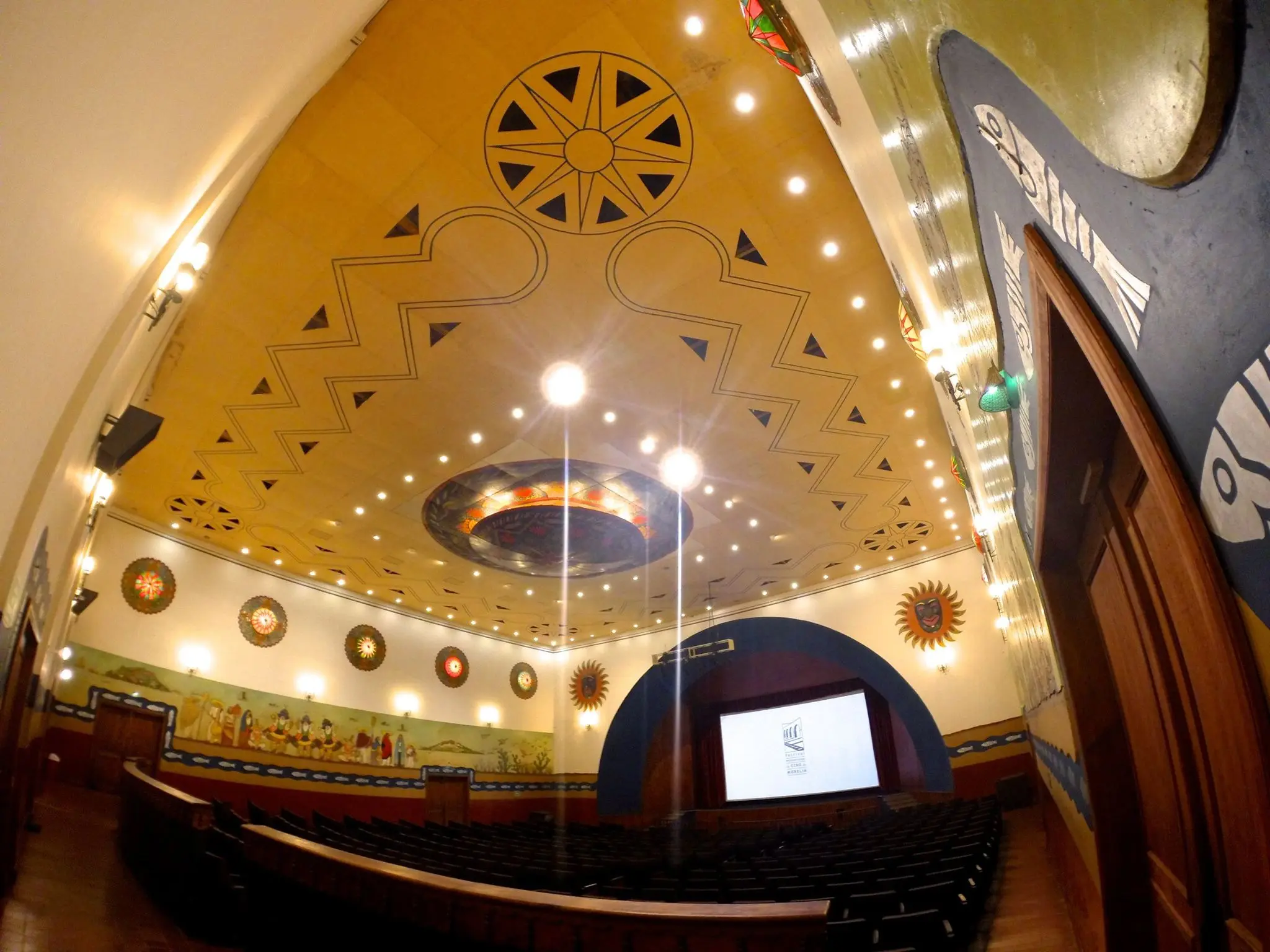
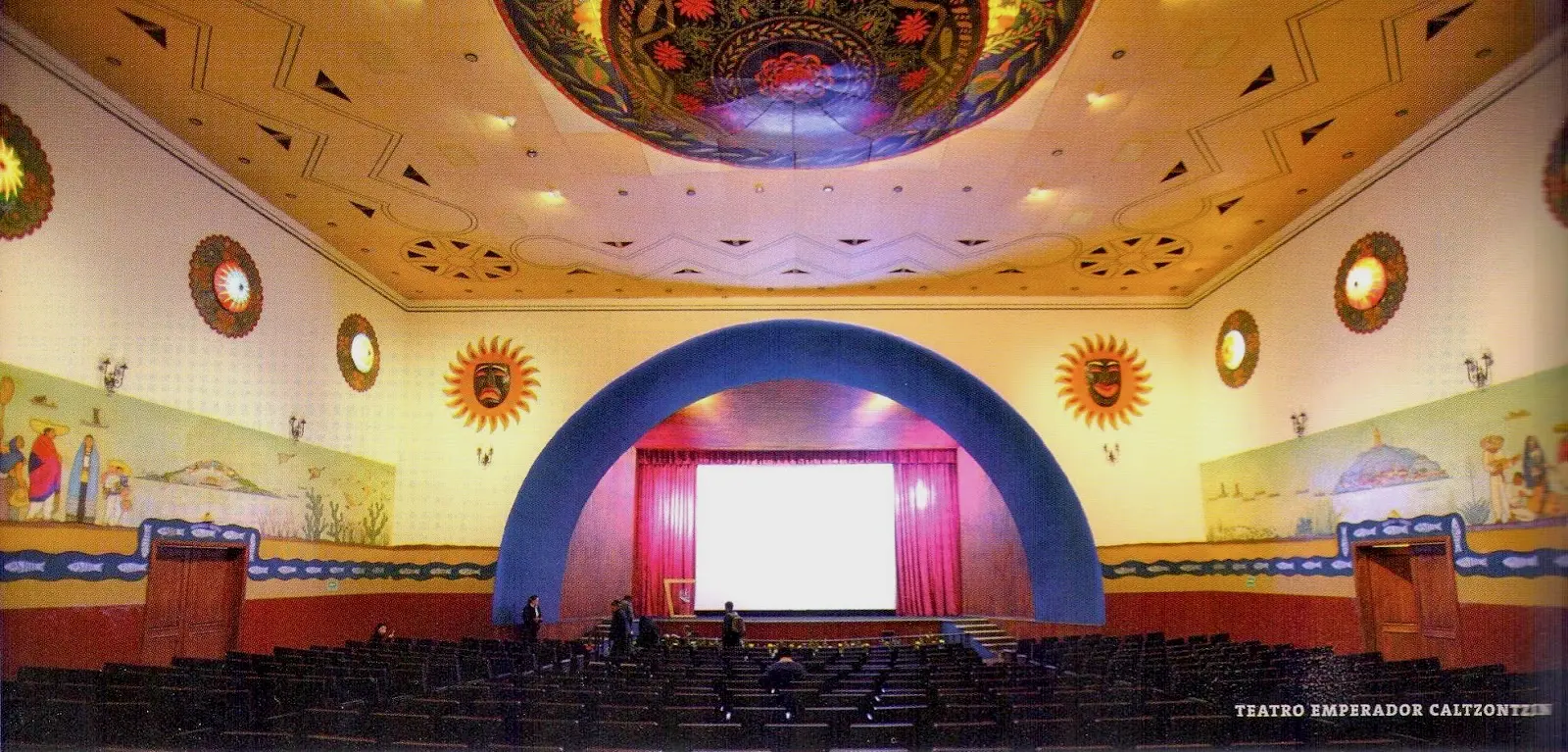
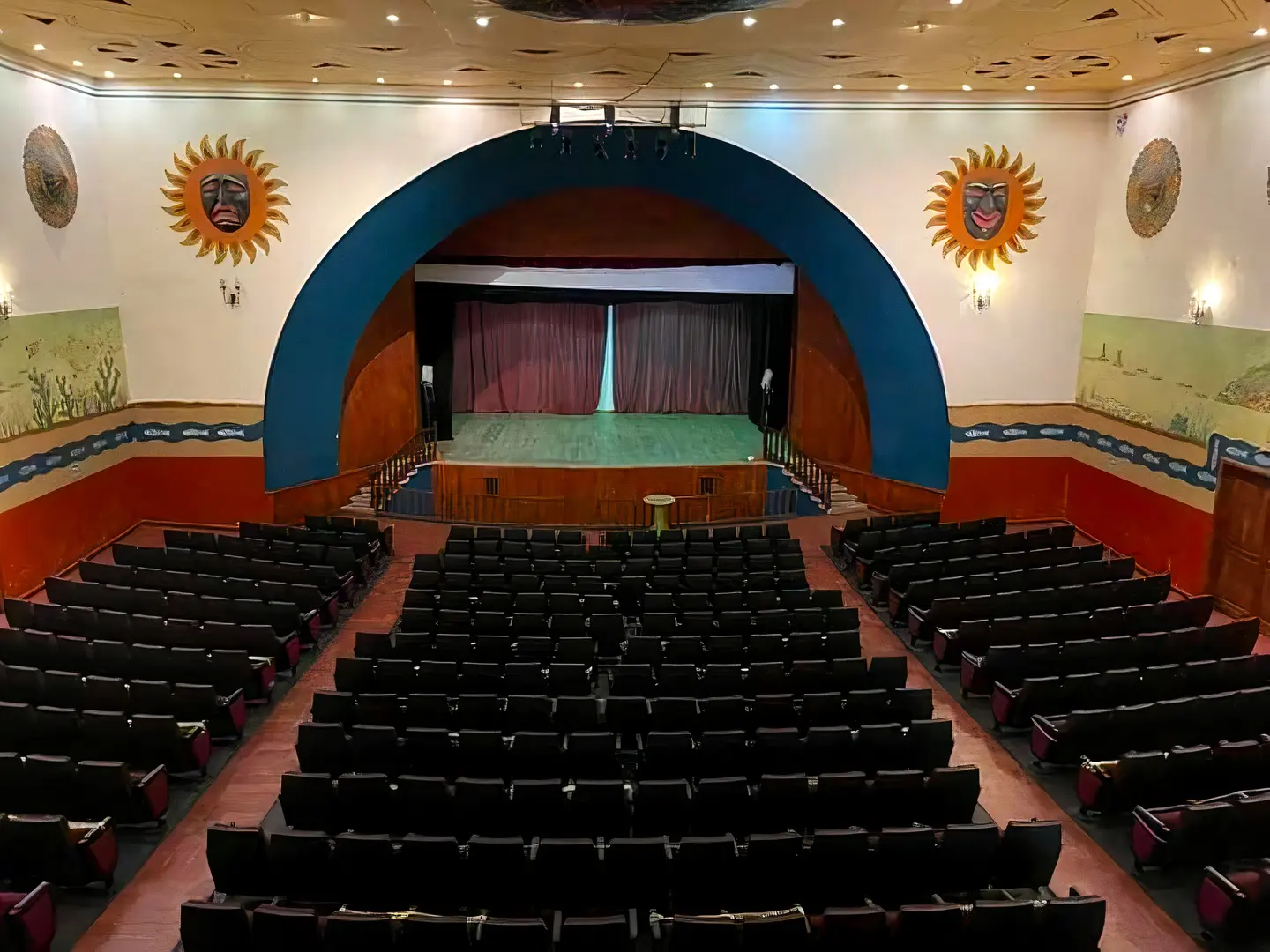
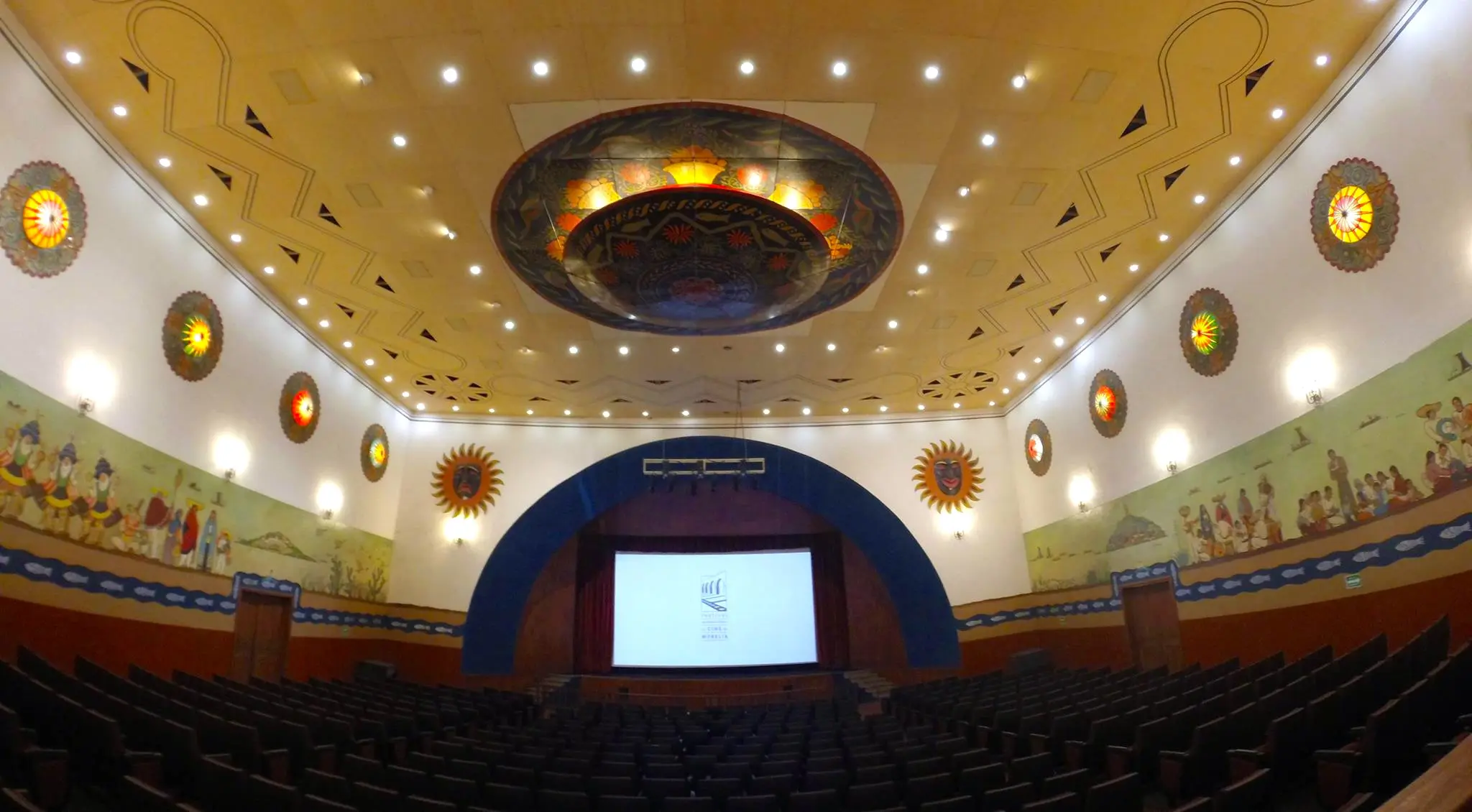
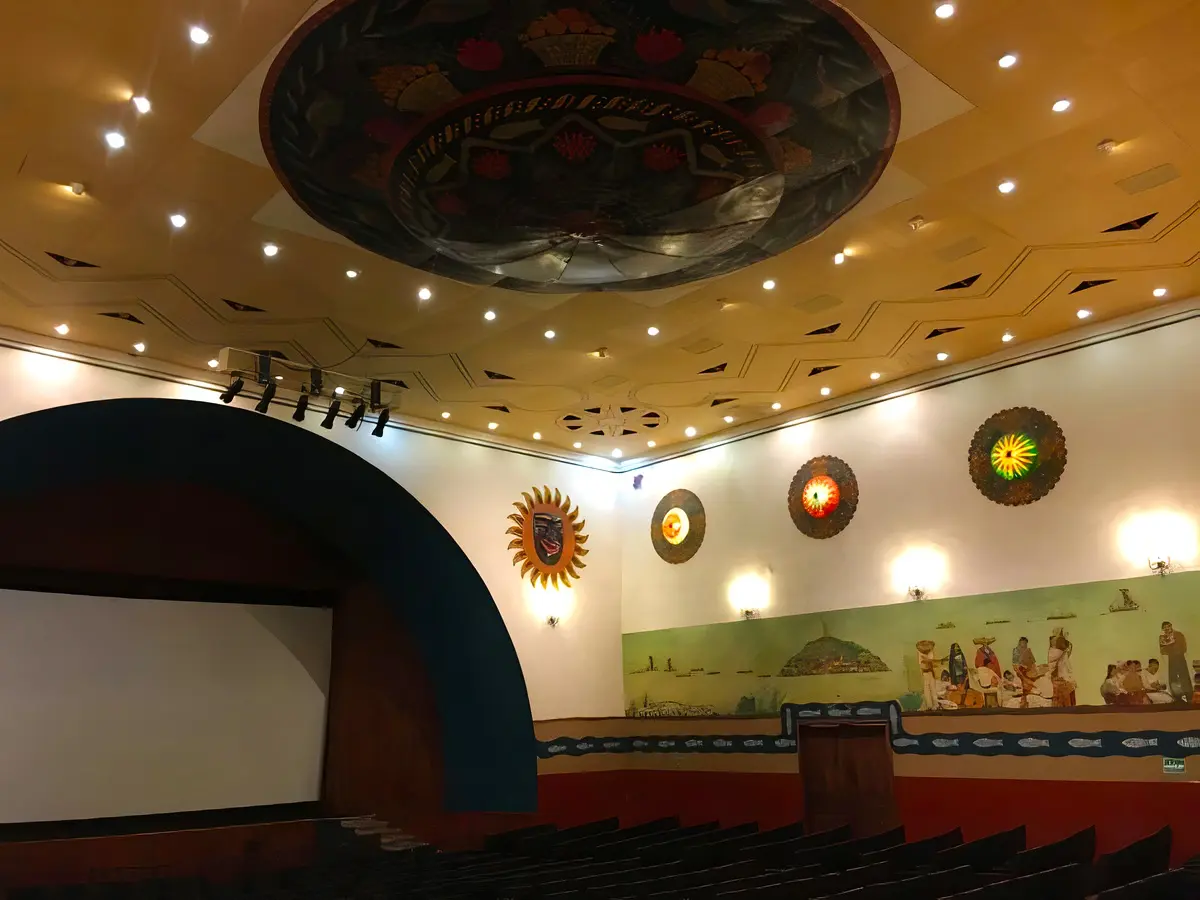
Entering the room is like immersing yourself in pure Mexican nationalism.
The Walls: Guarded by murals by Roberto Cueva del Río, they narrate from pre-Hispanic life to the arrival of the Spanish, reminding us that this land has always been a meeting point.
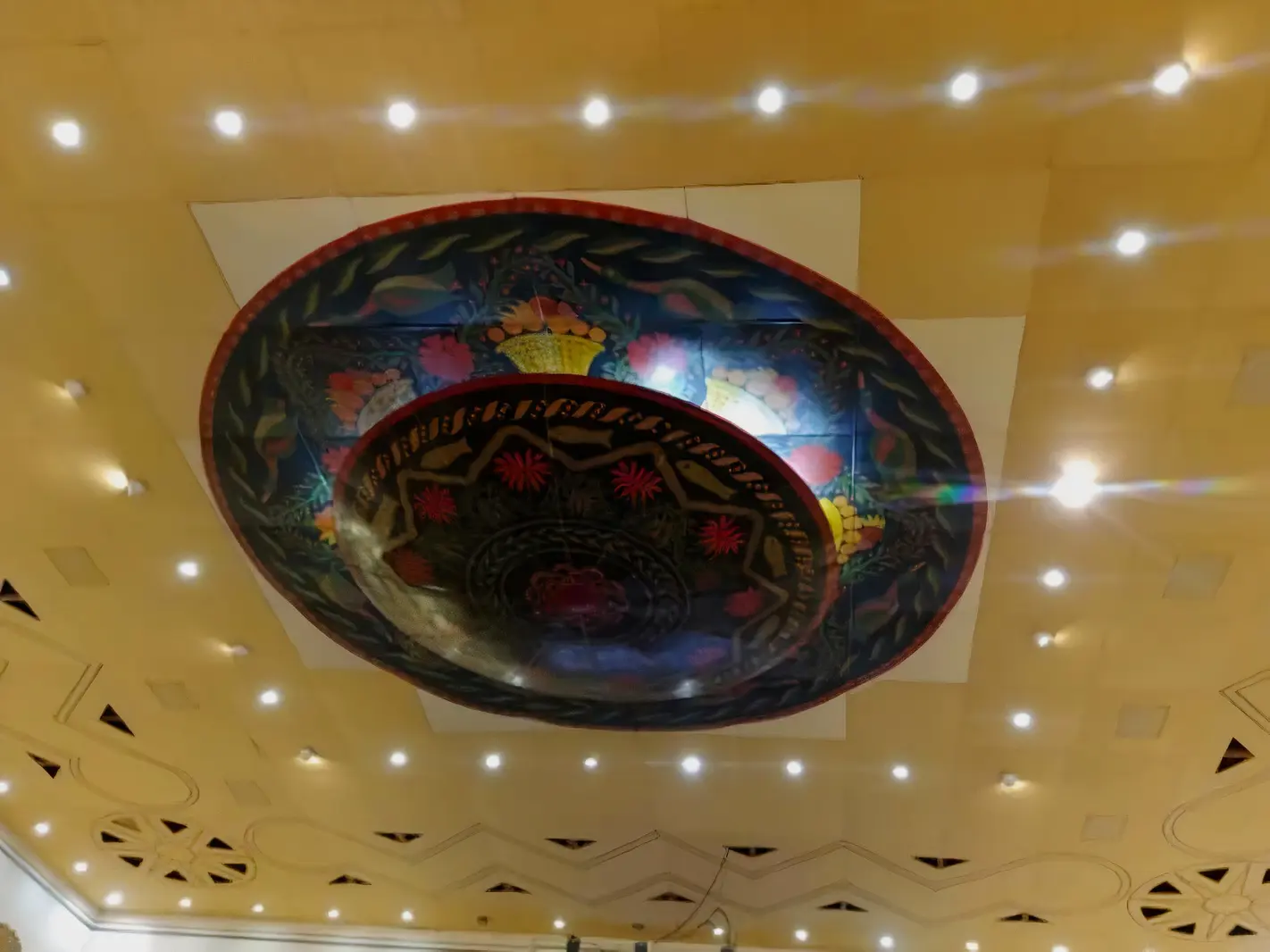
The Sky: The ceiling is a gigantic “Pátzcuaro Tray” (lacquer outlined in gold), an eternal tribute to the artisans of the region that watches over the spectators from the heights.
Chapter 5: The Cinema That Healed
Perhaps the most moving fact is its social function. In 1939, the federal government leased the theater to a board of trustees with a noble purpose: that the box office profits would finance the Civil Hospital. For decades, seeing the gems of Mexican Golden Age Cinema here also meant buying medicine for the sick in Pátzcuaro. A commitment to service that President López Mateos renewed in 1961 and that remains in the memory of the venue.
Chapter 6: The Modern Renaissance (21st Century)
Today, the “Caltzontzin” has established itself as the most important movie theater in Michoacán outside of the capital, remaining current with state-of-the-art technology:
Total Renovation (2001-2010): Comprehensive rehabilitation, new acoustics and seats.
Digital Era (2014): Installation of Barco 10Sx projector and Dolby 7.1 sound.
The Theater Today
Today, the ‘Caltzontzin’ defies time. With a room optimized for 474 spectators, the venue merges the mystique of the past with the precision of the present: a projector Barco 10Sx with DCP technology, sound Dolby Surround 7.1 and a screen of 9 x 4.8 meters. However, its greatest technical treasure is the projector's enduring design 35mm, allowing celluloid to keep rolling in a digital age. It has established itself as one of the most beautiful venues in the Morelia International Film Festival and the main headquarters of Feratum International Fantastic and Horror Film Festival.
Visit it in Plaza Chica. As you pass through its arches, remember: you are entering a former orchard, an old jail, and a movie palace. It is, technically, the most important historical movie theater in Michoacán.
 EN
EN  ES
ES