
 MAP
MAP SEARCH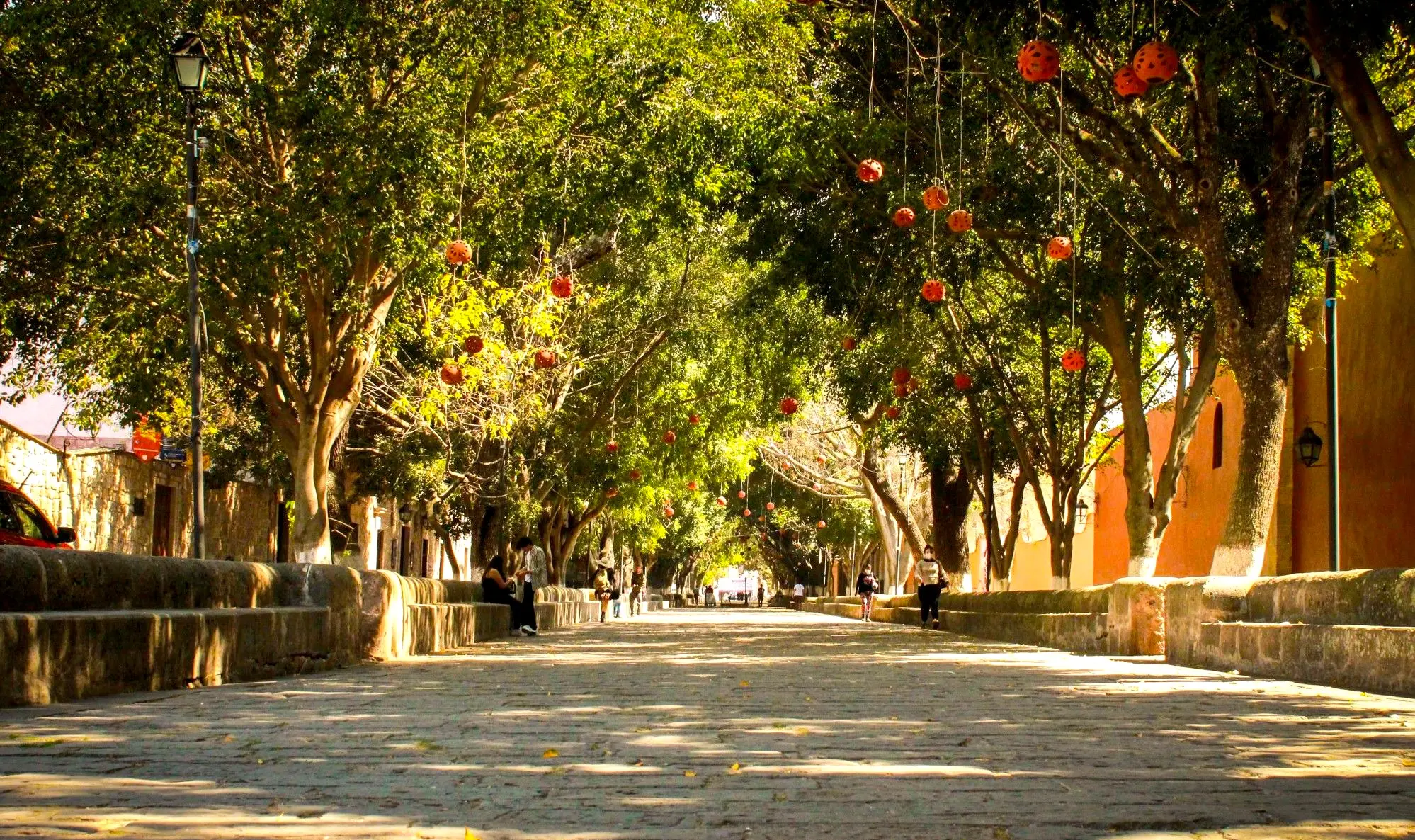
Adress
Calle Fray Antonio de San Miguel, Centro, 58000 Morelia, Michoacán, México.
GPS
19.702701369343, -101.18202745914
KNOW MORE PLACES
VISITA OTRAS LOCALIDADES
🍂 The Most Romantic Stroll in Morelia
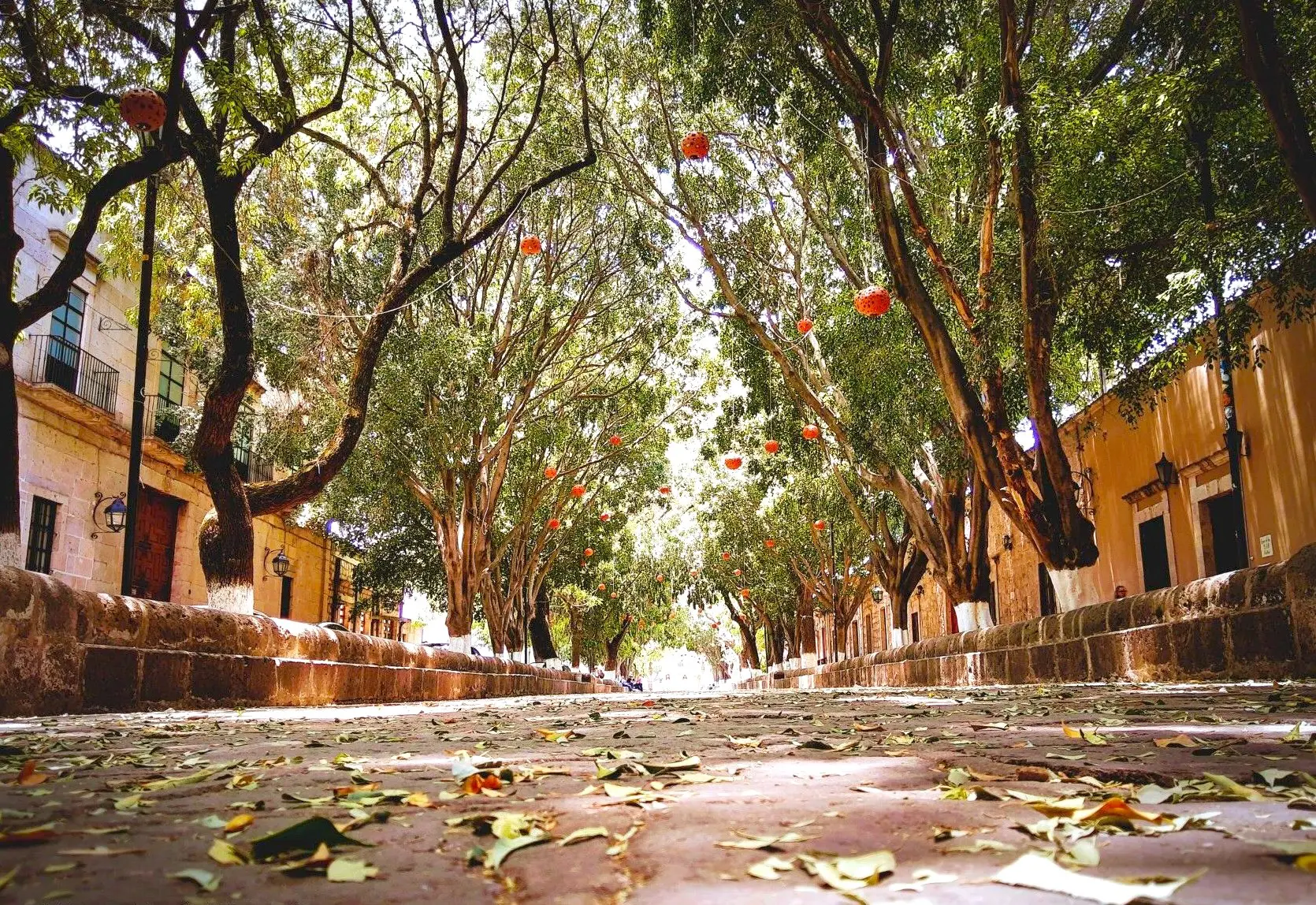
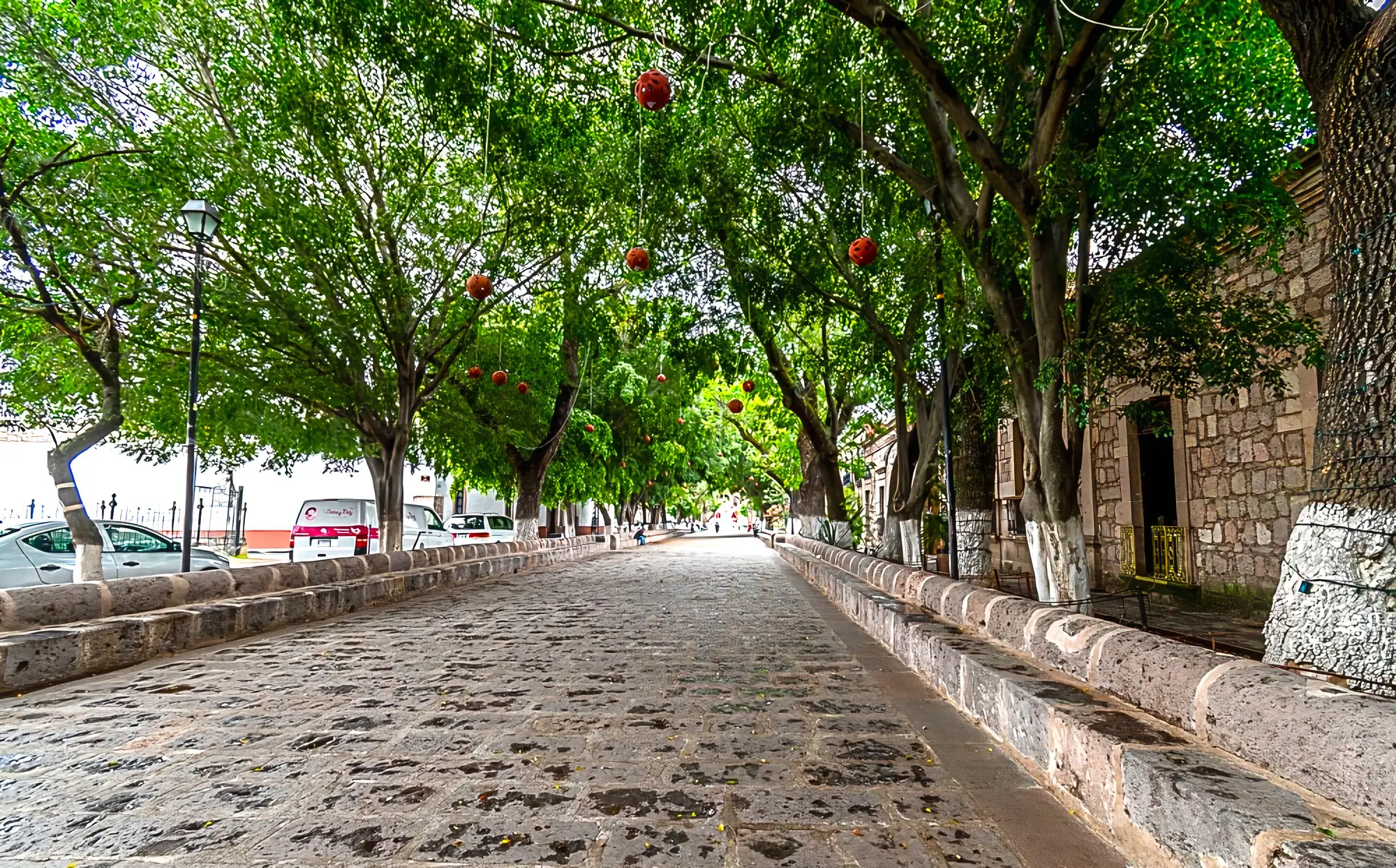
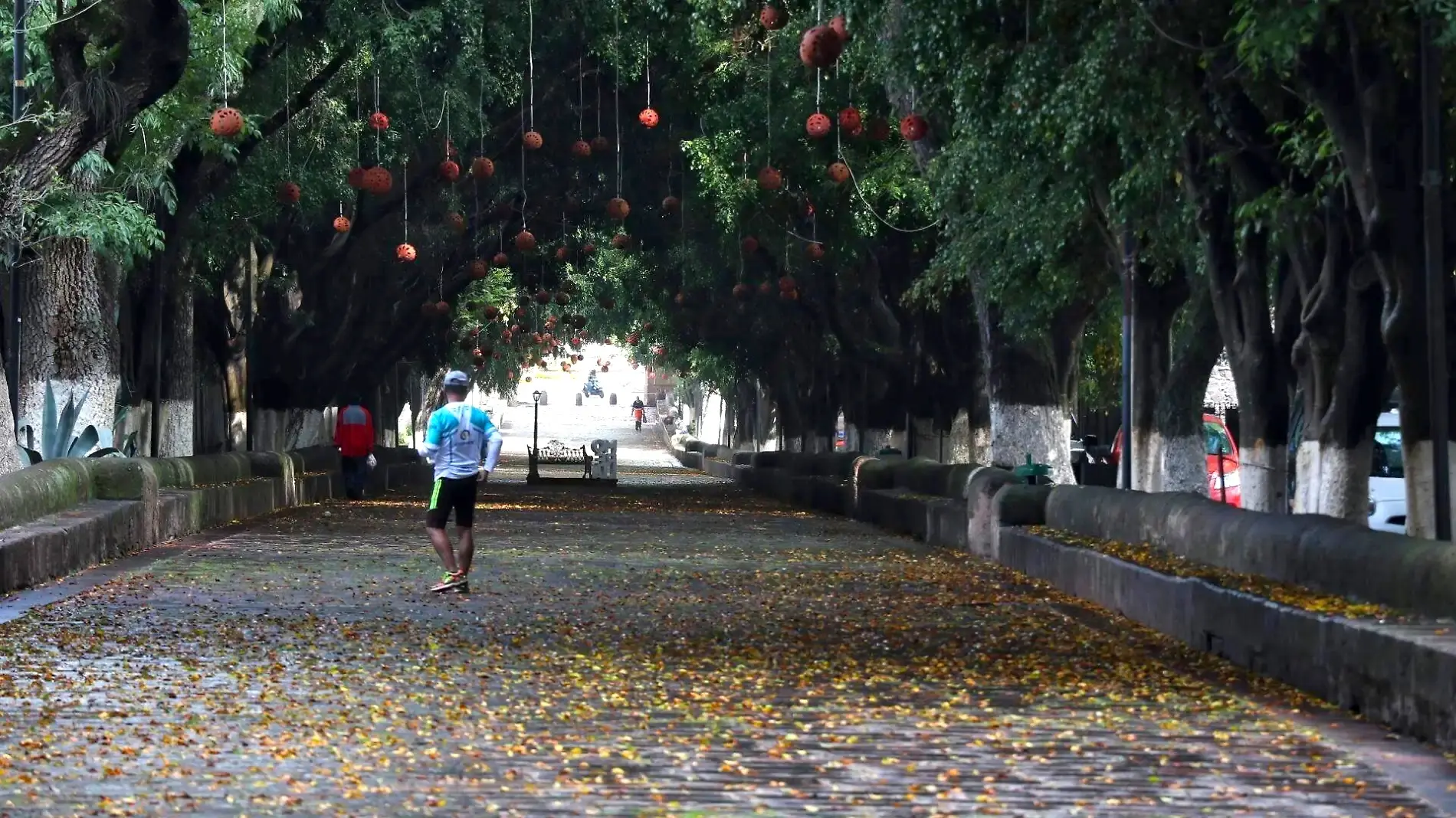
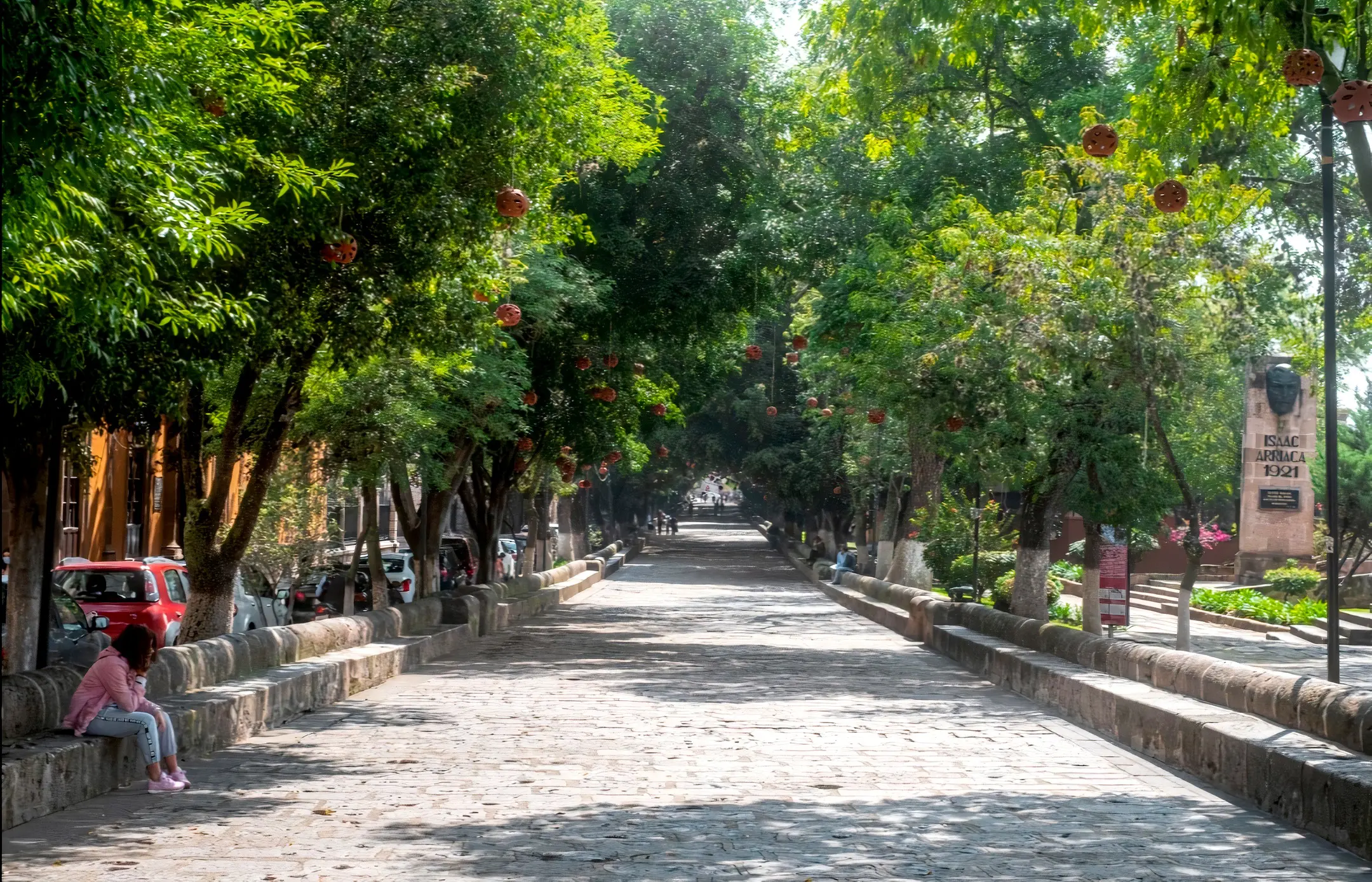
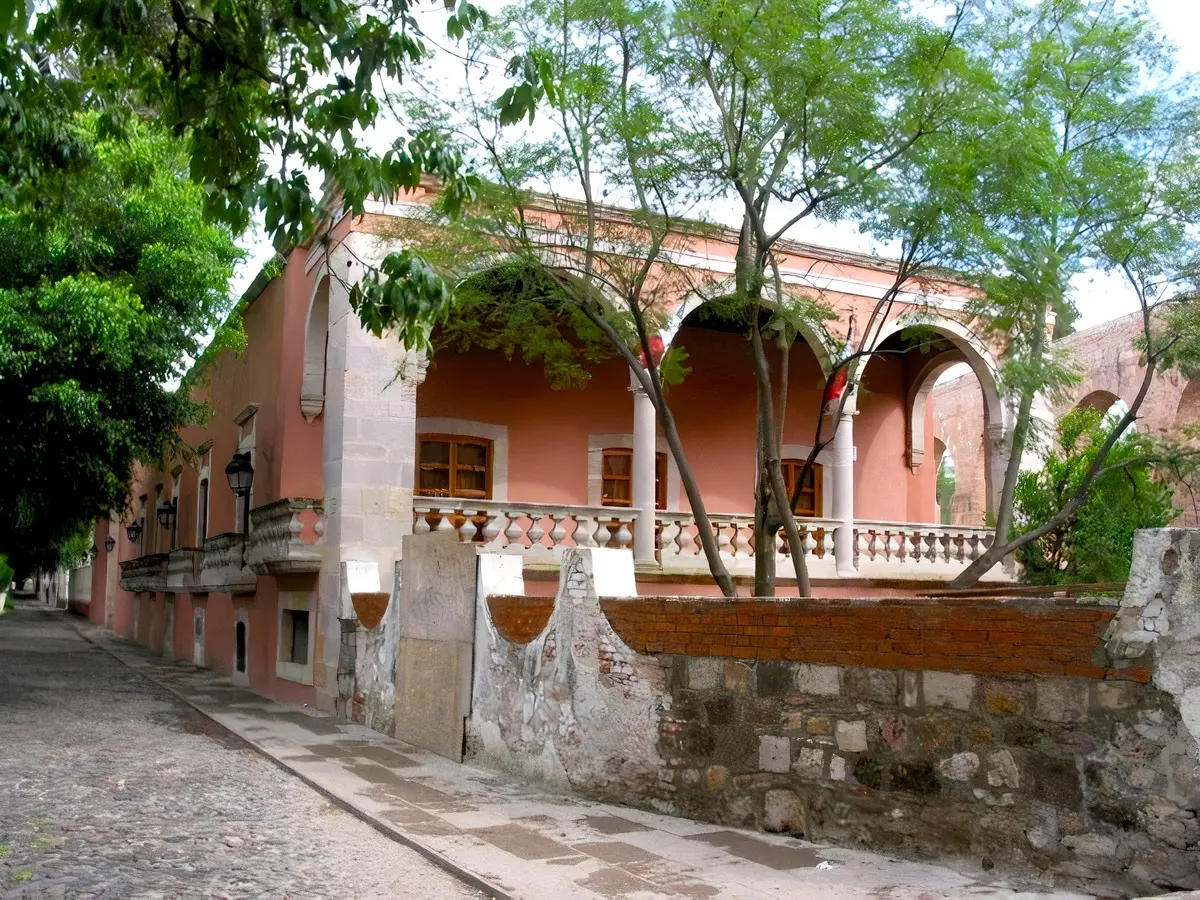
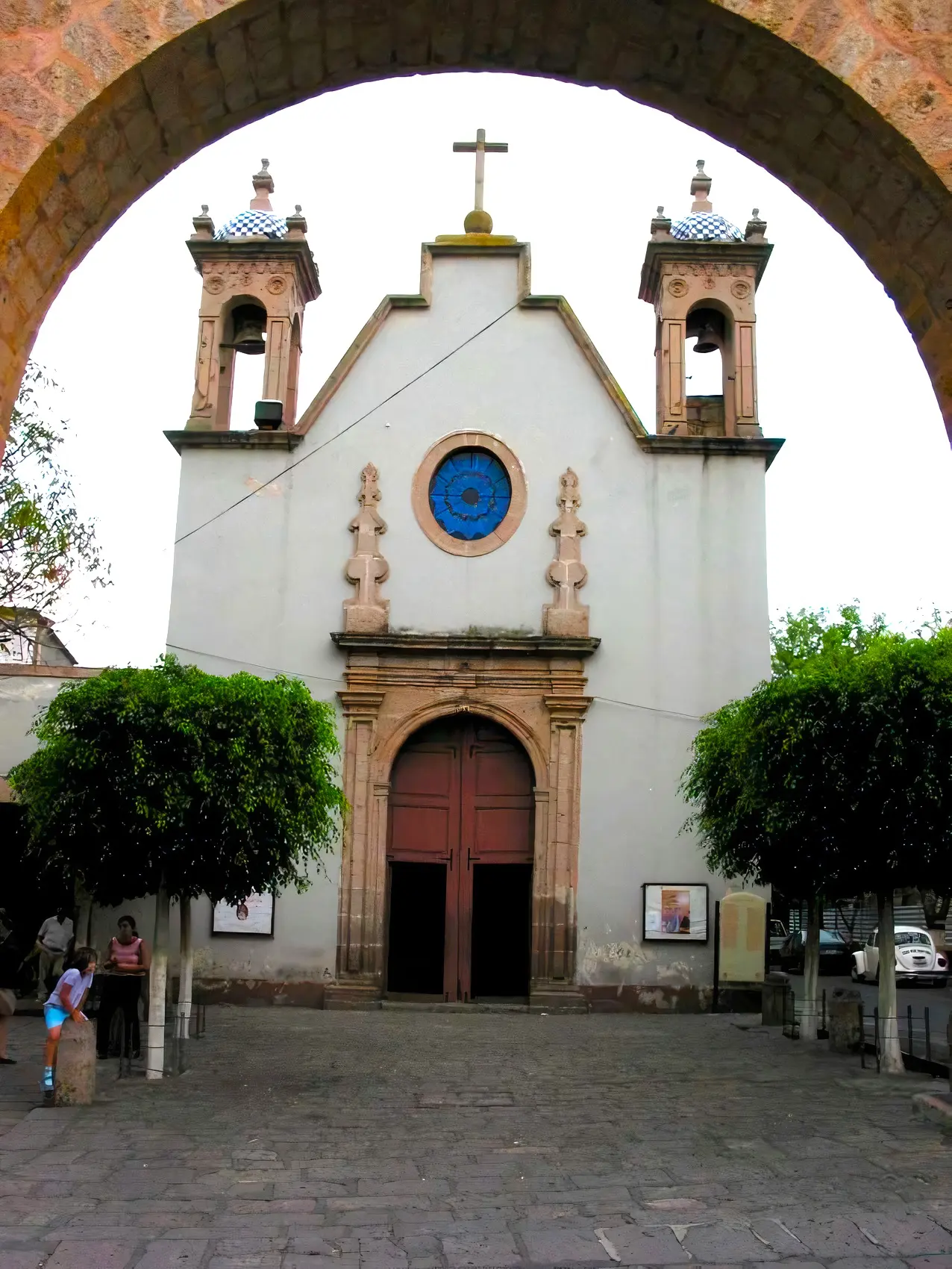
If the Aqueduct It is the backbone of Morelia, the Fray Antonio de San Miguel Causeway it is its poetic soul. Popularly known as "Calzada de San Diego", this pedestrian corridor of pink quarry stone, shaded by centuries-old trees, connects the Aqueduct with the Sanctuary of Guadalupe.
It's much more than a beautiful path; it's a time tunnel that takes you from the 18th century to the city's most tragic legends.
📜 A Way of Faith (1732)
Originally, this area was the boundary of the indigenous village of San Pedro (today Cuauhtémoc Forest). In 1732, the need arose to build a proper road to lead the faithful to the newly constructed Sanctuary of Guadalupe. At first, it was a simple cobblestone path called the "Calzada de Guadalupe." It was until 1784 that the Bishop Fray Antonio de San Miguel (the same one as the Aqueduct) ordered its total transformation: he removed the cobblestones, placed the enormous quarry slabs and ordered the construction of the famous stone benches (called lunettes) for the rest of the walkers.
👻 The Legend of “The Hand on the Gate”
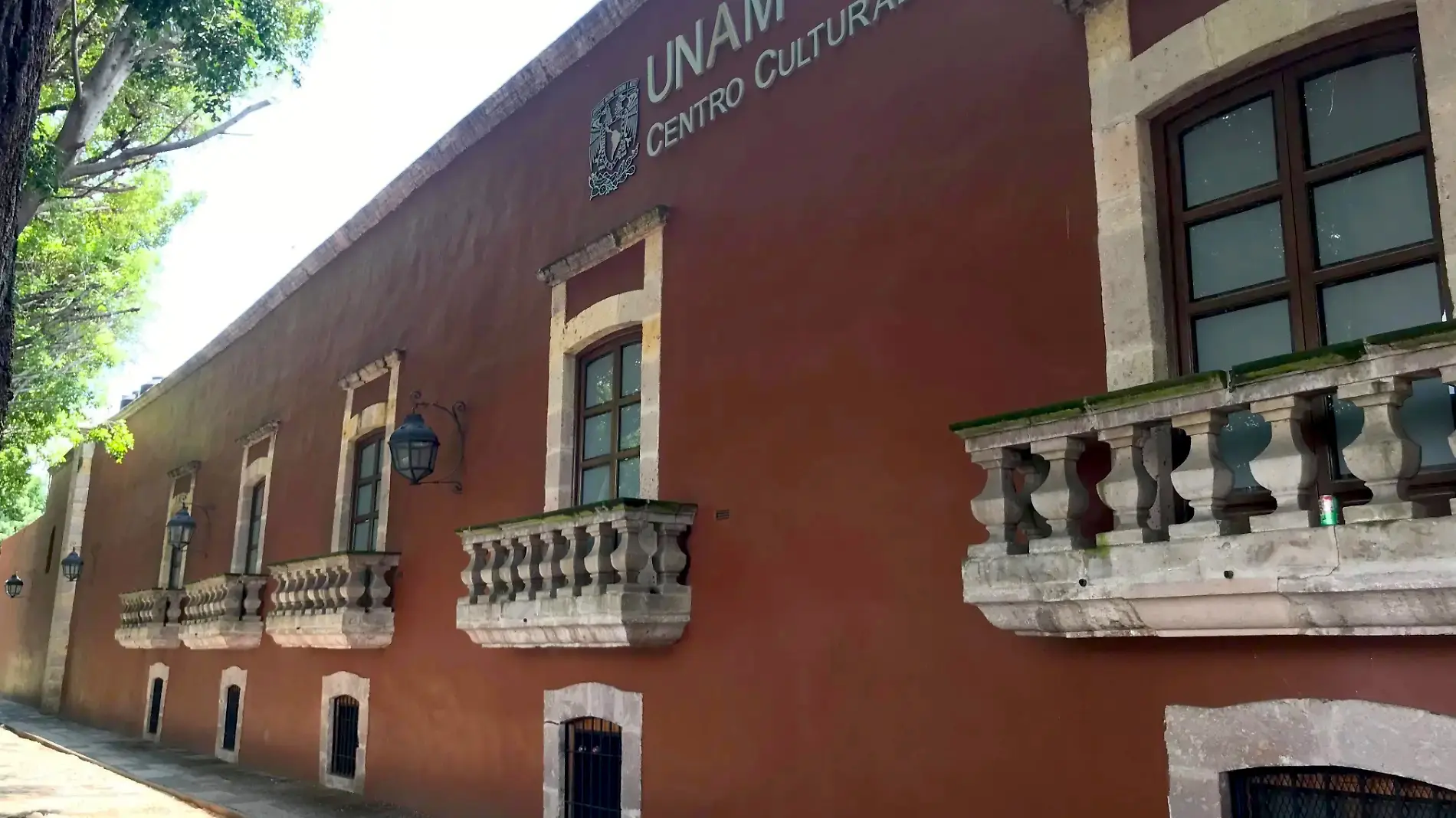
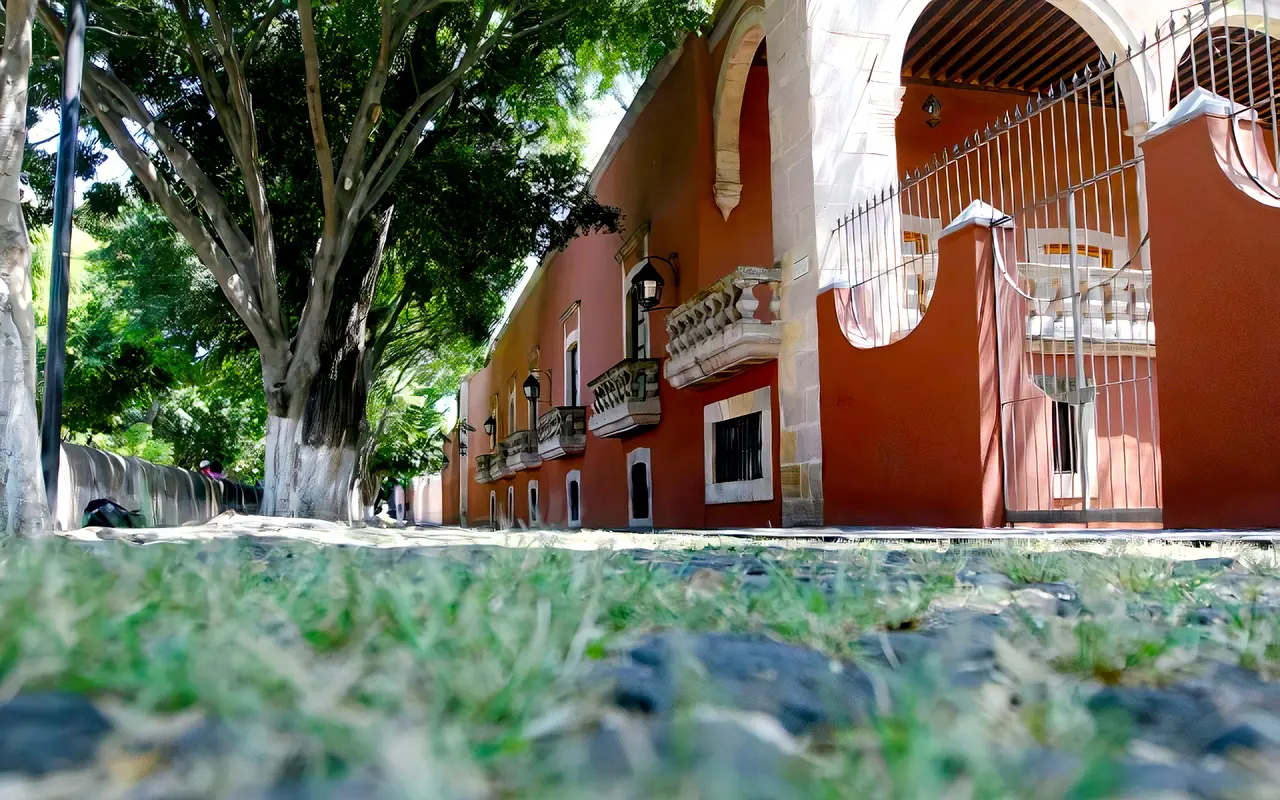
Walking along the road (on the southwest side), you'll see an imposing mansion with a low, barred window. It's the Casa de Martín García de Carrasquedo (today the UNAM Cultural Center). Here was born the most famous legend of Morelia: It is said that a beautiful young woman named Leonor Núñez de Castro was locked in the cellar by her cruel stepmother to prevent her from seeing her beloved. Legend says that Leonor would extend her pale hand through the cellar grate, begging for bread or a letter from her sweetheart, until she tragically died. They say that at night, a white hand can still be seen peeking through the bars.
🐎 The Bronze Guardian (Morelos)
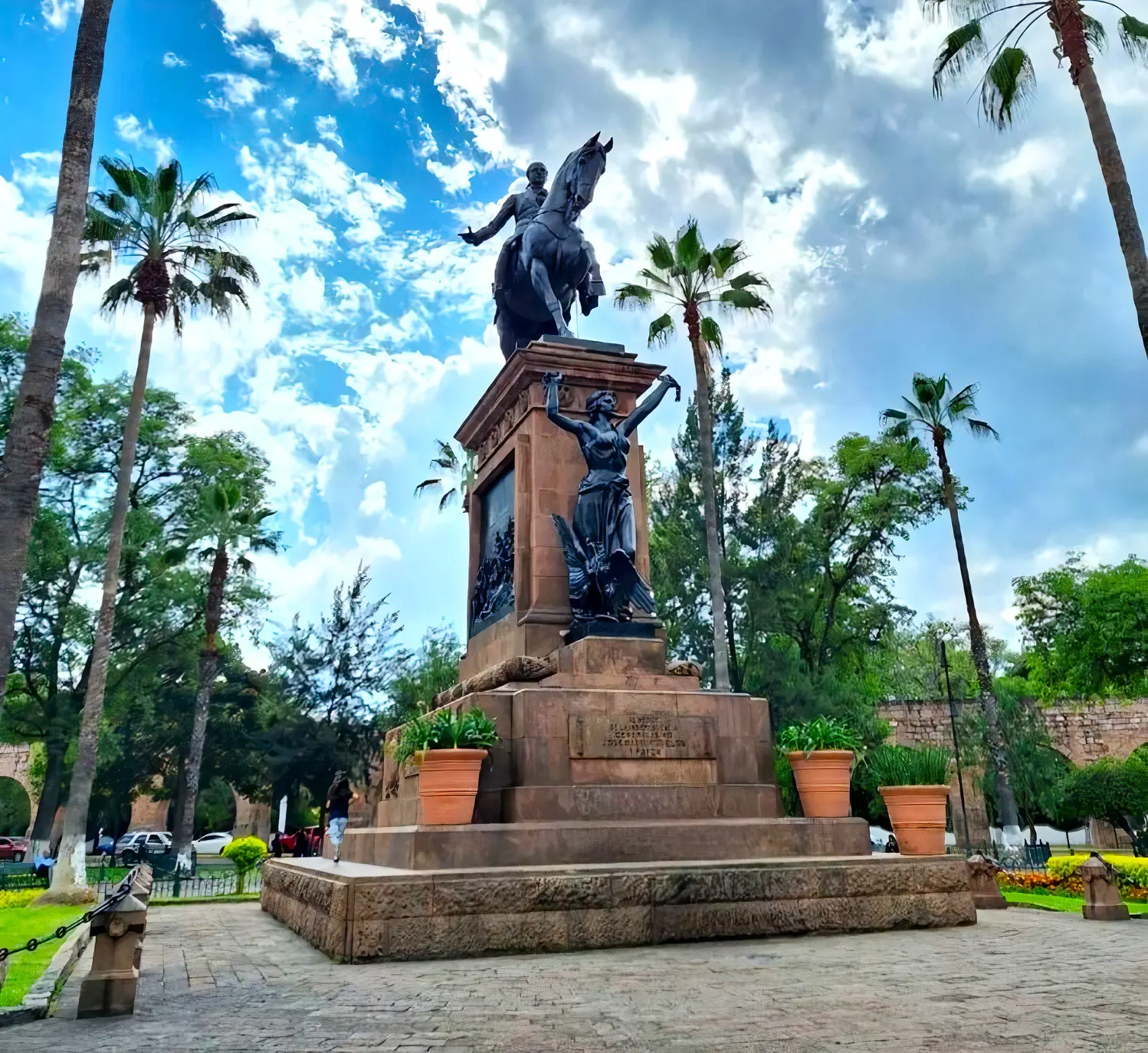
Almost at the end of the road, in the Morelos Garden, stands the largest and most important equestrian monument in the city: José María Morelos y Pavón on horseback.
The masterpiece: It was sculpted in bronze by the Italian Giuseppe Inghilleri and inaugurated in 1913.
The hidden detail: The monument features female figures representing the Motherland and Liberty. The models for these figures were two beautiful sisters from Morelia named Fourier.
The orientation: Morelos looks north, indicating the direction he took to meet Miguel Hidalgo and begin the fight for Independence.
🎨 From Trams to Festivals
A century ago, a tram (first mule-drawn, then electric) ran along the north side of the road. Today, it's the city's favorite cultural venue. During the Festival de Cine or the Day of the Dead, the roadway is transformed: it fills with flower carpets, candles, and photography exhibits. It's a living open-air museum over 400 meters long.
📍 Why visit it from Pátzcuaro?
Because it's the perfect walk to slow down. After the hustle and bustle of the city center, walking in the shade of these ash trees is therapeutic. Tip from Visit Pátzcuaro: If you reach the end of the road, you must enter the Shrine of Guadalupe (San Diego). From the outside it looks like a simple church, but its interior is an explosion of golden and baroque decoration that will leave you breathless. (It's Morelia's best-kept secret!).

 EN
EN  ES
ES