
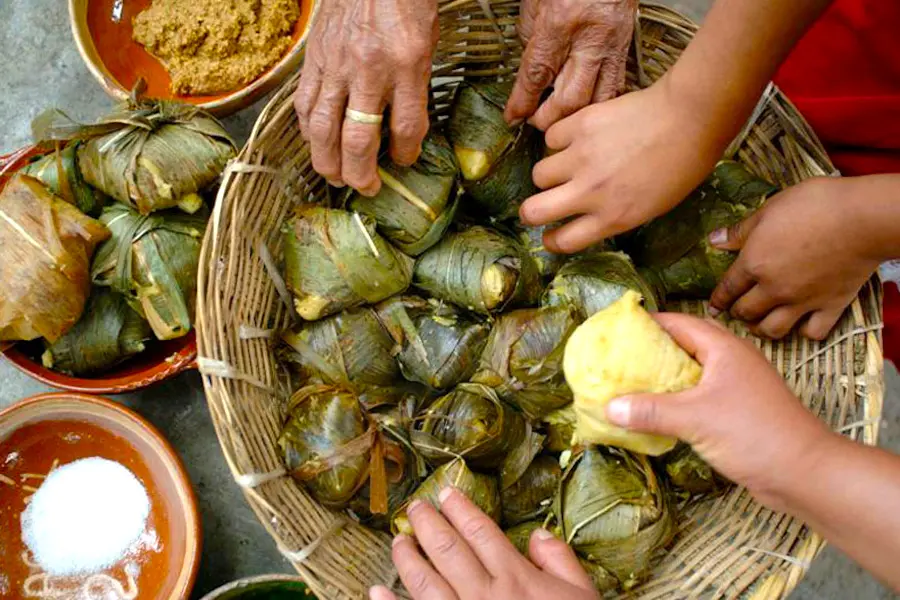
The soul of this cuisine lies in the heritage of traditional cooks, guardians of ancestral techniques such as nixtamalization and cooking in clay pots and ovens, and copper pans, which maintain authenticity in every bite.
I. Emblematic and ceremonial specialties
Tarascan Soup (The Creation of Pátzcuaro): Invented by a local chef, this soup is the symbol of Michoacán's cuisine. It's a delicious combination of beans, tomatoes, and pasilla chiles, served with fried tortilla strips, avocado, cream, and cheese. It's a must-try appetizer.
- Churipo and Atápakua (The Ceremonial Broths):
- Churipo: Caldo de res o pollo, a menudo condimentado con chile rojo y xoconochtle. Se sirve tradicionalmente con corundas simple and is the ceremonial dish in many Purépecha festivals.
- Atápakua: A type of ancient and thick mole, cooked with corn dough and spices, which serves as a base for stewing vegetables, mushrooms or meat.
Corundas and Uchepos (The Sacred Corn): Corn is the fundamental base. Corundas They are triangular tamales typical of the central area, while the Uchepos They are sweet tamales made with fresh corn.
II. Treasures of the Lake and High Popular Consumption
The region offers a vast repertoire that takes advantage of local ingredients and the tradition of feasting:
- Pozole and its Regional Varieties: A national dish with unique variations in the region. In addition to the traditional one. pozole rojo, you can taste the Pozole Batido, el Máschuta (made with black corn, beans and cilantro), and the distinctive Quiroga Wheat Pozole, which takes advantage of other local grains.
Market Enchiladas: The enchiladas michoacanas, accompanied by chicken and potatoes, are a dish of altísimo consumo local. They are especially enjoyed in dinner restaurants and in the Municipal Market of Pátzcuaro.
Carnitas (Regional Reference): Although Quiroga is famous, Pátzcuaro concentrates the best preparations of this dish of pork cooked in lard, a benchmark in the area.
Atole (A Universe of Flavors): Atole is essential to combat the cold of the plateau. The variety is immense: from the thick Atole de Grano (with tender corn and anise) until the Atole de Chaqueta (made with piloncillo and chocolate), going through fruity flavors such as blackberry, guava, pineapple, or the creamy atoles of cookie, cajeta, white or black.
Fish from the Lake: The lakeside tradition is manifested in dishes such as Charales (fried or in tacos), the Whitefish (battered or in garlic sauce) and the singular Achoque, an amphibian endemic to the lake.
III. Interregional Culinary Routes (Flavors of the Magical Towns)
The Pátzcuaro region is the node that allows testing the specialties of the extended region:
Torta de Tostada (Santa Clara del Cobre): A bolillo filled with beans, cold cuts and, the special touch, a crispy tostada inside.
Bola de Pedernales (Tacámbaro): A delicacy originating in Pedernales, in the municipality of Tacámbaro, made with handmade tortillas and filled with beans, cheese and dried meat.
IV. Desserts, Bakery and Cultural Heritage
Nieve de Pasta: A unique and delicious dessert, distinctive of Pátzcuaro, which must be tried in the Plaza Vasco de Quiroga.
Pan de Muerto Regional: During the season of the Feast of Souls (Night of the Death), bread becomes a ritual, with a preparation and flavor unmistakable from Michoacán.
Other Desserts: The pastry shop includes the famous Chongos Zamoranos, Fruit preserves and a wide variety of dulce de leche and preserves.
In summary: The cuisine of the Pátzcuaro region is a living heritage that connects visitors to centuries of history. Each recipe tells a story of identity, resilience, and love for tradition, guaranteeing a unique sensory experience.
For recipes and other gastronomic references, visit Experiencia Pátzcuaro.
 EN
EN  ES
ES