
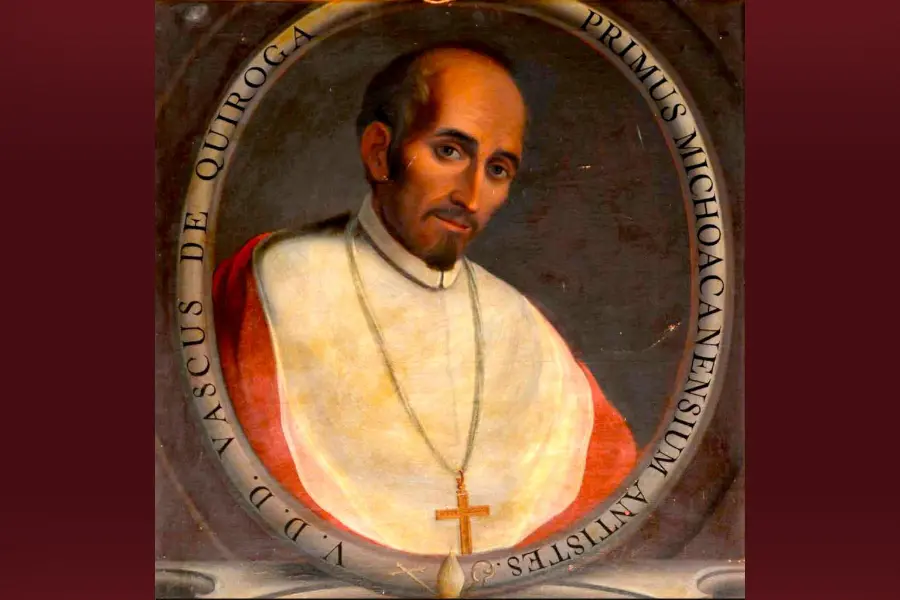
Tata Vasco: The Architect of a Dream
The Man Behind the Legend Don Vasco de Quiroga is, without a doubt, the most transcendental figure in the history of Pátzcuaro and Michoacán. Born in the noble town of Madrigal de las Altas Torres, Spain, and trained as a brilliant lawyer, his life took a radical turn when the Spanish Crown sent him to New Spain in 1531.
Utopia on Earth: The Hospital Towns Inspired by Thomas More's “Utopia”, Vasco da Gama came not only to evangelize, but to implement a revolutionary social model. In 1533, he founded his first experimental town: Santa Fe de la Laguna, located on the shores of Lake Pátzcuaro, a site that still maintains its traditions and can be visited today.
La Utopía en la Tierra: Los Pueblos Hospitales Inspirado en la obra “Utopía” de Tomás Moro, Don Vasco no vino solo a evangelizar, sino a implantar un modelo social revolucionario. En 1533, fundó su primer pueblo experimental: Santa Fe de la Laguna, ubicado en la ribera del Lago de Pátzcuaro, un sitio que aún hoy mantiene vivas sus tradiciones y puede ser visitado.
Later, he replicated this model by founding the “Hospital Towns” in Tzintzuntzan, Pátzcuaro, Uruapan, Acámbaro, and Cuitzeo. It is important to clarify that these were not “hospitals” in the modern medical sense, but rather houses of hospitality and community service. They were centers where the land belonged to everyone, work was rotated in fair shifts (six hours a day), and sustenance was guaranteed for the elderly and orphans, allowing Indigenous people to be self-sufficient and live with dignity.
Craft as Identity After being appointed the first Bishop of Michoacán around 1538, and earning the affectionate title of “Tata” (Father) Vasco, he implemented his master strategy: productive specialization. To avoid competition between towns and foster mutual trade, he assigned each community a specific craft and technique, blending pre-Hispanic knowledge with European technologies.
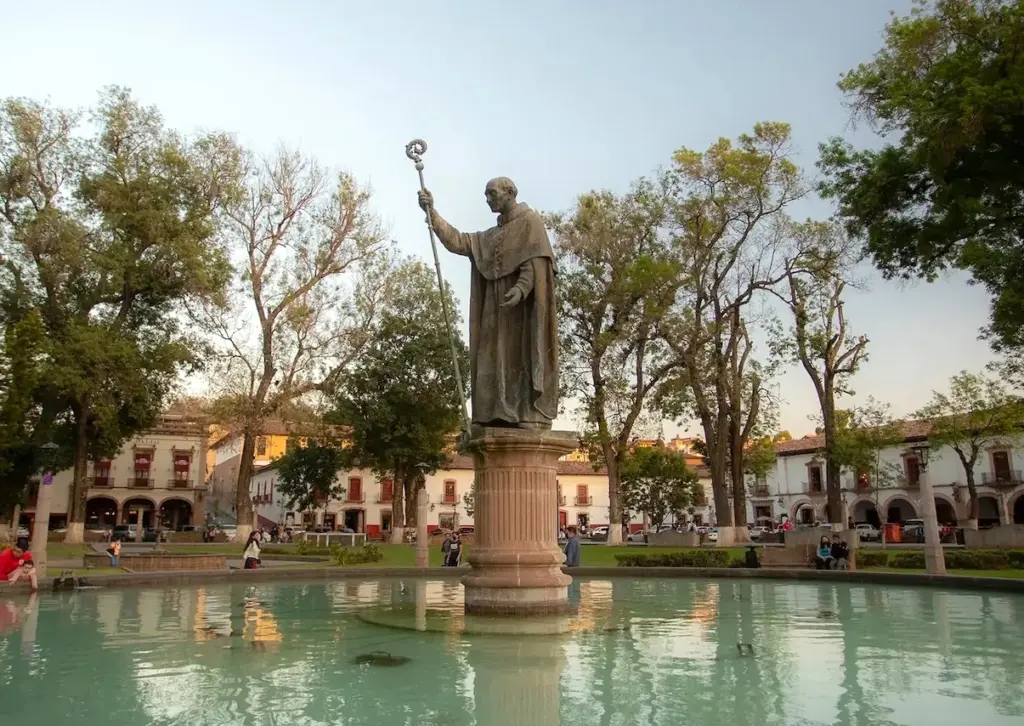
This economic and artistic legacy endures to this day:
- Santa Clara del Cobre: Where the rhythmic beating of the sledgehammers continues to forge the copper.
- Uruapan: Famous for its maque and lacquerware made using pre-Hispanic techniques.
- Patamban: Renowned for its exquisite earthenware and glazed ceramics that adorn tables all over the world.
- La Ribera del Lago: Where wood, pottery and textiles continue to be the livelihood of thousands of families.
An Eternal Legacy Don Vasco de Quiroga died in the city of Pátzcuaro on March 14, 1565, at the venerable age of 95. His death marked the end of a golden age, leading to the subsequent transfer of the diocese's seat to Valladolid (now Morelia). However, his heart remained here.
His remains rest in the Basilica of Our Lady of Health, the temple he himself commissioned. According to the local belief, the spirit of "Tata" still roams the valleys and the lake he loved so much. Few figures in history have managed to build, in the twilight of their lives, such a solid legacy that, five centuries later, continues to be the cultural and economic engine of an entire region.
💡 Expert Recommendation: To truly understand the magnitude of this figure, a visit to the Don Vasco Route Interpretation Center (CIVAQ) in Pátzcuaro is a must. It's a modern museum experience that will allow you to grasp how a single man changed the destiny of Michoacán.
 EN
EN  ES
ES