
 MAP
 SEARCH
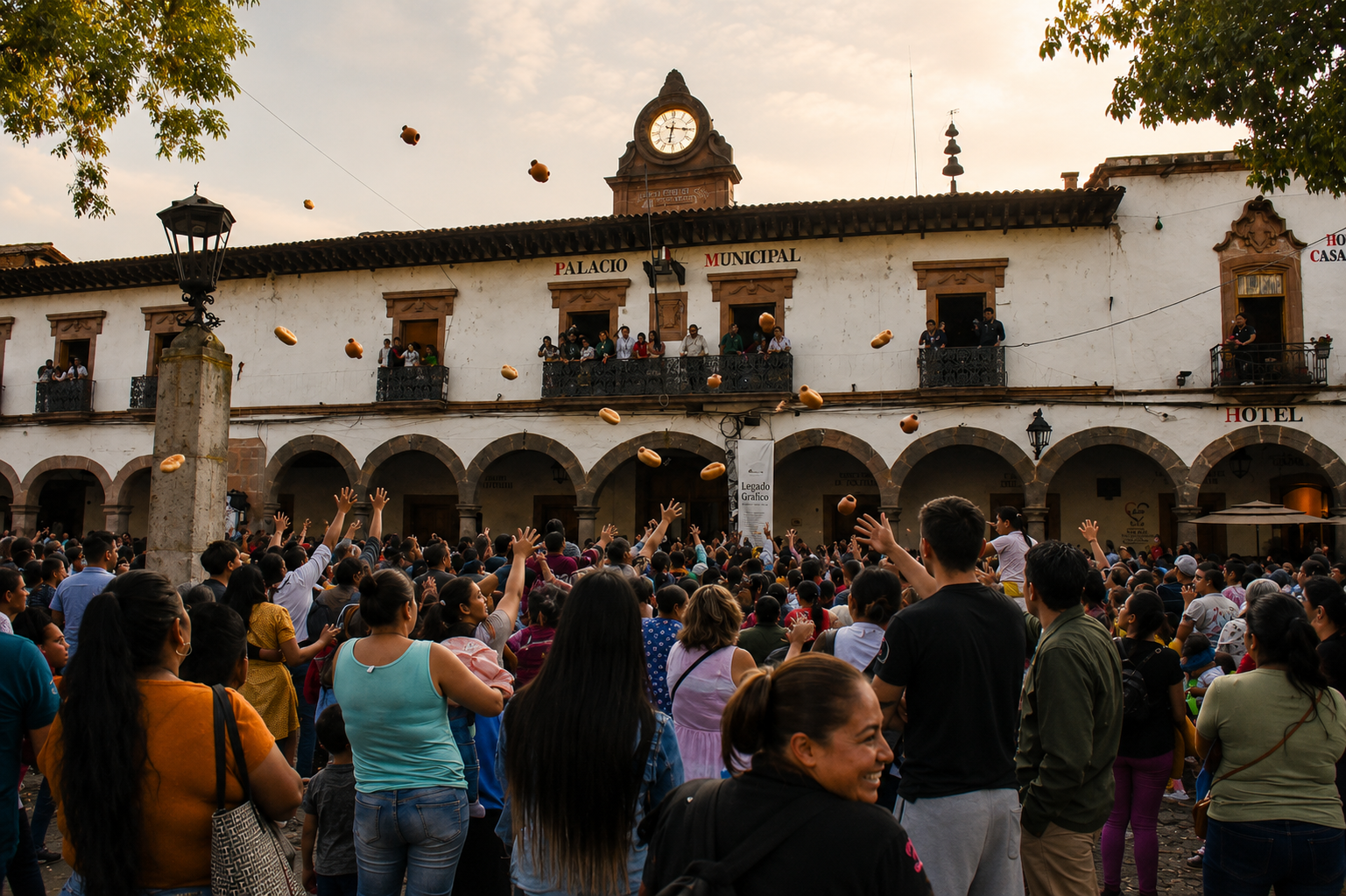
Durante el Corpus Christi, las plazas y portales de Pátzcuaro se convierten en escenarios de encuentro, música y ofrendas compartidas.

KNOW MORE PLACES
VISITA OTRAS LOCALIDADES
Trades, guilds, and a celebration that moves into the streets
During Corpus Christi, Pátzcuaro offers another way of looking at work.
The celebration belongs to the Catholic calendar, but here the procession shares the streets with guilds, products, trades, and objects that also speak about the everyday life of the city and the participating communities.
There is music, religious imagery, and offerings. And what people grow, make, transform, or sell also appears.
For a few hours, work becomes visible.
A Catholic feast with a long history in Michoacán
Corpus Christi arrived with European Christianity.
In Purépecha towns it acquired characteristics of its own during the colonial period. Seventeenth-century documents already describe the participation of occupational groups, agricultural products, crafted objects, and representations connected with work.
Historical studies have also found relationships between colonial Corpus celebrations and agricultural practices that predate the conquest.
But we must be precise here.
Those studies document processes of adaptation and cultural encounter in different towns of Michoacán; they do not demonstrate that every present-day practice in Pátzcuaro’s Corpus Christi descends directly from a specific pre-Hispanic rite.
History is more interesting when we do not simplify it.
The trade as an offering
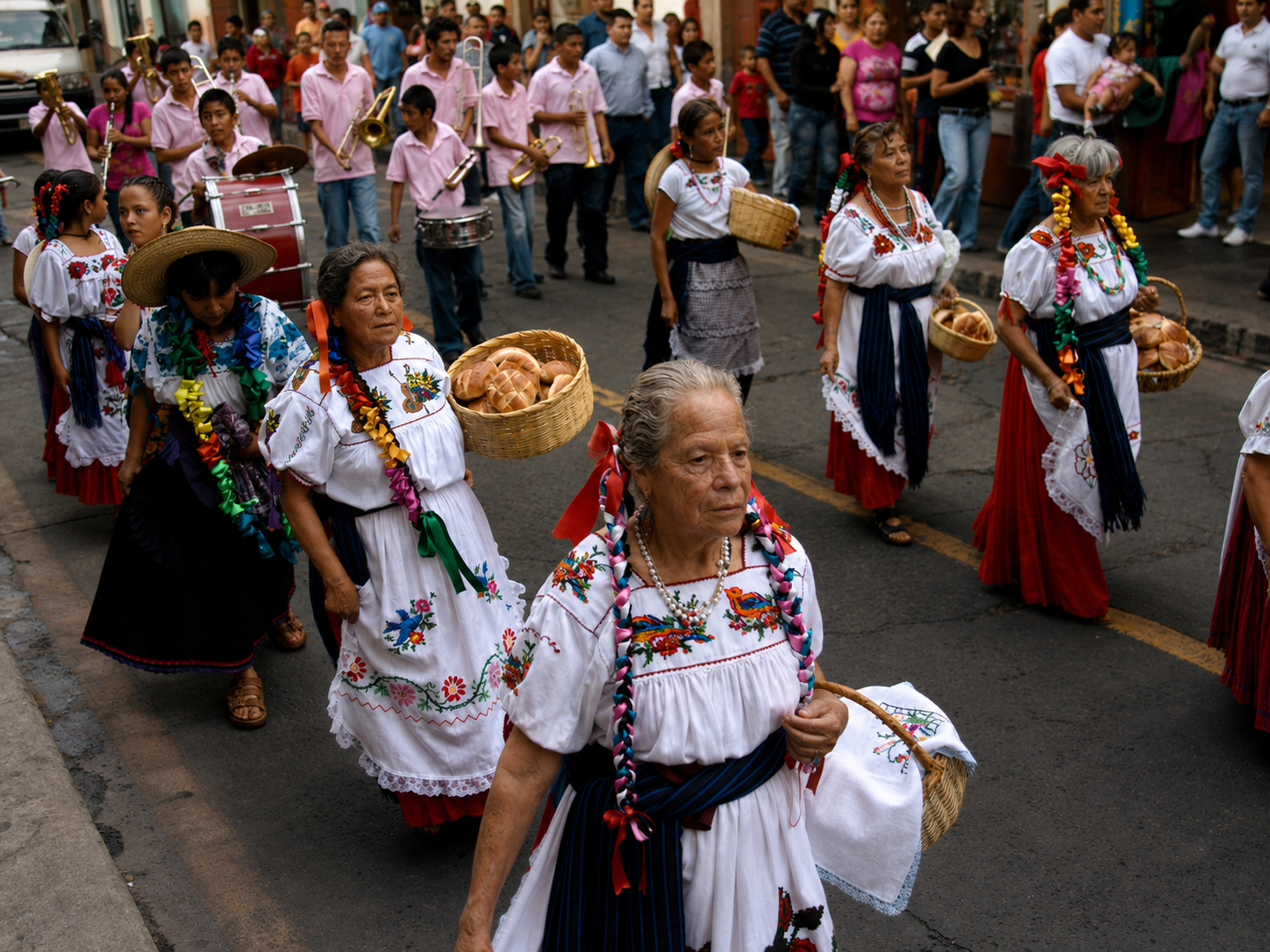
One of the most recognizable features of regional Corpus celebrations is the participation of guilds and groups connected with different kinds of work.
In several communities, people make or carry objects representing what each group produces: food, crafts, fruit, wooden objects, and other goods.
Sharing or tossing some of these products is part of different Corpus celebrations in Michoacán, although the specific practices vary from one town to another.
The small object passing from one hand to another may look like a souvenir.
It can also tell you who made it and how a community makes its living.
Pátzcuaro as a meeting point
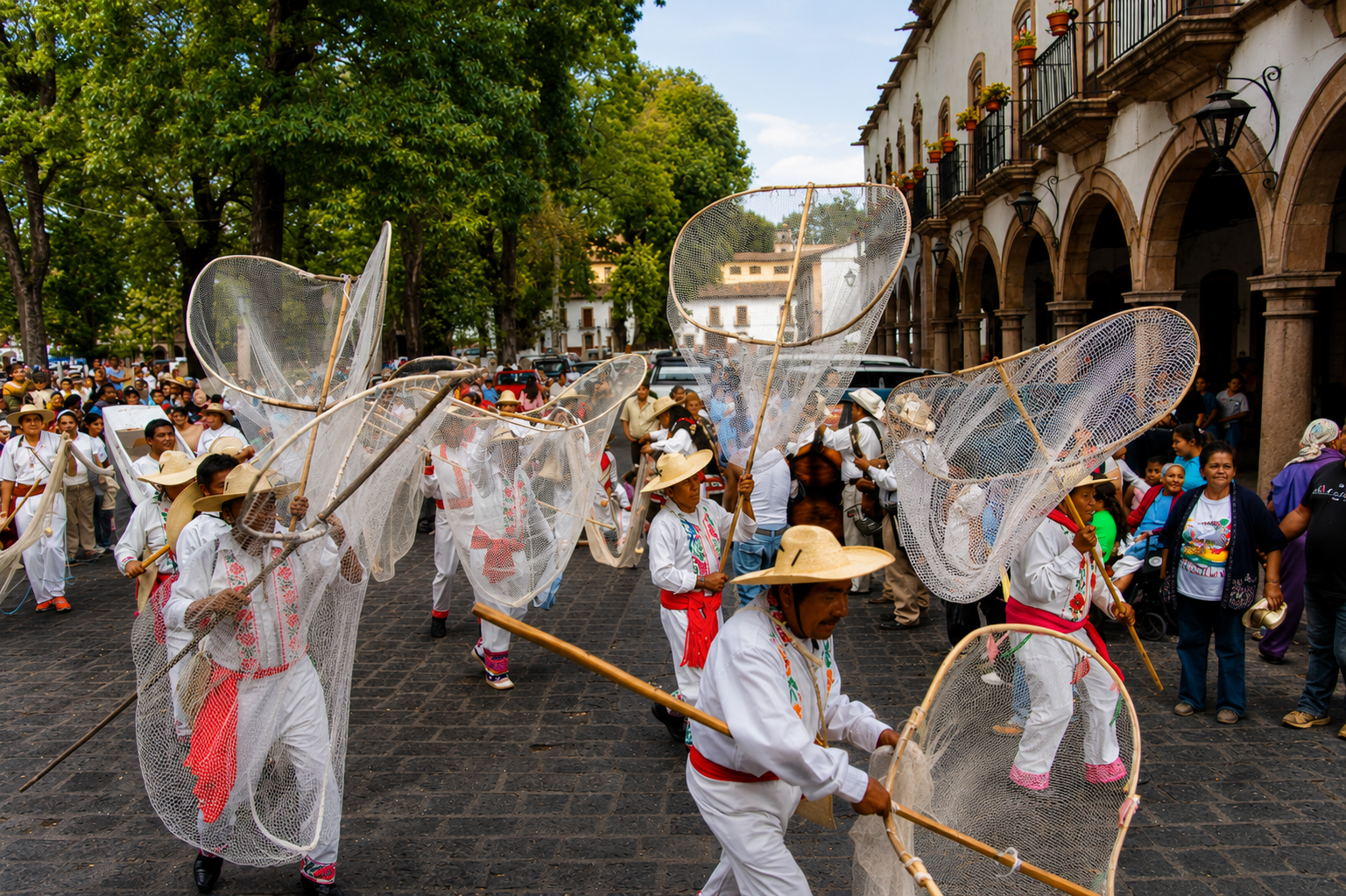
In Pátzcuaro, the Corpus route has brought together groups and expressions connected with the city and with other communities in the region.
That does not make Pátzcuaro the origin of them all.
At these moments, the city functions as a meeting place.
Looking at where each contingent comes from, what it carries, and what trade it represents helps reveal the territorial dimension of the feast.
There is no single regional Corpus Christi
Tzintzuntzan, Quiroga, Janitzio, and other communities maintain celebrations of their own.
Some share the presence of guilds, music, processions, and goods that are offered or distributed; others have particular practices.
In Urandén, for example, contemporary research documents a Corpus representation connected with fishermen and older practices of the lakeside landscape.
The similarities matter.
So do the differences.
Visiting with respect
Corpus Christi remains a religious and community celebration.
Do not interrupt processions or stand in front of contingents simply to obtain a photograph. If objects are distributed or thrown, remember that the feast is not a competition to collect as many as possible.
Look at the object.
Then look at the person who made it.
Another part of the story begins there.
Keep exploring
Experiencia Pátzcuaro explores in greater depth the relationship among Corpus Christi, trades, and community life in Pátzcuaro.
Explore Corpus Christi and the offering of the trade →
Next edition / Practical information
Corpus Christi has a fecha móvil, determined by the liturgical calendar.
The exact date, schedule, procession route, participating guilds, closures, and traffic conditions must be confirmed each year.
The route published for 2026 belongs to that edition and must not remain in the evergreen body.
Information for the next edition is pending confirmation.
 EN
 ES