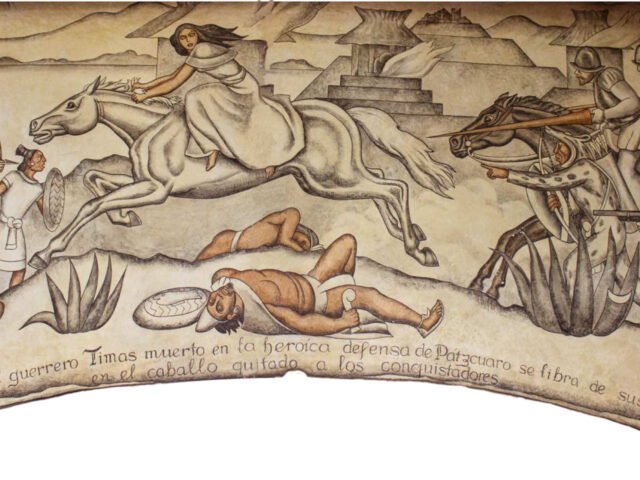
Ubicación: Pátzcuaro
Some cities are best discovered when you stop watching the clock. Pátzcuaro is one of them. Its plazas, streets, churches, and houses hold stories from different periods, but they are also part of a city that is lived in every day.
It is worth exploring without rushing: lingering beneath the arcades, looking up toward the rooftops, stepping into a courtyard when it is open to the public, or simply sitting for a while and watching how the plaza changes throughout the day.
Pátzcuaro is also a good starting point for discovering the Pátzcuaro Region. Its history is closely connected to the lakeside communities, the islands, and the ancient Purépecha centers, as well as to the towns where crafts, languages, celebrations, and distinctive ways of life continue.
A history shared with the region
Pátzcuaro’s importance predates the arrival of the Spanish. Its history forms part of the complex political, religious, and territorial organization developed by the Purépecha throughout the lake basin, in close relationship with other important centers such as Ihuatzio and Tzintzuntzan.
In the 16th century, Vasco de Quiroga established the episcopal seat in Pátzcuaro and promoted institutions that left a lasting mark on the city. The bishopric was based here, and the Colegio de San Nicolás was founded here as well. Toward the end of that century, the episcopal seat and other institutions were gradually transferred to Valladolid, present-day Morelia.
That history helps explain why Pátzcuaro preserves such a significant heritage, but history alone does not explain what the city is today. Its identity has also been shaped by the life of its neighborhoods, the work of generations of residents, and its continuing relationship with the communities of the lake basin.
The name and its interpretations
Among the traditional interpretations of the name Pátzcuaro is “Gateway to Heaven,” an expression deeply rooted in local memory and popular accounts of the city. There are, however, other etymological interpretations associated with the ancient temples of the area. It is therefore worth recognizing the cultural meaning of “Gateway to Heaven” without presenting it as a definitive linguistic translation.
A city to explore on foot
Plaza Vasco de Quiroga is a good place to begin. From here, you can appreciate the scale of the historic center, the continuity of its arcades, and the relationship between its public spaces and the buildings around them.
There is no need to see everything at once. Some streets invite you to keep walking; others invite you to stop before a façade, a doorway, a courtyard, or a small local shop. From the center, this guide leads toward churches, former colleges, museums, plazas, neighborhoods, and places connected with different periods in Pátzcuaro’s history.
Each deserves its own time. That is why the individual entries in this guide tell their stories separately, allowing the route to take shape as you walk.
It is also worth setting aside time to head toward the lake and its communities. The landscape changes with the light, the conditions on the water, and the rhythms of everyday life. City and region are better understood when explored together, remembering that before they are destinations to visit, they are places where life continues every day.
And perhaps that is a good way to get to know Pátzcuaro: walk, look around, and leave something unseen for the next time.
El tesoro escondido a orillas del lago. La antigua casa de descanso del General Lázaro Cárdenas (hoy CREFAL) alberga murales poco conocidos por el turismo, pintados por Roberto Cueva del Río y Ricardo Bárcenas. La Experiencia: Entrar aquí es viajar al idealismo de los años 30. Los murales no narran…
Ver másEl broche de oro: Un homenaje a las manos que crean. Terminamos la ruta en el lugar donde el arte deja de ser pintura y se convierte en objeto tangible. En la Casa de los Once Patios (Ex Convento de Monjas Dominicas), te encontrarás con el mural del maestro José…
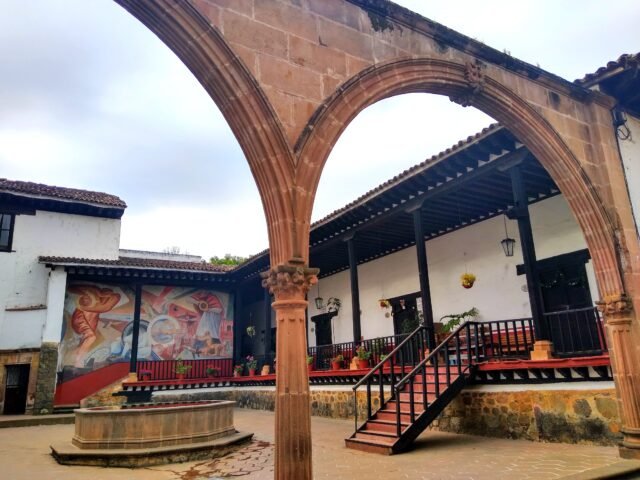
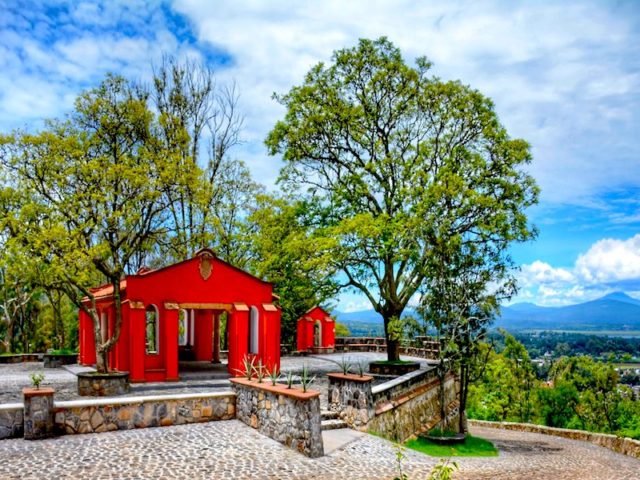
Ver más¿Creías que el arte solo estaba en los museos? Visita al Estribo Chico (una caminata agradable de unos 20 minutos desde el centro). En su pabellón encontrarás decoraciones murales de Roberto Cueva del Río. Aunque el tiempo ha dejado su huella, es fascinante ver cómo el mismo artista que pintó…
Ver más